



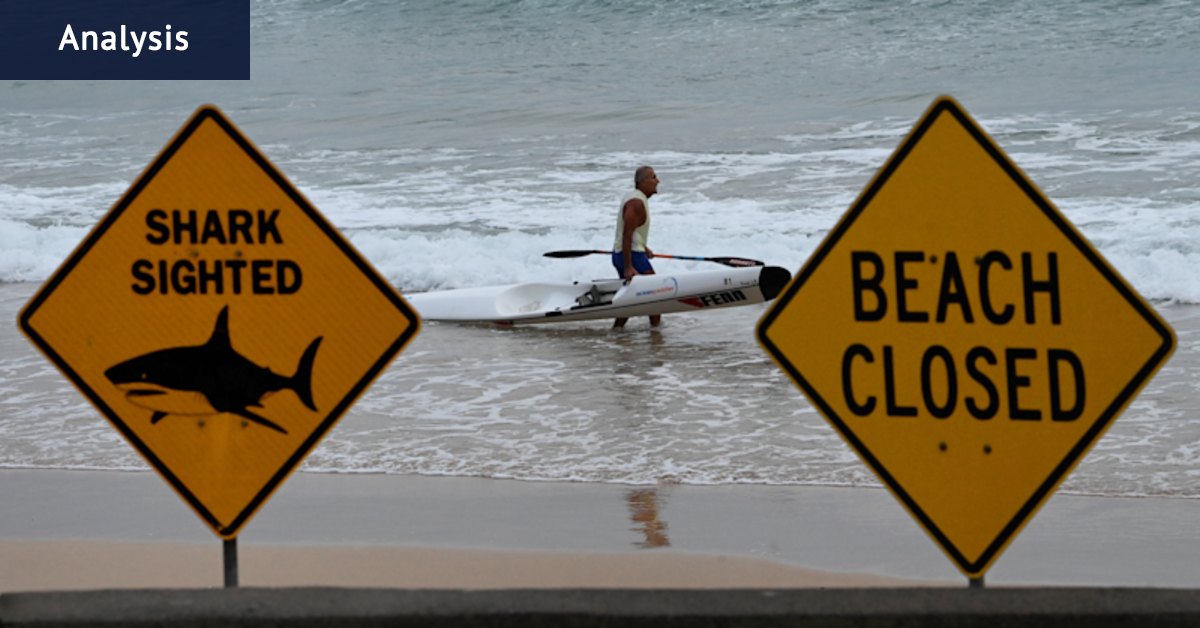
On Tuesday morning came a fourth strike – at 10am at Point Plomer Beach in Limeburners Creek National Park, north of Port Macquarie. A 39-year-old surfer was taken Kempsey Hospital.
According to Agriculture Minister Tara Moriarty, who is responsible for the state government’s shark mitigation program, such a spate of attacks was unprecedented in Sydney. Speaking on ABC radio on Tuesday morning, she urged swimmers to keep out of the water after rain.
It will be of little reassurance to those who have been scarred or scared over recent days that shark attacks remain so rare that even this spate of attacks remains a statistical “blip”, in the words of Brown.
“It is the nature of the noise in this data set,” he said. “We also have long spells with no bites and or deaths, but the media and society don’t notice those gaps.”
That might be the case, but the number of people killed by sharks in Australia has been growing over recent years. To November last year, the Australian Shark Incident Database had recorded 56 deaths by shark bite since 2000. At the time, the database was yet to include the deaths of Mercury Psillakis, 57, who was killed by a white shark at Dee Why in Sydney in September last year, and a woman killed at Crowdy Bay in the NSW mid-north coast in November by a bull shark.
The vast majority of deaths were caused by white sharks.
In the decade from 2000 to 2009, 14 people died around Australia from being bitten by a shark, the shark incident database shows. From 2010 to 2019, there were 21 deaths. And in the third decade of the 21st century, the tally has hit 23 after less than five years.
Surfers paddle out in memory of shark attack victim Mercury Psillakis.Credit: Max Mason-Hubers
As Brown explained at the time, the increase in attacks is not due to an increase in shark numbers so much as of human populations on the coast.
“It’s not the number of sharks that’s going up – it’s environmental changes and increases in the number of people engaging in water sports. With climate change, you can swim off Sydney pretty much all year round now, so there are more people in the water. Everyone has a wetsuit.”
Loading
Green concurs, pointing out the 305 or so smart drumlines regularly deployed in NSW to catch potentially dangerous sharks – white, bulls and tigers – have detected no increase in numbers.
But climate is having an impact. As Australian waters warm, the range of bull and tiger sharks is extended south, and the period during which bull sharks are active around Sydney is growing longer. Animals that once lingered in waters around Sydney mostly during January and February are now arriving sooner and departing later.
Either way, Green says that in his 25 years of shark management, he can recall no other spate of attacks like the one just seen in NSW.
Be the first to know when major news happens. Sign up for breaking news alerts on email or turn on notifications in the app.
Read the full article here


