



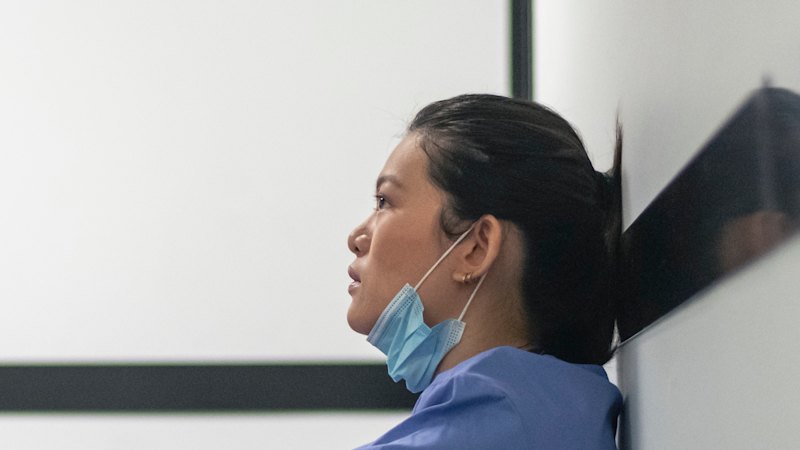
Nearly half of the state’s publicly employed doctors are at risk of burnout, a Queensland Health survey has found, with those in remote and regional areas facing greater workplace challenges.
More than 2000 doctors from across Queensland took part in the Medical Workforce Wellbeing Survey last year.
Of the clinicians surveyed, 49 per cent met the threshold of burnout, driven by workforce shortages, increased workload and greater demand for services.
Staff in regional and remote areas were at higher risk of burnout compared to those in metropolitan areas.
Burnout is defined as a state of complete mental, physical and emotional exhaustion, and is often the result of prolonged levels of stress and pressure.
Australian Medical Association President Dr Nick Yim said many clinicians go through burnout, recover and return to work, but many others change their roles or leave the industry entirely.
“It is deeply concerning that nearly half of the Queensland Health workforce is burning out,” Yim said.
“This is something that we need to address. We need to keep our greatest and brightest [doctors] in our state.”
Yim said the issue was worsening and more had to be done to prevent it.
“We need to work with Queensland Health to increase that culture within the healthcare system to ensure that we are looking after [doctors] … that includes investment into things like housing, and also lifestyle measures.”
Queensland Chief Medical Officer Dr Catherine McDougall said the problem was not unique to Queensland, and was faced by health systems across the globe.
“System-level reform combined with targeted local initiatives are needed to address the survey results, but it is important these are introduced with extensive engagement and collaboration with staff,” McDougall said.
The survey showed workload was the key metric that most negatively impacted doctors’ wellbeing, followed by organisational processes, resources, culture, support, supervision and professional development.
Doctors suggested changes including increased staffing, flexible work arrangements, and improved access to leave and relief cover.
Queensland Health’s workforce gap analysis, released in November, showed Queensland will be short nearly 6000 doctors by 2032.
Speaking at a keynote on Tuesday, Health Minister Tim Nicholls said the survey findings were “not acceptable” and promised further details on a fix for workforce shortages later this year.
The Crisafulli government previously pledged 46,000 additional healthcare workers, including doctors, nurses and paramedics, by 2032, but was yet to say how it will achieve such figures.
“Our aim, put simply, is to build the hospitals and to fill them with the clinicians they need. Build and fill,” Nicholls said.
“I have two major goals: releasing and implementing a system-wide workforce rescue plan … [and giving] clinicians a meaningful voice in hospital decision-making.
“Having a workforce with a bigger say in how their hospitals are run is a core priority of our government.”
Start the day with a summary of the day’s most important and interesting stories, analysis and insights. Sign up for our Morning Edition newsletter.
From our partners
Read the full article here


