


CHALLENGES AHEAD FOR WAWASAN
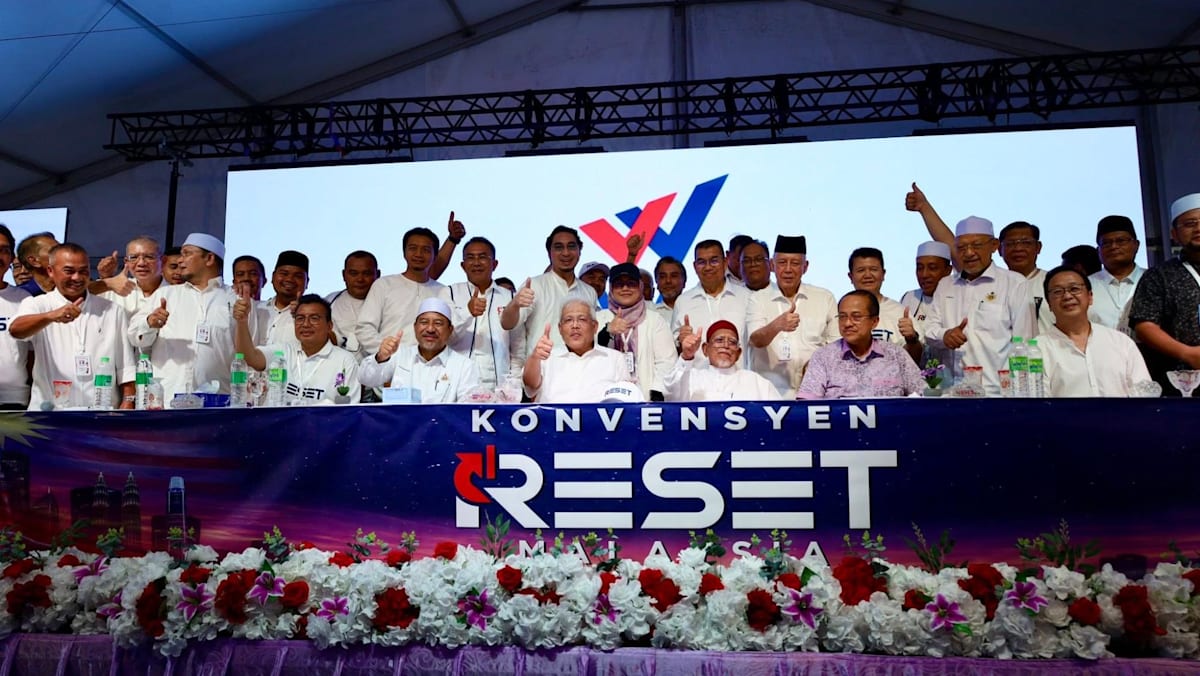
Analysts whom CNA spoke to said that for now, Wawasan would not be able to shake off the label of being a Bersatu replacement.
This is especially so given that its ranks are heavily populated by former Bersatu figures and its survival within PN relies closely on political alignment with PAS.
They also said that Wawasan would have to settle into the role of a junior partner in PN for now and prove itself in the upcoming Negeri Sembilan polls in order to give itself a fighting chance in the long term.
Azmi Hassan, a senior fellow at the Nusantara Academy for Strategic Research, said that the party must, for a start, establish its viability by outperforming Bersatu in vote share.
“If Wawasan can do that, it would show that they are much more accepted than Bersatu and can be accepted at a national level. That is their biggest challenge in the short term,” he said.
He also cast doubt on the fresh politics they espoused, questioning the appointment of certain figures into Wawasan, such as former minister Rais Yatim, 84, who is the party’s chairman.
“Unlike MUDA for example, you can see that their candidates and leadership structure is made up of those from the younger generation, but I don’t see this in Wawasan. It seems like the same old same old,” he said, referring to the youth-centric Malaysian United Democratic Alliance party.
Similarly, political scientist Syaza Shukri of the International Islamic University Malaysia (IIUM) told CNA that Wawasan’s formation felt like an attempt by certain leaders to carve out a new political space for themselves.
“It claims to lead the ‘Reset’ movement but like most people have said, it feels more like a reset for Hamzah and his supporters than a reset for the country,” she said.
Syaza added that while Wawasan may attempt to project a “Malaysian” image, it still fundamentally felt like another Malay-based party due to the political history of its leaders.
“Maybe they can change and the current leadership is ethnically mixed but I feel they need to prove themselves, walk the talk basically,” she said, adding that the party’s best chance of success was if it could stay relevant within PN.
Socio-political analyst Awang Azman Awang Pawi of Universiti Malaya noted that Wawasan is currently viewed as latching onto PAS, which acts as the dominant coalition partner in PN.
Awang Azman also believes it remains uncertain whether PAS will allow another party, as Bersatu did previously, to lead and control the coalition’s narrative.
“PAS is also growing in strength and confidence, meaning Wawasan would not be seen as a leader, but rather as a means to complement PN,” he said.
“They can try to build a new narrative, but they will have to prove themselves,” he added.
Read the full article here