



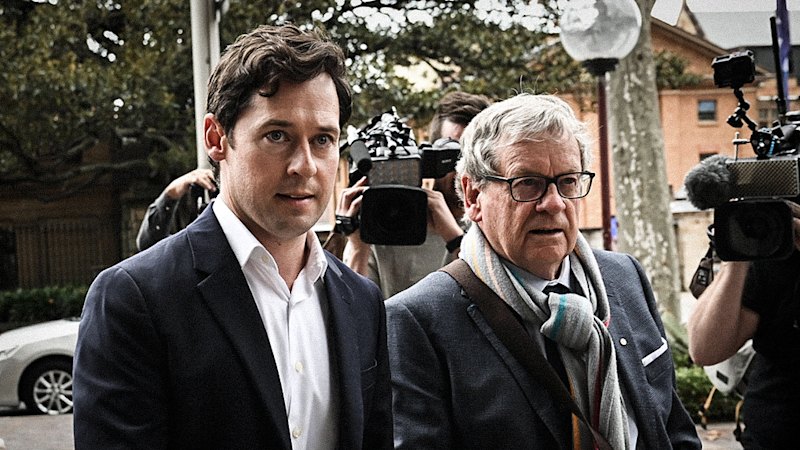
When Chris Masters was rattling through Afghanistan in 2008 in the back of a vehicle with special forces soldiers of Australia, notebook in hand, he had no idea the contacts he was making would lead him to the most consequential story he’d ever covered.
A decade later, his journalistic collaborator, Nick McKenzie, landed in Kabul. By then, both knew their reporting could rattle Australian society and forever change the defence establishment.
McKenzie was in the war-torn country on the trail of Ben Roberts-Smith.
This physical giant – more than two metres tall – was Australia’s uber-soldier. With a bulging chest full of medals, he was the feature hero of the Australian War Memorial’s Afghanistan gallery. He was father of the year and allied in business to one of Australia’s richest men.
In 2018, Masters and McKenzie were about to allege he was also a killer multiple times over – a war criminal.
“When I discussed with a senior colleague the prospect of me challenging the reputation of this eminent Victoria Cross recipient, he told me it would be like shooting Bambi,” Masters later wrote in his book, Flawed Hero.
It was, wrote McKenzie in his book, Crossing the Line, “the most difficult undertaking of my 20-year career”.
Masters went to Afghanistan as Australia’s first reporter embedded with the special forces, wanting to tell how the nation’s best-trained soldiers were contributing to what was becoming this country’s longest, and ultimately most fruitless, war.
His stories described stunningly brave and conscientious acts of soldiery performed by the Special Air Service Regiment and the Commandos.
Even as he told that story, though, Masters heard growing whispers that a small number of elite soldiers was operating without regard to the rules of armed conflict.
In Kabul 10 years later, McKenzie saw the human impact.
He interviewed Bibi Dhorko, the grieving wife of Afghan civilian Ali Jan – a man allegedly kicked off a cliff by Ben Roberts-Smith, then summarily executed on the same soldier’s orders.
She wanted just one thing from Australia – justice for the brutal killing of her husband.
For nine years, this was also the mission McKenzie and Masters took on.
For years, all that was known about Ben Roberts-Smith was his legend. In his six rotations in Afghanistan, he’d become the recipient of the Victoria Cross, Australia’s highest military honour, as well as the Medal for Gallantry and a Commendation for Distinguished Service.
On his return, Roberts-Smith was employed by a man who idolised him perhaps more than most – the mogul in charge of the Seven Network, the chairman of the Australian War Memorial, and a giant of Western Australia, Kerry Stokes. Stokes anointed Roberts-Smith as the executive in charge of his TV network’s Queensland division.
As the former soldier’s reputation grew, the rumours Masters had heard in Afghanistan kept niggling. So, in April 2017 he arranged to meet Roberts-Smith in Canberra to ask some questions.
The retired soldier bit back. “For the first hour he reasoned, for the second hour he ranted,” Masters says. Roberts-Smith called his detractors “cowards,” “incompetent,” “toxic”.
Masters, famed for his work bringing down the Queensland government in the 1980s, felt his journalistic instincts bristle. So later that year, Masters and his former protege McKenzie teamed up and got to work.
As they crisscrossed Australia to test the stories they’d heard, a starkly different picture of Roberts-Smith emerged. In interviews and catch-ups with serving and former SAS soldiers in Perth, Brisbane, Canberra and Melbourne, the two reporters found many who had served alongside the big man. Some were highly decorated themselves.
In even speaking, these men risked losing their jobs or facing criminal charges. But some were burning to share, mostly under a cloak of anonymity, what they claimed was an untold story that had eaten away at their consciences.
Easing some of these soldiers’ minds was their long-standing relationship with Masters, forged during his trips 15 years earlier to Afghanistan. The younger McKenzie earned their trust with the intensity of his commitment and his belief in the importance of what they were doing.
As word of their investigation reached Roberts-Smith – as well as that of a parallel probe by the Inspector-General of the Australian Defence Force – he hit back. He called some detractors to meetings to find out what they’d said. He sent threatening letters and orchestrated a police raid on a former soldier based on false evidence.
He put the word out – those speaking against him were small men jealous of his success.
McKenzie and Masters were finding something quite different. They saw soldiers motivated by a desire to tell the truth to the public they’d served.
Some pitied Roberts-Smith. And they believed Australia had been spun a monumental lie about the man who’d become the face of the military’s contribution to what seemed like a never-ending war.
The stories from SAS soldiers built a foundation for the two reporters, but they needed corroboration. The first breakthrough came in early 2018 when the pair uncovered accounts from SAS support staff living overseas.
The second breakthrough was when this masthead’s long-time Afghanistan fixer-journalist risked his life to travel to Darwan, deep in Taliban territory, to speak to key witnesses. They were 11,000 kilometres away from Australia, but they confirmed every crucial element of the cliff-kick story.

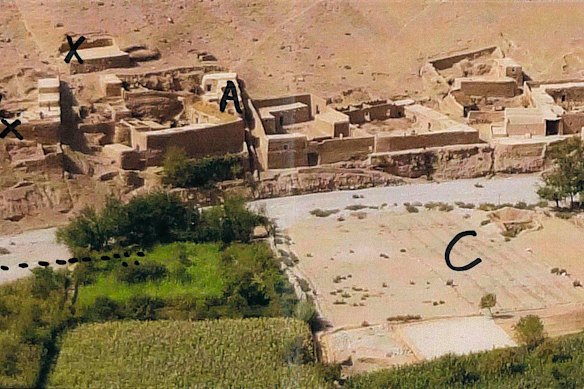
Defence Force records sourced by the journalists also helped them understand how the official narrative was so at odds with the accounts emerging from the witnesses.
By mid-2018, the two reporters, along with Canberra-based journalist David Wroe, had enough to publish. Their most consequential early account pointed to two key alleged war crimes by Roberts-Smith.
The first was that Roberts-Smith had kicked a man off a cliff in Darwan in September 2012 and ordered his execution.
The second was that he had executed a man with a prosthetic leg on Easter Sunday, 2009 during The Battle of Kakarak. On the same mission, witnesses said Roberts-Smith had ordered a junior soldier to execute a second prisoner in a ritual allegedly known as a “blooding”.
What could have been the end of this journalism investigation was only the start. Roberts-Smith sued three newspapers – The Age, The Sydney Morning Herald and The Canberra Times – and the journalists for defamation. His decision dragged out and ultimately deepened the story.
Rather than submitting to the weight of Roberts-Smith’s legal team, funded by Stokes and involving three top silks, McKenzie and Masters resolved to keep reporting.
In the background, the now national anti-corruption commissioner, Paul Brereton – then the assistant defence inspector-general and a senior judge – was also digging. His inquiry heard similar allegations: that people killed in Afghanistan were unarmed, sometimes handcuffed, and soldiers had covered up crimes by putting incriminating objects, known as “throw-downs”, near their bodies.
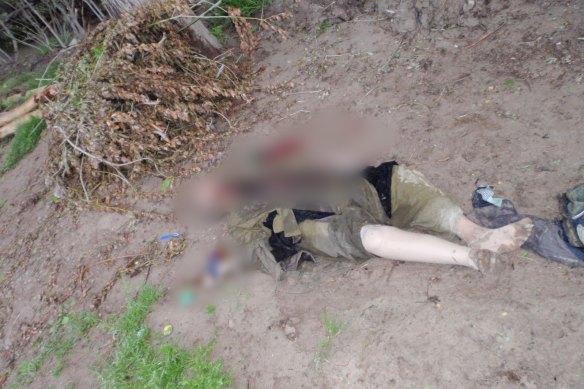
It later became clear that, following McKenzie and Masters’ reporting, Roberts-Smith was also becoming a major Brereton inquiry target.
As both investigations continued, McKenzie and Masters soon focused on a new thread – Roberts-Smith’s attempts to discredit them and undermine or threaten witnesses who might be helping the defamation defence, or the Brereton inquiry, or both.
Several tape recordings of Roberts-Smith, made surreptitiously by people he trusted, were leaked to McKenzie and Masters. In one, Roberts-Smith described his desire to bring them down.
“Now it is personal. Now I’m going to do everything I can to f—ing destroy them, mate. Like everyone – and I’ll keep going – all those journalists. And that’s my sole f—-ing mission in life.”
Roberts-Smith also praised the flow of cash from Stokes.
“There’s no f—ing way I’d be able to keep paying what I’m paying for until Kerry got into it … he’s prepared to run his bank down to do it … Bottom line, I’d be f—ed without him.”
Fighting for their own careers and reputations, Masters and McKenzie sourced a cache of USBs that Roberts-Smith had buried in his backyard in a pink lunchbox to hide them from the defamation proceeding.
On the USBs was crucial evidence, including photographs of possible crime scenes, as well as images that were, simply, shocking.
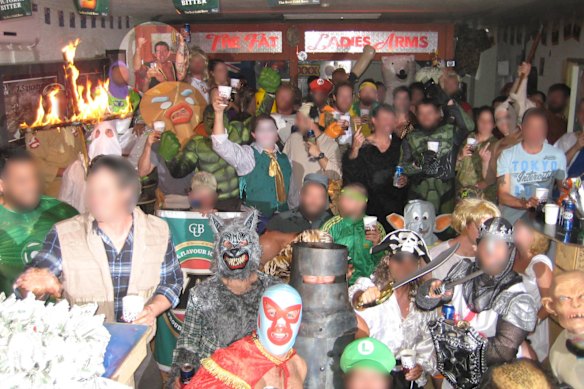
There was Roberts-Smith cheering on as men swigged beer from the prosthetic leg belonging to the man he had machine-gunned to death. Here was one of Roberts-Smith’s closest soldier allies dressed as a member of the Ku Klux Klan, holding a noose and a burning cross.
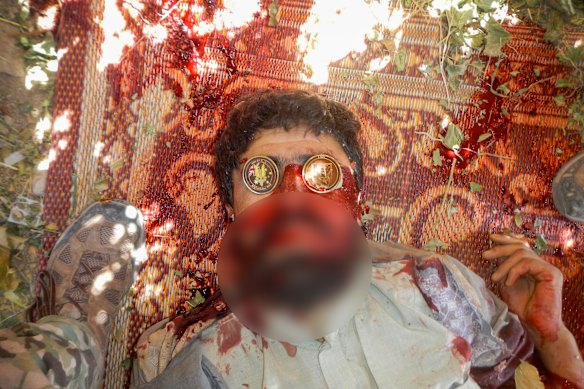
There were pictures of an allegedly executed Afghan man with souvenir coins placed on his eyes – an act described by former Defence Force chief and Vietnam veteran, Chris Barrie, as “barbaric trophy hunting”.
McKenzie and Masters received repeated death threats from veterans and the wider public, while Roberts-Smith was championed by some media, particularly in the Stokes stable and among the Murdoch press.
When the court case began, the reporters, the Afghan fixer and their lawyers from MinterEllison, arranged for Afghan villagers to testify about what they saw at Darwan – their testimony was taken via video-link as the Taliban closed in on Kabul in 2021.
The reporters found the numbers of burner phones Roberts-Smith was using to communicate to his alleged co-accused, whom he had summoned to court in the defamation case to back his version of events. The story they stuck to was that every alleged execution of a detainee or civilian was in fact, an act carried out in the heat of war involving a dangerous and armed combatant.
McKenzie and Masters had both help – and luck. COVID lockdowns delayed the case, allowing them to find and convince more witnesses to give evidence.
It was also clear that the judge – the inscrutable Justice Anthony Besanko – was firmly focused on finding the facts.
His decision to allow the media defendants access to sensitive documents from the Brereton inquiry revealed more potential witnesses, and more allegations. These backed the journalists’ contention that Roberts-Smith had allegedly committed multiple murders.
The reporting never stopped. Over years, dozens more stories appeared.
McKenzie and Masters relayed key developments and key setbacks. When an Australian Federal Police criminal investigation collapsed, they reported it.
Stokes was furious, famously calling the pair “scumbag journalists” at his 2022 annual general meeting.
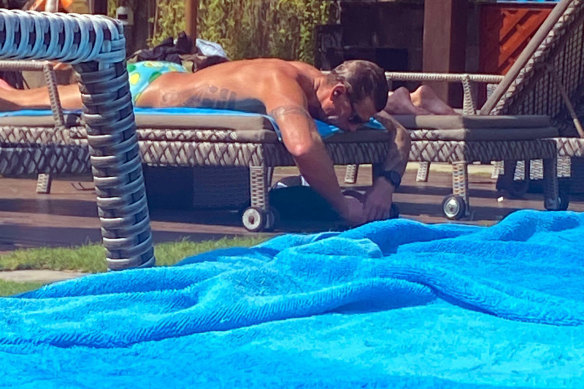
On the day the defamation judgment was handed down the following year, McKenzie and Masters were sitting in court – unlike Roberts-Smith, who was sunning himself in Bali.
The verdict? On the key points – including the cliff kick and allegations of the killing of two men (including one with a prosthetic leg) at a place known as Whiskey 108 – Besanko found the newspapers had “established the substantial truth of the relevant imputations” to the civil standard of proof.
The pair embraced and held a press conference outside court. McKenzie paid tribute to the Afghan witnesses, and called it “a day of justice for those brave men of the SAS who stood up and told the truth about who Ben Roberts-Smith is – a war criminal, a bully and a liar”.
Of those soldiers, Masters said: “I’m proud that they’re out there, and that, as journalists, we can meet Australian people who are able to tell a difficult truth and stand up to it.”
And Stokes? He said: “The judgment does not accord with the man I know.”
Almost three years later, McKenzie is still on the case. On Tuesday morning, he was in Sydney hoping to catch a glimpse of the moment Roberts-Smith – 17 years after his first alleged murder – was arrested to face criminal charges.
Perhaps now, finally, Bibi Dhorko will get the justice she craves.
Start the day with a summary of the day’s most important and interesting stories, analysis and insights. Sign up for our Morning Edition newsletter.
Read the full article here


