



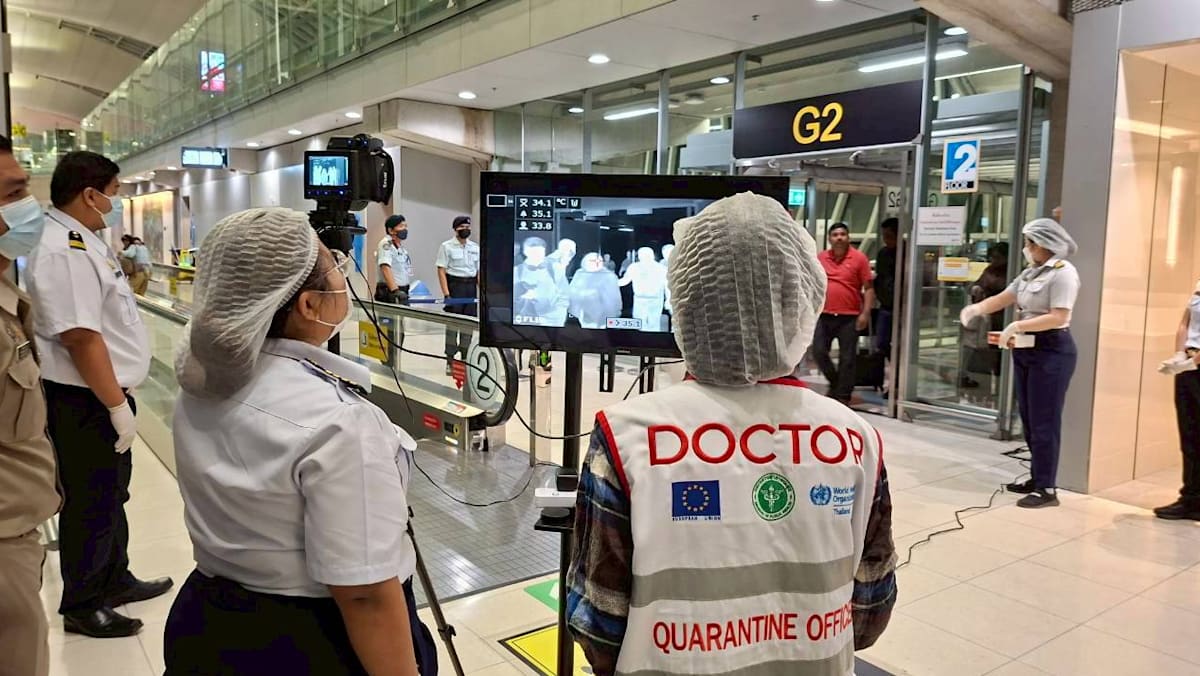
SINGAPORE: Authorities in parts of Asia have stepped up airport screening measures for the Nipah virus after cases emerged in India’s West Bengal state.
India confirmed two cases, disputing media reports of “speculative and incorrect” figures stating a higher caseload.
WHAT IS NIPAH VIRUS?
Nipah is a zoonotic virus, meaning it can be spread from animals to humans. It can also be transmitted through contaminated food or directly from person to person.
Fruit bats are natural hosts for the Nipah virus, according to the World Health Organization (WHO).
The Nipah virus has an estimated fatality rate of 40 to 75 per cent, and can cause illnesses ranging from respiratory distress to brain inflammation.
Symptoms usually begin with a sudden flu-like illness, headache or fever. People may experience sore throat, muscle ache, vomiting, dizziness and drowsiness.
Pneumonia and other respiratory problems may also develop.
The most serious complication is encephalitis (inflammation of the brain) or meningitis, which typically develops three to 21 days after the initial illness begins, according to the UK Health Security Agency.
“This is the hallmark of Nipah infection and is associated with a very high mortality rate,” the agency said, adding that some survivors may be left with lasting neurological difficulties such as persistent seizures.
WHERE IS IT FOUND?
The first human cases of the Nipah virus were identified between September 1998 and June 1999 in Malaysia and Singapore.
The virus initially struck pig farms in Malaysia before infecting about 180 people in the country. In Singapore, 11 cases were reported among abattoir workers who had handled infected pigs from Malaysia.
No new cases have been reported in either country since then.
Further outbreaks of Nipah virus infection have occurred mainly in western Bangladesh, as well as in India’s Kerala and West Bengal.
IS IT AS TRANSMISSIBLE AS COVID-19?
The risk of Nipah virus transmission is much lower than that of COVID-19, according to Dr Leong Hoe Nam, an infectious disease specialist at Mount Elizabeth Novena Hospital.
To illustrate his point, Dr Leong said that the basic reproduction number for the Nipah virus is 0.5, meaning that for every Nipah virus case, it spreads to half a person.
The figure is 15 for measles and chicken pox.
“COVID-19 and influenza are about 1.6 to 2, so the risk of transmission (for Nipah) is much lower,” he said.
Dr Leong added that someone needs to be physically close to an infected person to get the Nipah virus, noting that people in the same household and healthcare workers would be at risk.
There is currently no proven treatment or vaccine on the market to fight the Nipah virus. Treatment is limited to intensive supportive care for those with severe infections.
HOW ARE COUNTRIES DEALING WITH IT?
Several countries have stepped up measures following the outbreak in India.
Thailand began screening passengers on Jan 25 at three airports that receive direct flights from West Bengal – Suvarnabhumi and Don Mueang in Bangkok, and Phuket.
A travel advisory was also issued to Thais planning trips to India.
Cambodia and Nepal have also started screening travellers arriving from India.
Jakarta’s Soekarno-Hatta International Airport has stepped up supervision of incoming international travellers, Antara news agency reported.
Malaysia’s Health Minister Dzulkefly Ahmad said on Tuesday that the country’s health security system is “robust, tested and ready”.
“We are scaling our response proportionately to keep you safe,” he added.
Dr Leong told CNA that the spread of the virus across borders is “very slim”, adding that the Singapore government has the ability to contain any potential spread.
“Simply isolate the infected individual, contact trace all those who came in contact, isolate them, and the risk of infection and spread stops,” he said.
Indian authorities said they had ensured “timely containment” of the deadly Nipah virus after two cases were confirmed in West Bengal state.
“Enhanced surveillance, laboratory testing, and field investigations were undertaken … which ensured timely containment of the cases,” India’s health ministry said in a statement late Tuesday.
“The situation is under constant monitoring, and all necessary public health measures are in place”, it added, saying 196 contacts linked to the cases had been traced, and all were negative.
Read the full article here


