



Queensland universities have been named some of the country’s most improved institutions in a widely regarded global ranking, while the nation’s tertiary sector in general received a terse warning.
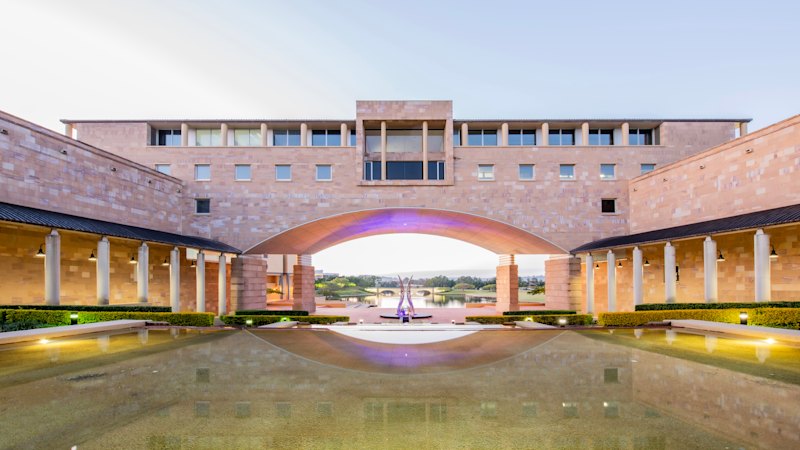
The Gold Coast’s private Bond University climbed 73 positions in the QS World University Rankings 2027, claiming the title of Australia’s most improved.
The university credited the jump, in part, to high teacher-to-student ratios, a “vibrant” campus environment, and the close-knit community of its roughly 6200-strong student body.
“We continue to invest in areas where student interest and workforce needs are strongest, including business, health, law, digital transformation and artificial intelligence,” a spokesperson said.
Education analysts QS Quacquarelli Symonds measure nine key factors spanning research impact, facilities and employment conditions, through to learning outcomes.
More than 1500 institutions are ranked worldwide.
Following Bond, CQ University jumped 63 places from the 2026 rankings, while Griffith rose 38 places.
Across Australia, 11 institutions slumped in their rankings, including Queensland University of Technology, which fell 14 places globally and one position nationally.
The inner-Brisbane university’s Australian rank was eclipsed by that of Griffith, which secured a spot in the nation’s top 15 highest-ranked universities for the first time on the QS list.
Vice Chancellor Professor Carolyn Evans said the university’s results reflected the “real-world impact of a Griffith education”, as well as academic outputs.
“Griffith’s research has been on a strong upward trajectory, which is also reflected in our improved global
rankings,” she said.
The University of Queensland ranked the highest in the state – 42nd globally and sixth within Australia.
Nationally, the University of Melbourne was ousted from its top spot by the University of NSW, with QS cautioning the Australian sector against complacency.
QS chief executive officer Jessica Turner said despite looming threats – including AI – 21 Australian institutions improved their global rankings for 2027, illustrating “real confidence on the world stage”.
“The rankings also highlight areas where further progress is needed,” she said.
“Compared with some of its global peers, Australia performs less strongly on teaching capacity and graduate outcomes.”
Turner said the sector needed to keep investing in student experience, skills, and employability.
Concerns about the cost of student visas and a drop in acceptance rates for overseas students could undermine the sector’s global success, she added.
“At a time when international education is more competitive than ever, maintaining this momentum will also depend on ensuring Australia remains an accessible and welcoming destination for international students and researchers.
“Their contribution extends far beyond campus life, strengthening research, innovation, economic growth and Australia’s global connections.”
Start the day with a summary of the day’s most important and interesting stories, analysis and insights. Sign up for our Morning Edition newsletter.
From our partners
Read the full article here


