



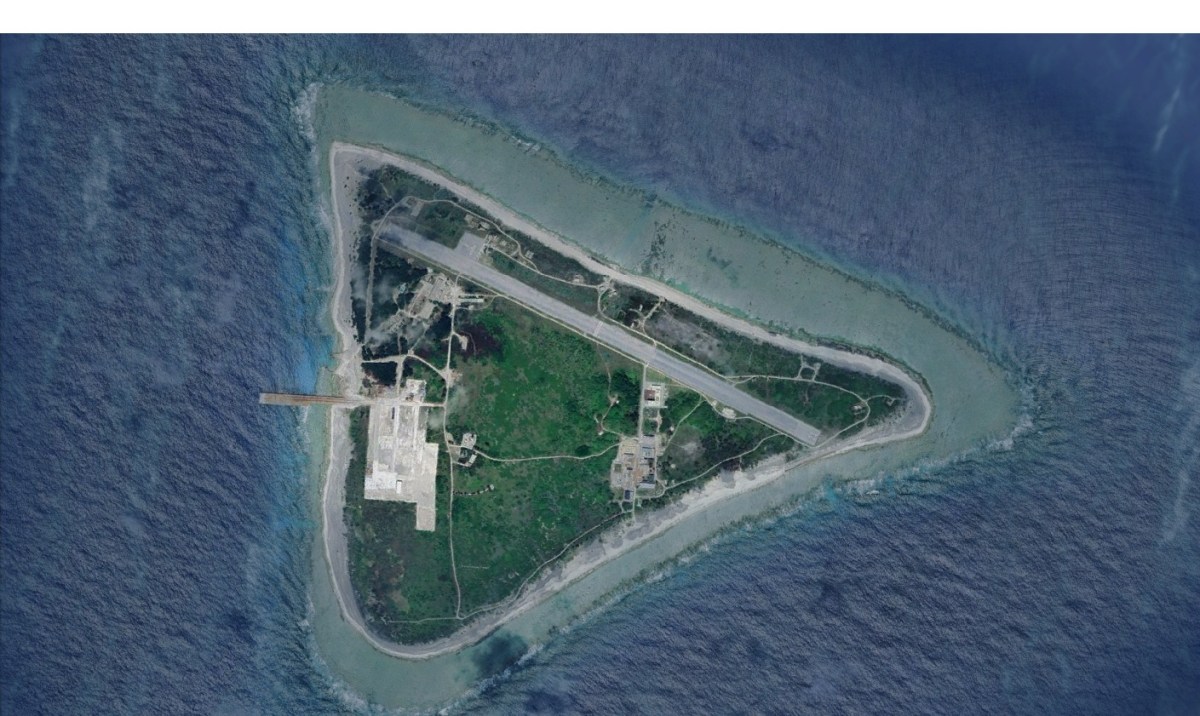
Japan is preparing to test mud containing rare earth elements from the seabed near the remote island of Minamitorishima in Tokyo’s broader push to reduce its reliance on China.
Newsweek reached out to the office of Japanese Prime Minister Sanae Takaichi by email with a request for comment outside of regular office hours.
Why It Matters
Rare earths are essential for the manufacture of a wide range of modern applications, including electric vehicle (EV) batteries, microchips, fighter jets, and advanced radar systems. China accounts for roughly two-thirds of global rare-earth output and demonstrated its willingness to weaponize this dominance by curbing exports earlier this year in retaliation for President Donald Trump’s tariff hikes that he placed on the country.
The United States and its Pacific allies—including Japan and Australia—have committed to increasing rare earth production, with Trump securing several new agreements this year. However, progress is expected to be gradual, and it may be years before these efforts significantly alter global supply chains.
What To Know
The mining operation is set to begin in February near Minamitorishima, an uninhabited atoll 1,180 miles from Tokyo and Japan’s easternmost island.
The operation, scheduled from January 11 to February 14, will test deep-sea mining equipment to determine whether it can extract 350 metric tons of rare-earth-rich mud per day from depths of around 6,000 meters (nearly 20,000 feet), local media cited Shoichi Ishii, director of the Japanese Cabinet’s platform for innovative maritime developments, as saying during a press conference last Tuesday.
Seawater will be separated from the mud on Minamitorishima before it is sent to the Japanese mainland for separation and refining. Environmental impact assessments will be conducted continuously on the seabed and onboard the mining vessel.
This will be the world’s first attempt to test the feasibility of lifting mud from the deep seabed specifically for separating and refining rare earth elements. Ishii said the Japanese government has spent roughly 40 billion yen ($256 million) on the initiative since 2018.
Ishii said Chinese navy ships were observed entering waters adjacent to the island in June while a Japanese research ship was carrying out surveys. “We feel a strong sense of crisis that such intimidating actions were taken, despite our activities being limited to seabed resource surveys within our EEZ [exclusive economic zone],” he said.
What People Are Saying
Shoichi Ishii, director of the Japanese Cabinet’s platform for innovative maritime developments, told the press on Tuesday: “One of our missions is to build a supply chain for domestically produced rare earths to ensure a stable supply of minerals essential to industry.”
Japanese Prime Minister Sanae Takaichi said during a December 17 press conference: “Bolstering the resilience of our supply chains, including for rare earths, is a matter of great urgency.”
What Happens Next
If the trial proves successful, a full-scale mining operation could commence as early as February 2027.
In late October, an agreement was reached by Takaichi and Trump during the latter’s visit to Japan. Under the framework, the allies pledged cooperation on extraction, stockpiling, and investment in critical mineral supply chains, though the agreement lacked specifics on financial commitments.
Read the full article here


