



SEOUL: The top policy adviser to South Korea’s president has resigned, officials said on Tuesday (Sep 1), following criticism over highly speculative investment products tied to the nation’s AI chipmakers and launched under his leadership.
Kim Yong-beom’s resignation came a day after President Lee Jae Myung’s administration announced a sweeping Cabinet reshuffle, including new finance and defence ministers, in an apparent bid to shore up its approval ratings.
Kim submitted his resignation on Monday, and Lee accepted it, a presidential spokesperson told a press briefing.
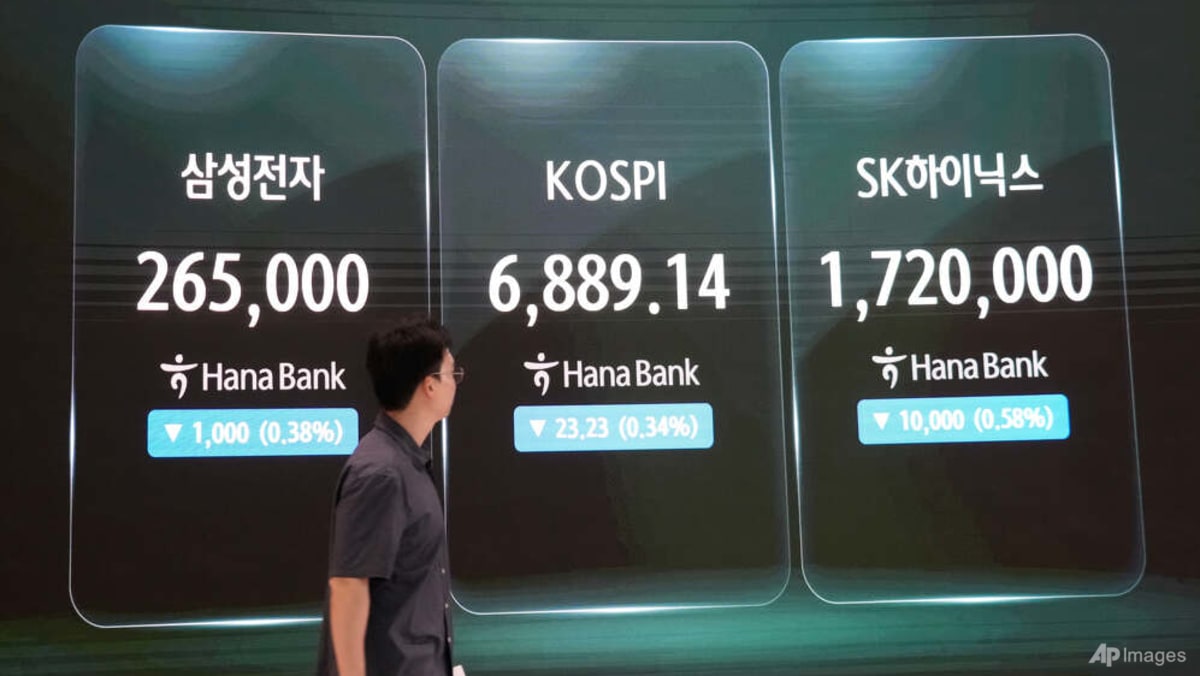
South Korea’s main bourse in late May launched single-stock leveraged exchange-traded funds (ETFs) tracking Samsung Electronics and SK Hynix – both major suppliers of advanced memory chips for the booming AI industry.
Introduced under Kim’s leadership, the products amplify a stock’s daily gains – and losses – twofold, drawing criticism for exposing retail investors to extreme volatility and market hype.
Some analysts said SK Hynix’s sharp decline in July was likely driven by factors including the sell-off linked to these ETFs, rather than a deterioration in fundamentals.
Opposition politicians have rebuked the government and the presidential office for introducing the products.
Regulators have expressed regret in greenlighting the funds and the government has since restricted their access to cash buyers with a minimum 30 million won (nearly US$22,000) deposit.
Lee’s approval rating also fell below 40 per cent for the first time since he took office in June 2025 this week, hitting 38.9 per cent.
Extreme volatility in financial markets and public concern over Lee’s real estate policies are seen as major factors behind his approval decline.
South Korea on Tuesday unveiled plans for a 162.3 trillion won “Future Fund” next year, aimed at channelling record tax revenues from the chip boom into long-term growth.
The focus is in four areas: youth, growth industries, regional economies and education.
Kim drew controversy in May after proposing that excess tax revenue from the AI boom – naming it a “citizen dividend” – be used to support startups and young people, among others, with critics warning against using temporary windfall revenues to fund recurring spending.
Kim later clarified that he was proposing to distribute surplus tax revenue, not draw on corporate profits.
The budget ministry said on Tuesday the Future Fund was different, as it would draw on tax revenues expected to continue, rather than an unexpected, short-term windfall above government forecasts.
Read the full article here


