



When Americans think of destination travel, it generally involves cities like New York, Los Angeles or Las Vegas. Or natural wonders like the Grand Canyon or beach destinations like Florida’s Emerald Coast or Hawaii.
But one entrepreneur managed to do the impossible, turning the dreaded gas station stop into destination travel. Buc-ee’s and its founder turned stopping from necessity to good, old-fashioned American fun.
Buc-ee’s is a Texas phenomenon because only a Texan could have dreamed up the idea of supersizing the gas station/convenience stores experience. The industry standard at the time of the opening of the first Buc-ee’s store in 1982 was 2,400 square feet. Buc-ee’s travel centers today are closer to 80,000 square feet. But there’s more to Buc-ee’s than sheer size.
In traditional gas stations, hot food generally sits under heat lamps for God knows how long serving food that comes from God knows where. At Buc-ee’s, there’s a huge center island where a small army prepares fresh barbeque and brisket sandwiches. In the morning, those same stations produce fresh breakfast tacos. And nearby—always it seems—they’re roasting fresh nuts, serving fresh fudge, and busily making beaver nuggets—a delight that combines the best of potato chips and french fries.
And then there are the walls of beef jerky. More than a dozen flavors in all, including their top seller—Bohemian Garlic. And there’s the deli and so much more—making Buc-ee’s a classic Texas food emporium.
But there’s more to Buc-ee’s than size and food. The story of who started Buc-ee’s—and how—may be the most remarkable part of this all-American entrepreneurship story.
Buc-ee’s started small, and came to be supersized at a snail’s pace.
“The very first Buc-ee’s started in 1982 and for the first 20 years of the store’s history, they were almost entirely in Brazoria County in southeast Texas, which is where Arch “Beaver” Aplin, the founder of Buc-ee’s, is from,” Eric Benson, who wrote a beautiful account of Aplin and Buc-ee’s in Texas Monthly, told Our American Stories.
Aplin’s family story and Buc-ee’s are inseparable.
“My dad was an entrepreneur who started as a schoolteacher and ended up building houses and doing developments,” Aplin said. “I grew up in a family that was wired that way.”
He graduated with a construction science degree from Texas A&M, hoping to build tall buildings in big cities. But a bad economy and bad career bet led Aplin to adapt his dreams.
“I got this hair-brained idea,” Aplin said. “I’m going to build a convenience store. My grandpa had a small-town general store in a little town in Louisiana. And I remember being a kid going in that little general store and wishing I could run the register.”
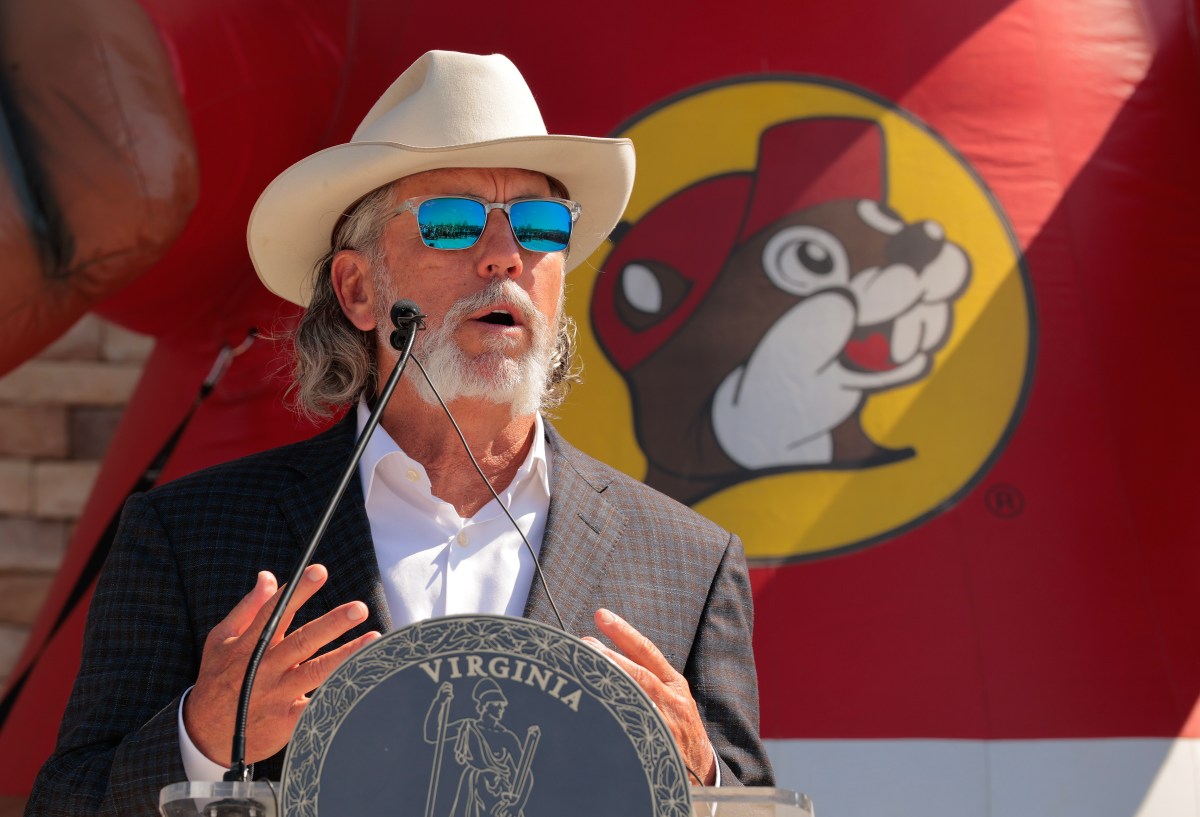
No fancy Madison Avenue advertising came up with the name of the enterprise, or the logo.
“I had a Labrador retriever named Buck and my mom nicknamed me Beaver when I was born,” Aplin explained. “So I named the store Buc-ee’s and made my logo a Beaver. And that was my business plan.”
Aplin didn’t have an MBA, let alone much experience in the gas station business. Like so many successful entrepreneurs, he learned by doing, adapting and innovating.
“The first store I built was 3,000 square feet and had two gas pumps,” Aplin said. “At the time, 7-Elevens, the leader in the industry, was 2,400 feet. So it was a little bigger, a little nicer, but very much the same business model.”
Over the next 21 years, Aplin—along with partner Don Wasik—would tweak and re-tweak designs until they were finally ready to build their first Buc-ee’s travel center. Soon, the travel centers were popping up all over major thoroughfares between Texas’ biggest cities. And soon after, Buc-ee’s set its sights on conquering the southeast. Buc-ee’s travel centers are now beginning to pop up in the Midwest, too—54 travel centers and growing, staffed by 12,000-plus employees.
But Buc-ee’s growth was not confined to geography. The company did what few companies manage, weaving themselves into the hearts and minds of an army of loyal fans. Fans like at Applebee’s, Costco, Ralph Lauren and Traders Joe’s.
For Aplin, the success of Buc-ee’s was predicated on two basic ideas: “At Buc-ee’s, let’s be clean and let’s be friendly.”
Simple ideas, yes, but Buc-ee’s is famous for taking those simple ideas and executing them. Their sparkling clean restrooms are no accident, setting a standard of excellence rarely achieved in any national retail brand.
“Who hasn’t been to a gas station convenience store bathroom where the door kind of doesn’t close and the toilet is unflushed,” Benson said. “Bucky’s offers a promise that you’re not going to face that; that you’re going to get a gas station Disney World when you stop.”
The customer experience is no accident, either.
“They think much like Disney World does with employees, too,” Benson continued. “There’s no colored hair, no visible tattoos, you have to wear nice shoes, you can’t look at your cellphone, you have to be standing the whole time. So there’s a kind of brand representation and professionalism that’s drummed into you. And if you can’t do it or you don’t want to, you get drummed out pretty quickly.”
Aplin’s high standards are accompanied by a philosophy that encourages upward mobility within the Buc-ee’s ranks.
“A lot of the people who run Buc-ee’s stores come up through Buc-ee’s stores,” Benson said. “They’re jobs with real growth potential. They’re not dead-end jobs, and that’s unique.”
And then there’s the best-in-class compensation package, with starting salaries more than double the Texas minimum hourly wage, and general manager positions that pay more than $225,000 a year. And that’s not counting the generous health insurance and a 401(k), complete with a 6 percent company match.
Aplin’s managerial talent didn’t spring from a stint at Harvard Business School but from practical wisdom—and his Christian worldview.
“He’s a down-home Texas guy,” Benson noted. “Christianity is definitely part of his life and maintaining humility is important to him.”
But there’s more to the story of Buc-ee’s success. The marketing is masterful, exemplified by the brilliant Buc-ee’s signs drivers encounter on long stretches of highway travel. A few fan favorites: “Restrooms That Make Mom Smile,” “My the Fudge Be With You,” “Where the Fun Never Sets,” “Risk it For the Brisket,” “My Overbite is Sexy” and the best one—“Only 262 Miles to Buc-ee’s: You Can Hold It!“ Many of these signs originated with Buc-ee’s employees, with Aplin no doubt playing a part.
And then there’s the sheer size of everything else that matters in a well-planned customer experience.
“I’ve never seen a Buc-ee’s parking lot full where you can’t find a spot,” Benson said with a sense of wonder. “And there’s almost always a gas pump ready for you, and I think as a consumer, it probably makes you feel a little special, like you’re wanted there.”
Even the parking spaces are bigger at Buc-ee’s. They were designed to comfortably fit Ford F-150s and the American appetite for big trucks.
“You’re never going to go into a Buc-ee’s parking spot and have to wedge yourself out of the door because someone parks too close to you,” Benson noted.
The most important customer experience decision Aplin made with his travel centers—and what sets them apart from other travel centers—is one no one sees: Buc-ee’s chose not to allow 18-wheelers. The ideal customer for Buc-ee’s was the family of four or five, not long-haulers looking for a hot shower and a meal.
But the story doesn’t end there. Just a few years ago, Aplin donated $60 million to create a new Department of Hospitality, Hotel Management and Tourism at Texas A&M to be completed in 2028, bearing Aplin’s last name.
It’s a remarkable story, the story of how Buc-ee’s came to be. Starting from scratch, Aplin built the Buc-ee’s brand on instinct, excellence, common sense and uncommon decency, turning the dreaded gas station stop into good, old-fashioned American fun.
And through his generosity, his alma mater will teaching young people how to pursue their own American dreams for decades to come.
Read the full article here


