



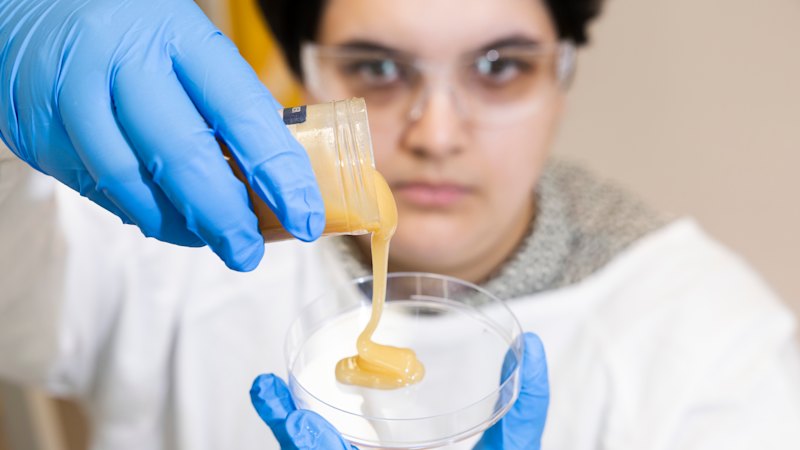
Like the opening scenes of a horror movie, last month scientists described the discovery of ancient bacteria entombed within a Romanian ice cave that was resistant to 10 modern antibiotics.
The 5000-year-old bacteria thawing from the ice could theoretically pass their drug-resistant genes to infectious microbes, highlighting yet another way microbial evolution can render once-lifesaving drugs useless.
But as efforts to craft new antibiotics flail, and many pharmaceutical companies give up all together, a Sydney researcher has turned to a natural yet potent elixir in the fight against antimicrobial resistance: honey.
“The current arsenal of antimicrobial drugs that we have is not going to be very effective for resistant bacteria much longer,” Dr Kenya Fernandes, a microbiologist at the University of Sydney, said. Superbugs kill an estimated 100 Australians a week and about 5 million people globally each year.
“Honey is a really unique solution because it’s a natural product. It’s been honed by millions of years of evolution, and it’s really, really complex in a way that’s hard for us to replicate.”
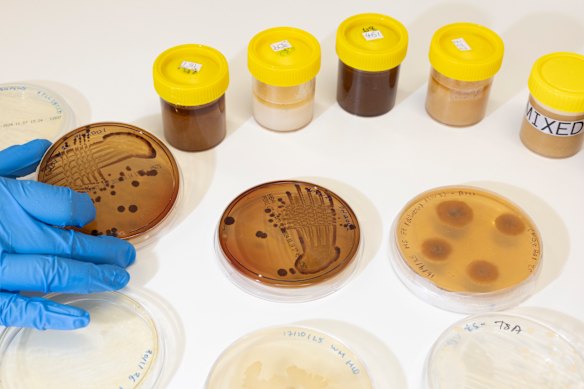
For a new study published in Microbiology Open, Fernandes took 56 Australian honeys from 35 apiaries and put it to work in Petri dishes festering with E.Coli and golden staph (Staphylococcus aureus).
Three-quarters of the different honeys killed both bugs even when diluted to 10 per cent.
The crucial finding was that bees which fed on a diverse range of flowers made the most antimicrobial honey. The study, in some ways, draws a direct line between the biodiversity of the Australian bush and potential human health benefits.


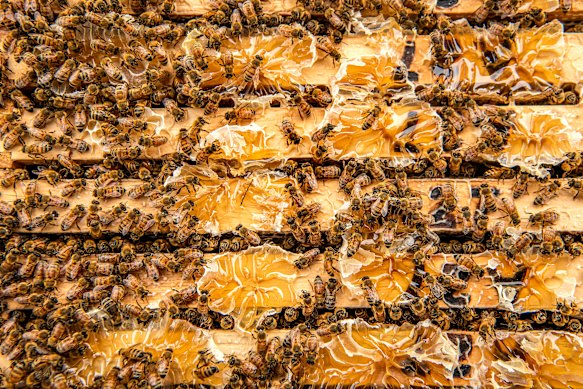
“It actually turned out that it’s not this or that one plant that’s important in a medicinal honey sense. It is just having that biodiverse native forest available,” Fernandes said.
The honeys in Fernandes’ study were made from the nectar of a range of eucalyptus trees such as jarrahs and ironbarks, and other natives including marri bloodwoods and jellybush, a type of tea tree.
Honey evolved as a crucial carbohydrate source to get bees through cold winters.
“They need to generate heat to stay alive. And they do that by taking honey, rehydrating it, consuming it, and then that gives them energy to vibrate flight muscles, which generate heat,” honey bee technical specialist for the NSW Department of Primary Industries, Liz Frost, said.
But a hive’s honey is essentially a delicious, ultrarich lump of sugar sitting out in the open. The honey must withstand attack from ravenous bugs and microbes; otherwise, bacteria quickly would spoil the bees’ smorgasbord.
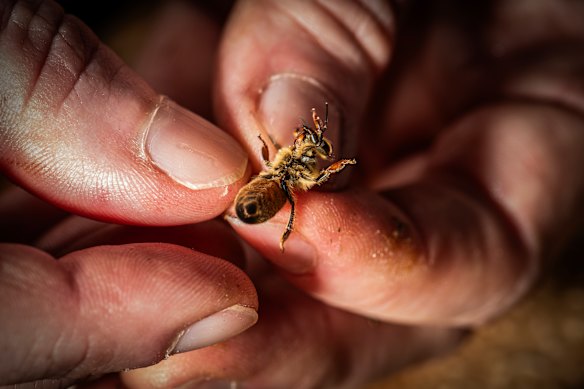
That’s why honey has evolved to be so antimicrobial, with more than 200 compounds acting to kill invading bacteria.
Part of that bug-busting power is borrowed from plants, with botanical antimicrobial defence compounds passing from nectar into the honey.
Bees also inject an enzyme called glucose oxidase into the honey from their salivary glands. When bees dilute the viscous honey to feed the queen’s babies, the compound forms hydrogen peroxide – an antiseptic.
“There’s a lot of stuff we don’t know as well,” Fernandes said. “We know that there are antimicrobial peptides, maybe bee immune defence peptides, but many of them haven’t been characterised.”
Unlike traditional antibiotics, which might target one part of a bacterium to kill it, honey can kill a microbe in seven or eight different ways, which makes it far harder to out-evolve, Fernandes said.
“That’s why it’s so good against bacteria – because it’s so complicated. But it’s one of the problems with standardisation.”
Addressing that issue will partly form the next stage of research. Fernandes says the most realistic medical application is to expand honey’s potential to treat topical wounds such as scrapes and cuts.
“But also, chronic wounds are a huge problem. Diabetic ulcers, pressure sores, burn wounds, that kind of thing – particularly in those cases where patients have resistant bacteria, so normal antibiotics are not able to work.”
Golden staph frequently inflicts drug-resistant skin infections, particularly in hospital patients, and could be a target for new honey-derived creams or gels.
Frost said the research into the medicinal potential of Australian honey nourished by our uniquely diverse native bush could open new commercial opportunities for beekeepers as the industry battles the parasitic varroa mite.
The findings could also help beekeepers manage healthier hives.
Frost works at the Tocal College Bee Research and Training Centre near Newcastle, where Fernandes swabbed hives for pathogens and sourced honey samples.
The study was funded by a NSW government bushfire recovery grant after the Black Summer fires destroyed 10,000 hives.
The researchers said buying local instead of imported honey helps support the bee populations, which pollinate about 65 per cent of our food crops.
Large Australian honey producers also pay a levy that goes towards funding research to improve hive health.
The Examine newsletter explains and analyses science with a rigorous focus on the evidence. Sign up to get it each week.
Read the full article here


