



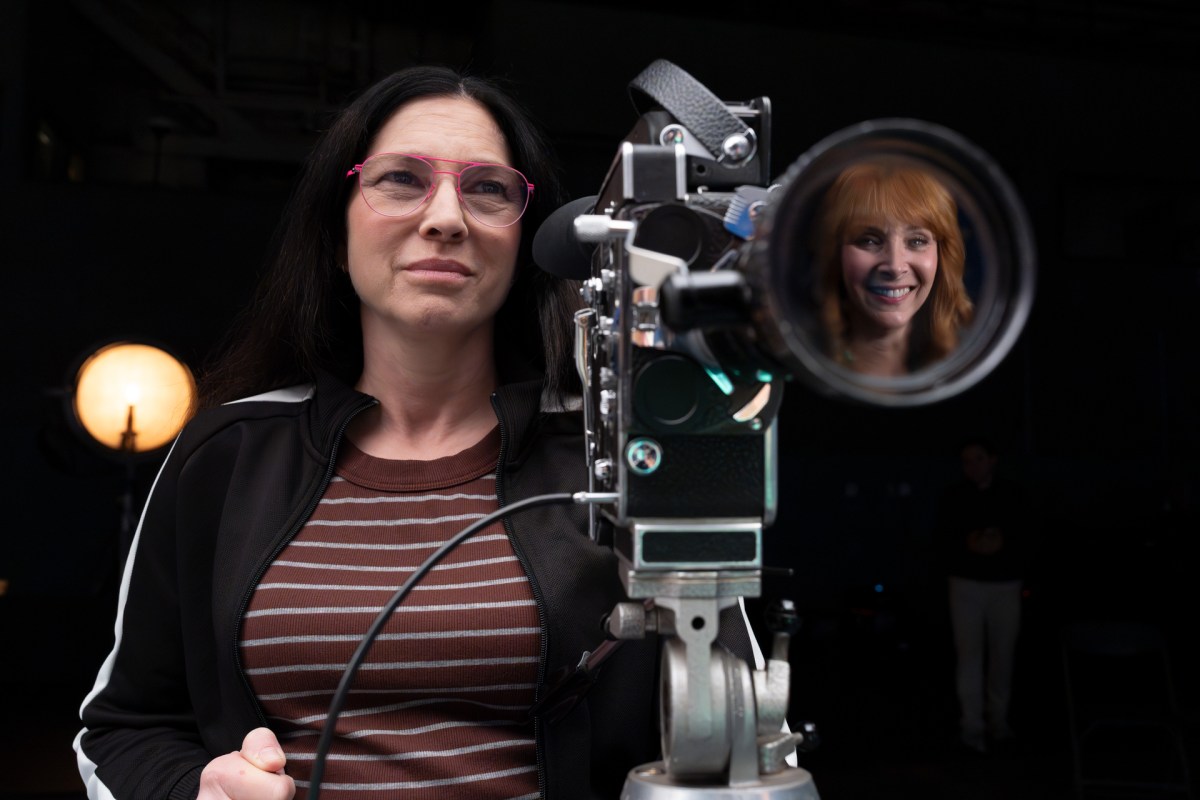
With a character as iconic as Lisa Kudrow’s Valerie Cherish on The Comeback, it can be hard to stand out as a supporting player. But there’s one character in Cherish’s orbit who is not only essential for us, the audience, to understand Cherish, but also vital to the lore of the entire series: Jane, played by Laura Silverman.
The third and final season of The Comeback recently aired, wrapping a 20-year journey with these characters. The show, which debuted on HBO in 2005, follows Cherish, a 90s sitcom star perpetually looking for her comeback, documented by Silverman’s Jane, a director and documentarian who starts the series tasked with creating a reality series around Cherish but eventually becomes the narrator of how Cherish is viewed. Through Jane’s lens we slowly see the person behind the facade of Cherish “the actress.” She becomes real, human and vulnerable. For the core fans of the series, Jane is our eyes and ears, offering a glimpse of Cherish as the person we know she is: a heroine. While some see Cherish as cringe, fans have always seen she’s more than just a fame-hungry actor, she’s an example of what Hollywood does to women. And we’re only able to see that because of Jane.
As Silverman puts it, “Valerie’s magnetic. And whether you are intellectually catching on to what it is that she’s doing, which is so incredible, not just to survive but to thrive, to always kind of put her best foot forward and make the best of the situation, she’s human, but then she’ll kind of be like, okay, well, something’s going on with that person.” That empathy, filtered through Jane’s camera, is what transforms The Comeback from a cringe comedy into something far more profound.
And at the heart of that transformation is the bond between Jane and Val. “I can’t let this bond be broken,” Silverman says of the relationship in the final season. “It’s not just about exposing or getting the story. It’s about, we have to be good with each other. We put in a lot of years.”
Silverman spoke with Newsweek‘s Parting Shot Podcast about the legacy of Jane, what it’s like to work with Lisa Kudrow and how she’s evolved alongside Cherish over the past 20 years.

SUBSCRIBE TO PARTING SHOT PODCAST WITH H. ALAN SCOTT ON APPLE PODCASTS, SPOTIFY, OR WHEREVER YOU GET PODCASTS.
Editor’s Note: This conversation has been edited and condensed for publication.
My first question: anyone who knows anything about you, at least in my world, knows The Comeback first. How close are you to your character of Jane?
Jane is like a side of me, but I don’t think super close.
In what ways are you similar?
My whole thing in season one was, okay, I’m here for Lisa. The character of Jane is something that just happens, it’s not analyzed. Sometimes I’d actually be unsure of what we were doing, like, what does this mean, what are we even doing? And I would ask Michael [Patrick King, co-creator, writer, director], what am I doing? And he’d just say, whatever you do, that’s what Jane’s doing. So it was a lot of just knowing the character as I created her in my audition, because that was what they wanted and what my instincts were.
I want to go back to something about Jane. I’ve followed your career from early on, and what I think a lot of people confuse—and I’ve found this in conversations—is that everyone surrounding Valerie is queer in some capacity. Jane, Mickey [Robert Michael Morris], Billy [Dan Bucatinsky]. Everyone. And that always stood out to me. She’s created this non-traditional family, very much a queer sentiment, around people who keep her real and create this universe for her, people who see the real person she’s trying to be, but also want to protect her.
She is magnetic. Valerie’s magnetic. Whether you’re intellectually catching on to what it is that she’s doing, which is so incredible, not just to survive but to thrive, to always kind of put her best foot forward and make the best of the situation. And if somebody is shitty to her, it will hurt, she’s human, but then she’ll kind of be like, okay, well, something’s going on with that person. Which is actually the truth in all cases.
Lisa told me that her ability to brush it off and say, I gotta go on, I can’t let this stop me—it’s so superhuman.
I think that is also the queer experience growing up. It hurts, and then to move forward and maintain your sense of self and your wholeness, you have to be like, okay, something’s wrong with that person. Somebody hurt them, that’s why they’re angry. Hurt people hurt people.
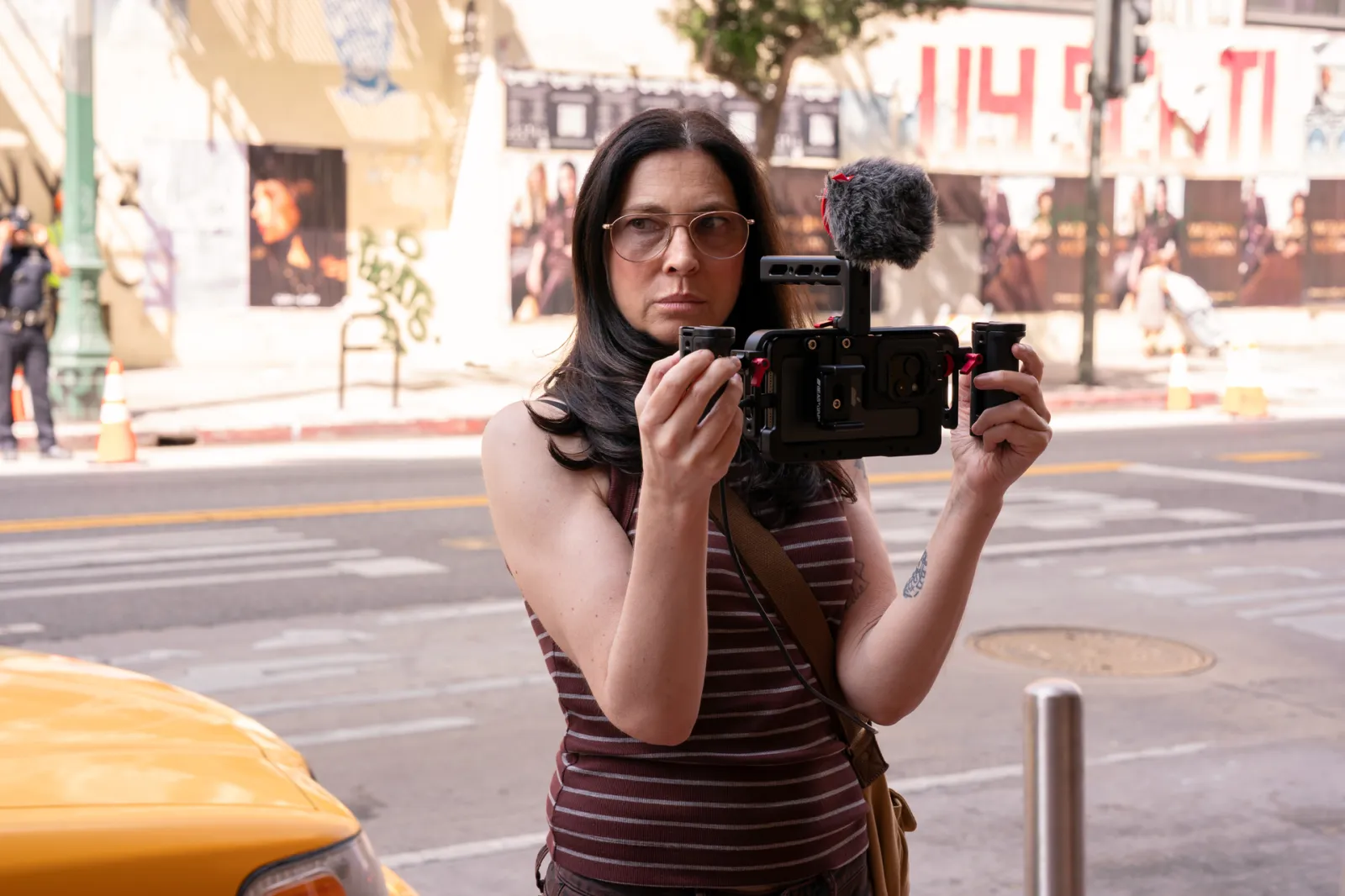
I want to go back to your career. People know you either from The Comeback, or if they’re comedy nerds, from The Sarah Silverman Program. There are two worlds of how people know who you are. And what I find so interesting is you did The Comeback first, which surprises a lot of people.
It was such a nugget in my soul, because I didn’t want the first series I did to be playing myself as my sister’s sister on my sister’s show. It really felt good to have that under my belt, to have done this other series that I felt proud of.
And that’s what’s so interesting about the legacy of Jane as a character. So much of Jane’s aura is part of the way I communicate with friends. There are moments where I’ll reference the whole “Jane, Jane, we can’t use this” thing, and the way I just say “Jane” to my friends and we all immediately know what we mean. The fact that you’ve played a character with that level of impact, how does that make you feel?
I haven’t experienced much recognition in real life, maybe people are like, that’s cool, but they don’t let me know. It happens on rare occasions. So I wasn’t really aware of the “Jane, Jane” thing becoming that kind of shorthand. I don’t know how to answer that question fully. But it’s also partly you.
When you’re on a show like The Comeback, everything is in service to Lisa and to this character she’s been developing since the 1980s and has morphed into this really iconic pop culture figure. But she can’t do that without the people around her. Even that moment of her going “Jane, Jane, we can’t use this,” she wouldn’t be able to do that without the way you’ve personified Jane and how Jane responds.
It’s interesting because people don’t see the interaction. I remember when John Early first came for a table read for season three, he was like, “But you weren’t there all the time.” And I was like, no, I’m there all of the time. Michael insists on it, and rightly so. When she’s on, I am always there. So if you don’t see me, I’m here. If she’s talking to me, I’m there, and I’m acting with her. I just looked at it like, I get to act with Lisa Kudrow all day. Everything she gives me, I have to give back as Jane, and then she can react off of that. Whether I’m seen or not, I’m doing that job, and I really embraced it.
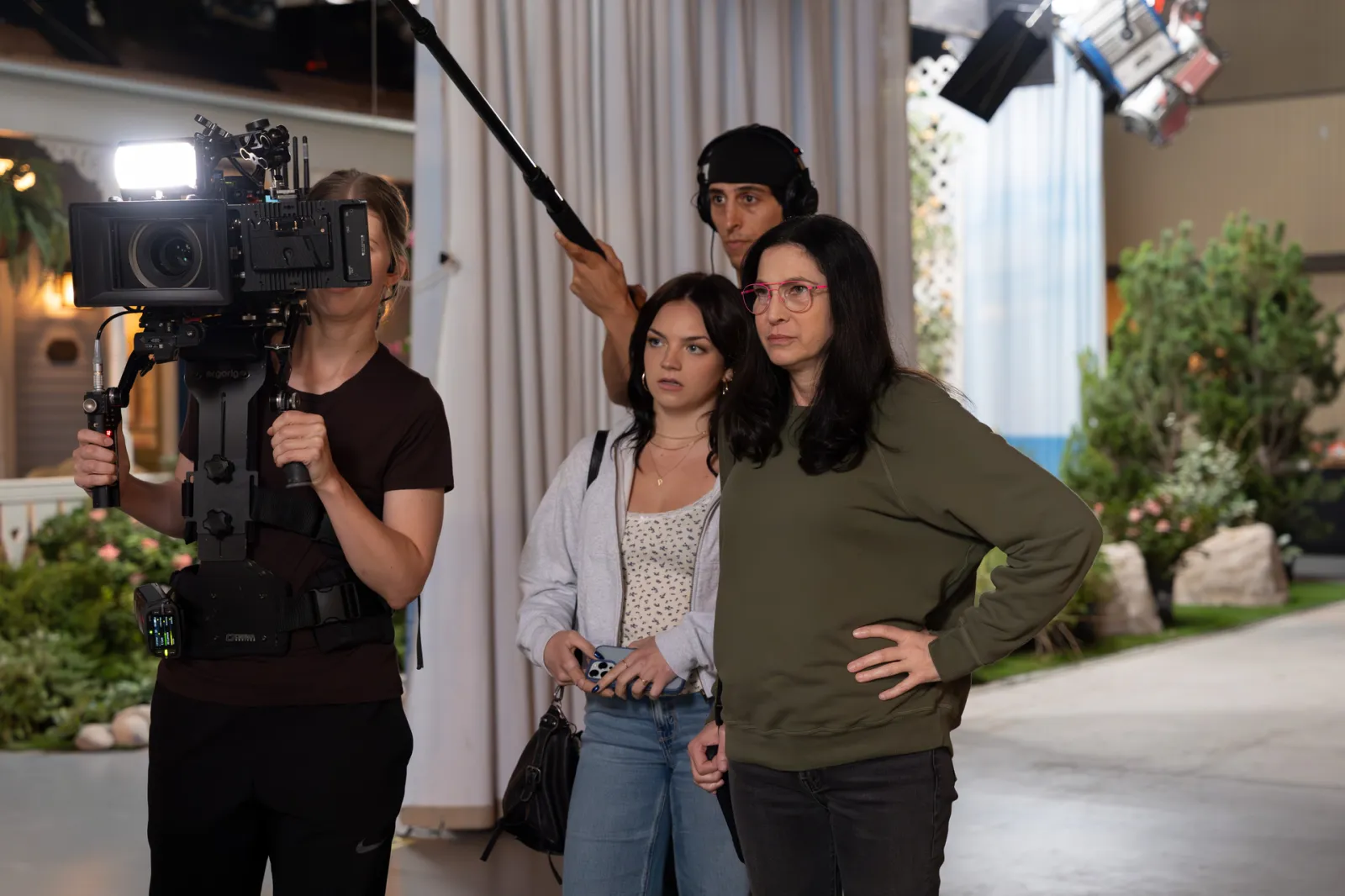
That’s also kind of the aura of your character, her voice being off camera. There’s a moment in season one where Val is getting emotional in a scene and excuses herself, and the camera pans into your reflection in the mirror and you tell the camera operator to get the camera off you. But we needed that. Jane’s crying. And I bring up that moment because it’s so indicative of what you’ve done with the character, but also what the character means to us. Jane is the audience. We are Jane. You are the vessel through which fans are part of the show, because you have this front row seat to a person you can’t stop watching, just like we can’t stop watching Val. You are our narrator in those moments.
It feels great because, like I said, I’m always in it, so when those moments come, having the right expression on my face is really important, it’s just a second, but Jane becomes connected and attached to Valerie from almost the beginning. I rewatched recently with my niece and would see those little moments and think, ah, that was cool. But I know how I got there, which was just staying present with Lisa all the time.
Lisa is one of the greatest actresses to have ever worked in television. The range of emotion, from high comedy to the depths of sadness within one line, is extraordinary.
There are a lot of layers. It’s just amazing to watch. You can’t take your eyes off her, watching her do it different ways, watching her doubt herself. She’s never like “nailed it.” She’s extremely intelligent but also incredibly compassionate and empathetic, and those two things combine into this mix. She has training in improv, but she just has this ability to let it all come into the moment without overthinking it. But there’s an intelligence there.
The first time I ever interviewed Lisa was at the beginning of COVID. I asked her about The Comeback, everyone was asking her about Friends because the reunion had just been delayed, but I wanted to talk about The Comeback. And in the middle of casual conversation, she just shifted into the Val voice. How does her ability to do that impact what you do as Jane?
My gut reaction is that it makes me just click into Jane. There isn’t some concrete Jane bible, I mean, I decided things like Jane doesn’t wear navy blue, but it’s more like a vapor. And with Lisa, she just steps into this mist. You just know the relationship and the parameters, and you also have the freedom to experiment when the relationship changes and grows. Michael will say no if it’s no. But that moment when she goes into it and Jane’s crying, that’s a little evolutionary moment. And sometimes Michael didn’t even direct the episode, but he directed every episode this season and wrote it.
There’s a moment this season—no spoilers—where Jane sees Val for the first time after a particular conflict. Val goes, “I know.” And you see this unspoken respect, Val recognizing that Jane will forever have her back. That’s very similar to that season one moment, and it says a lot about these two characters who’ve been intertwined since 2005. As fans, Val saying that to Jane and seeing her is almost Val seeing us, finally recognizing, you don’t have to perform for us.
It’s more like, I can’t let this bond be broken. Jane can’t let the bond be broken at that point. For the first time, it’s not just about exposing or getting the story. It’s about, we have to be good with each other. We put in a lot of years.
And Jane has been there to see everything.
It’s kind of interesting when I watched it back, I’m older, and my voice tends to be on the deeper side now, more jaded this season, a lower register and kind of grumbling. But in that scene, it’s the little voice. And Michael afterwards said, “Hearing the lesbians of Treblinka and that little Laura Silverman voice is the best thing ever.” I wasn’t aware I was doing it. But she’s humbling herself. She’s sort of back to the beginning.
There’s a moment in the final moments of the show—and this isn’t giving anything away—where Val is back in the director’s chair answering questions Jane is feeding her. And there’s this beautiful moment where the camera turns around. You see Jane in shadow, and there’s the image of Lisa as Val in the lens. Val is maintaining composure because that’s what Val does if a camera’s on her, she is always performing.
Especially in that setup, where there are no distractions. It’s like “I’m ready for my closeup, Mr. DeMille.”
But Jane was emotional in that moment and said, “I think I’m seeing you for the first time.” And that’s the audience. We’ve been with this woman for 20 years, seen her at her lowest and highest, and we needed that camera turned around on Jane. For the first time we’re able to see Val just exist, comfortable, with what she wants, having come through everything.
That was divine intervention, because that wasn’t in the script. The script had Jane off camera the whole time, just on Val, and we’d never see Jane until we pull out wide, Valerie’s gone, and they’re breaking down the set. But neither of us could get through it. The amount of lines Lisa would learn on a daily basis was insane. And I had paper and I was shaking, trying not to let it make noise, because it was the middle of the night, the very last day, and when we finished this, it was done. Something in our brains just wasn’t letting us get the words out. Lisa was really emotional. I tend to go numb and then six months later think, oh my God, that moment was so intense. I think it’s a middle child thing, you’re not allowed to have your feelings until the dust has cleared.
So how did that moment end up on screen?
Elie Smolkin, the DP [director of photography], who is a genius, I didn’t even know he was the DP until the third or fourth day because usually DPs let you know they’re in charge, and this guy was just running around making it all happen, organizing 14 cameras at once. He had a fix where they spray something on the lens so it becomes highly reflective and gets a clear image. And in editing they realized that image was the one. But we wouldn’t have had it if we weren’t both a mess.
Being a mess pays.
Be a mess.
As soon as I saw it, I remember sitting with a lot of anxiety because all I wanted to do was talk to people about it. For every fan of The Comeback over these past 20 years who’s been fighting for this show, telling people when no one was watching, “you have to watch this, trust me…”
And it’s passed down through generations.
Yes. So how do you move on from that? How do you let Jane exist in the world where Jane exists, but then go do everything else you need to do?
That happened every day when I came home, it’s called acting, you leave it behind. It’s like, you’re made up of lots of ingredients, and every character you play, you pull different stuff down from the cabinets and mix them together. It’s always you, but it’s different parts of you. And it’s actually exciting and fun. I came to LA thinking I was going to be a dramatic actress, I studied for 10 years, I have a lot of training. Comedy kind of grabbed me up because I was doing performance pieces, and, I mean, I can’t help it. I’m funny. I think it runs in the family.
It’s a byproduct.
But you know, Jane’s not a funny character per se. This was a very dramatic season for Jane. When I got to do that scene with the security guards, we filmed it like a play, one continuous scene from Jack O’Brien doing that speech to Bagley, which is just hilarious, and Jane is entertained, to knowing what was about to happen and pulling up all the emotion. I got to use the skills I’ve learned and it worked and it was thrilling. What I’m trying to say is I was ready to just stop because the auditions I was getting were for like, the weird teacher who introduces the parent on Parents’ Day, I just wasn’t happy. And I didn’t think they were going to entrust me with so much on The Comeback. Now I want to do more, and I’m not very good at the business side of show business. I just hope that somebody goes, oh, she’d be good for this.
That’s where people like me come in, we just tell everyone.
I appreciate it.
I wanted to add, that core group, particularly you, Lisa and Michael, all have strong dramatic backgrounds.
As Jim Burroughs [director] says, damaged people make great dramatic actors.
I wanted to add, that core group, particularly you, Lisa and Michael, all have strong dramatic backgrounds. And as someone once said, damaged people make great dramatic actors.
As Jim Burroughs [director] says, damaged people make great dramatic actors.
And to that point, I want to ask about the lesbians of Treblinka moment from a fan perspective. [The documentary Jane won an Oscar for in the second season of The Comeback.] I thought it was the funniest aside ever. It showed so much of who Val is, but also so much of who Jane is, in that scene at Jane’s house. Whose Oscar was that?
Oh, it wasn’t real.
It wasn’t real at all?
No. I don’t think it was real.
I was really hoping it was someone’s Oscar. But that moment, you two together, it made me fall in love with Jane all over again.
That was a fun, silly scene that we shot in one go. We did two takes.
Read the full article here


