



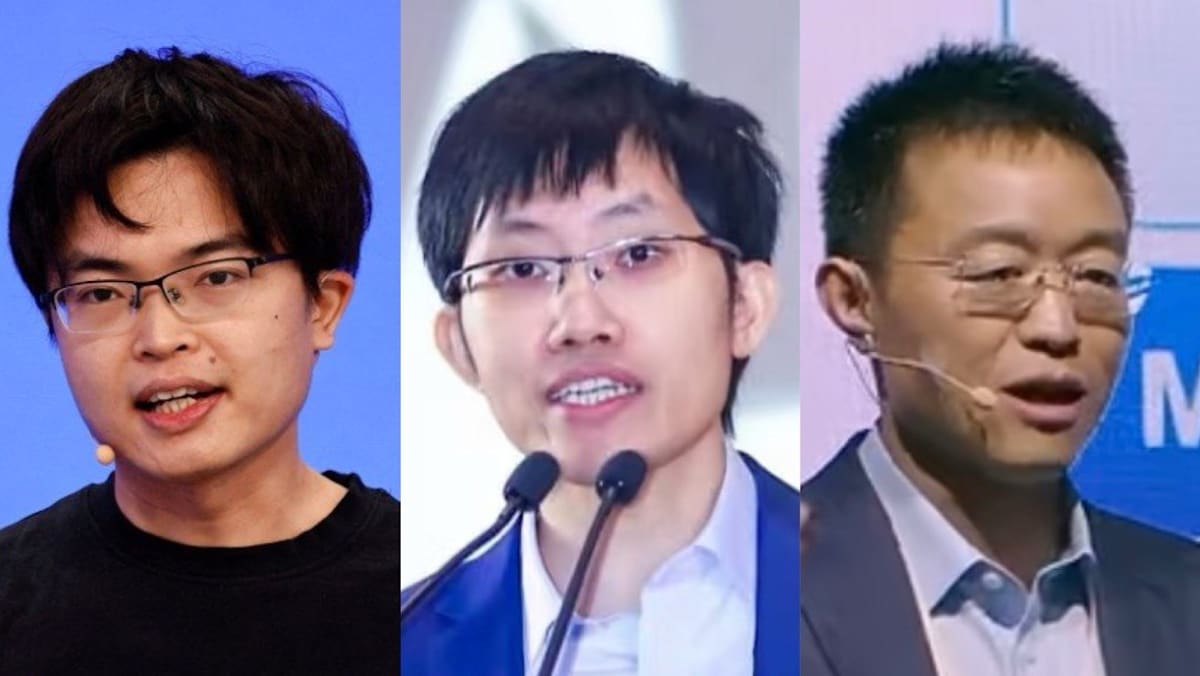
CHAMPIONING ACCESSIBLE AI TECHNOLOGY
Despite hailing from different companies, a common thread has emerged in the three men’s conversations about AI: a commitment to open-source models and accessibility.
Open-source AI models are systems that make available their full source code and information required for retraining the model from scratch. This means they can be used, examined, altered and distributed without having to request permission.
The approach is almost an inversion of trends in the US, where leading AI labs keep their best models closed and monetise access, said Dr Cong.
One reason for this is China’s position as the challenger rather than incumbent of AI model creation, he said.
“Giving the model away is the fastest way to win global developer adoption and set de facto standards – it commoditises the layer where US labs charge a premium, which pressures their business model without your having to beat them head-on,” he explained.
The strategy also fits China’s constraints due to US chip export controls, and taps into its massive talent pool.
“China has an enormous developer population, and open weights let all of them build on frontier systems rather than bottlenecking innovation inside a handful of labs,” said Dr Cong.
He added that China’s leading AI companies have been broadly consistent in their commitment to releasing open-source models, but noted that most of the models have been open-weight rather than fully open-source.
For most Chinese AI models, the weights are downloadable, but the training data and full recipe usually stay closed, said Dr Cong.
“And releases are sometimes staggered – API first, weights later – which shows commercial timing still shapes how open they really are.”
By providing high-performance models at far lower costs, China has established itself as a central hub for emerging economies to gain access to affordable AI, said Kong Tuan Yuen, a research fellow at the National University of Singapore’s East Asian Institute.
However, since their core products are essentially free, Chinese AI startups will need to establish completely new types of business models if they want to remain competitive in the long term, he added.
Dr Kong pointed out that one downside of open-source models is safety, since publicly disclosing their core components allows third parties to remove or modify safety features originally included within them.
“This makes it easier for malicious users to misuse the models, as well as increases the difficulty of regulating global AI governance issues such as accountability and data security,” he said.
As companies within and beyond China race to achieve artificial general intelligence, Dr Cong said the more important question was whether work had been done to ensure its safe use by the time they got there.
“My worry is that a competitive sprint between labs and between nations creates exactly the wrong incentives here – everyone has a reason to move faster and cut corners on safety, and no single player wants to be the one who slows down,” he said.
“For something with stakes this high, we owe it to ourselves, and frankly to future generations, to treat getting it right as more important than getting it first.”
Read the full article here


