



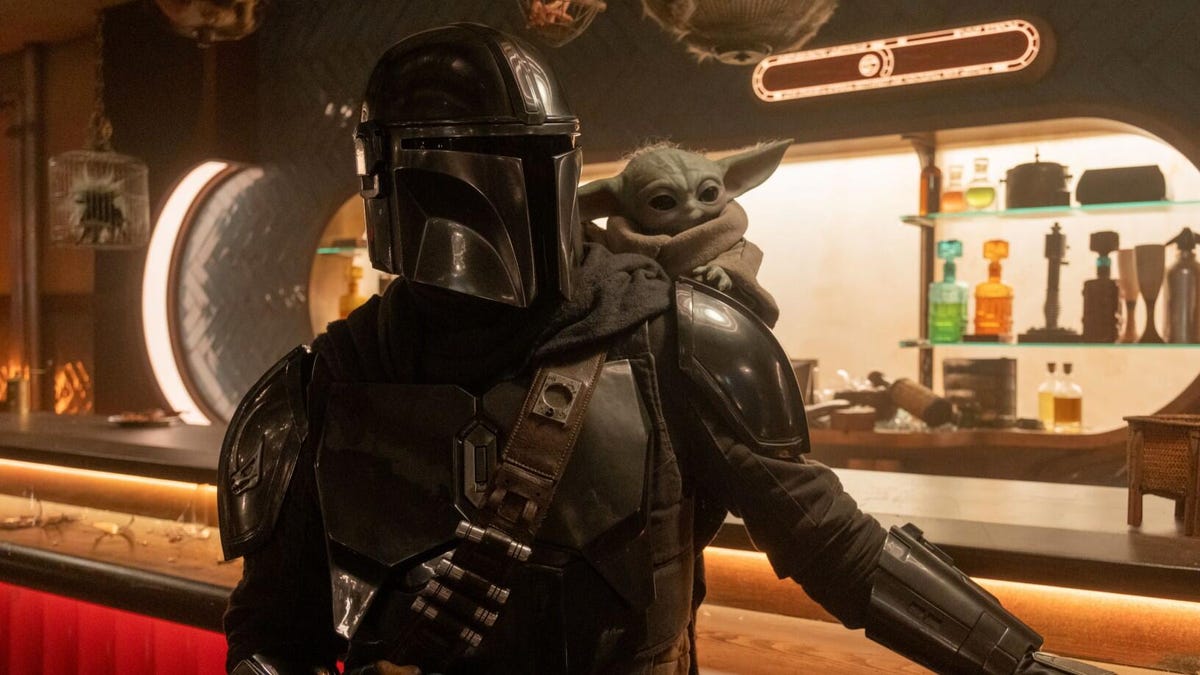
Star Wars: The Mandalorian and Grogu, which premieres on Friday, May 22, is the first Star Wars movie to hit theaters in seven years. That’s a noteworthy tidbit to consider since Rise of the Skywalker premiered in 2019, mere months before the pandemic shut down Hollywood’s movie-making machine. It was the same year Disney Plus launched, prompting a new Star Wars narrative to play out on a streaming platform.
It makes sense, then, that the latest Star Wars movie isn’t connected to Luke Skywalker’s saga, but rather to the three-season storyline of The Mandalorian TV series. That isn’t to say that everyone’s favorite Jedi master didn’t enjoy a resurgence in Season 2, and wasn’t the highlight of The Book of Boba Fett, but I digress.
As the movie goes, you get everything the title suggests in its 2-hour and 12-minute running time: Pedro Pascal is back as the soft-spoken, helmeted Mandalorian hero Din Djarin; the little green guy formerly known as Baby Yoda is back as Grogu. Together, they embark on a journey to save Jabba the Hutt’s son and catch a rogue imperial warlord.
That’s it; that’s the story. If you’d rather avoid further story details, I advise you to turn back now — I’m about to plummet my X-wing starfighter into this Death Star, or something.
What to Watch Before ‘The Mandalorian and Grogu’: TV Shows and Movies With Critical Star Wars Backstory
Din Djarin and Grogu embark on a new mission in Star Wars: The Mandalorian and Grogu.
It’s clear that Jon Favreau and Dave Filoni want The Mandalorian and Grogu to be its own thing. Gone from this outing are the signature Star Wars story crawl that kicks things off, and John Williams’s iconic score is nowhere to be found.
Ludwig Göransson’s score is an interesting change-up, bringing some ’80s-style synth and electro chords to the mix, enhancing the street-level scenes and giving the movie a Blade Runner-esque vibe. But as much as I appreciated the creative choice, I had to remind myself multiple times that I was watching a Star Wars movie because there was very little actual war transpiring on screen.
Is it a visually stunning entry in the expansive Star Wars catalog? Sure. Considering the movie features only a handful of human faces, it makes sense to lean heavily on striking visuals and action-packed sequences to deliver the emotion viewers need to connect with and care about what’s happening on screen.
If that’s all you require to enjoy a Star Wars movie, then I have great news: The Mandalorian and Grogu is a rip-roaring popcorn flick.
Beneath its riveting veneer, though, it all felt pretty rudderless, and I found myself checking my watch more than once.
Instead of building emotional stakes at the beginning of the story, especially for those unfamiliar with the TV series, The Mandalorian and Grogu kicks off in the midst of an explosive action sequence. Once that messy mission is complete, the duo receives their next assignment from Colonel Ward (played by the criminally underused Sigourney Weaver), then they’re off again to make a mess of things elsewhere, hop back in their ship, rinse and repeat.
To speak in video game terms, the movie works more like a cutscene for a game someone else is playing. Writing-wise, each scene predictably pushed the story forward, but without any real character development or plot work to establish the emotional connection you need to fully engage with a story.
Pedro Pascal stars in Star Wars: The Mandalorian and Grogu.
Performance-wise, I guess Pascal does a good job as Din Djarin — at least during the roughly 20-minutes he goes helmetless. Weaver is always fun to see on screen, even if she is barely in this movie. Of the actual human characters who appear in the movie, Jonny Coyne’s performance as the evil Lord Janu is the standout.
Favreau and Filoni do imbue human emotions elsewhere, though, and the results are mixed. Grogu is the highlight of the entire film, and while I find it difficult to connect with a puppet/CGI character, his storyline is a mixture of fun cuteness and fierce determination. Rotta the Hutt, Jabba’s rogue son, who’s voiced by Emmy-winner Jeremy Allen White, is a… choice.
I have multiple issues with this portrayal of Rotta. First, the creative decision to have a muscular young Hutt speak English feels like a shortcut that speaks to an overall attention deficit in entertainment nowadays. Instead of making people read subtitles, let’s just make him speak eloquent English, no matter how out of character and lazy it feels.
Further, Rotta comes off like an emo teenager who wants to remind you regularly how different he is from his father. I appreciated the character design, especially since I’ve never seen a Hutt move from a seated position, let alone engage in battle. But I have to wonder why White was cast given his voice was altered, rendering him unrecognizable.
Jeremy Allen White is Rotta the Hutt in Star Wars: The Mandalorian and Grogu.
The majority of the movie’s conflict rests on Rotta’s story, and it just doesn’t have the legs to carry the film. This explains why the movie is filled to the brim with stylish gunfights, fast-paced action sequences and more stylish gunfights.
When all is said and done, I can understand the decision to release The Mandalorian and Grogu in theaters. There’s enough going on here to keep younger audiences engaged, and it’s a fun ride if you ignore the lack of story. Multiple sequences feel like footage Disney will use for its theme park experiences, and I’m sure the merchandise tie-ins will be hugely popular.
That said, Star Wars: The Mandalorian and Grogu isn’t an event the way Star Wars movies used to be. If you ask me, I think you’d be better off waiting for it to hit Disney Plus — because this feels like nothing more than a really long bottle episode of The Mandalorian.
Read the full article here


