



As American forces engage Iran, a question worth asking in every situation room is going unanswered: How did a meaningful share of the American public come to view the regime we are fighting more favorably than our own country on human rights? Recent polling finds that Democratic voters under 50 view Iran and Israel unfavorably by nearly identical margins, and that almost three in 10 younger Democrats view China favorably.
The answer is not spontaneous. It was constructed.
What follows is a documented account of how that inversion was built, who is sustaining it and what it has already cost.
The accusations that shape this perception do not stop at America’s allies. They follow American money, American policy and American institutions wherever they go. When a United States-backed humanitarian operation delivers food, it is declared complicit in famine. When American diplomacy supports an ally under attack, that ally is labeled genocidal and America its enabler. The IRGC has called the United States the Great Satan for decades. A network of international institutions and organized advocacy groups has spent years assembling what presents itself as the evidentiary case for that characterization.
There is a pattern underlying this, and it begins not with disagreement about values or facts but with a confusion about cause and effect.
In recent years, the language of human rights has become detached from the evidentiary discipline that once governed it. Terms like genocide and famine are increasingly deployed in advance of established facts, as instruments for shaping reality rather than describing it. The accusation arrives first. The evidence is expected to follow. Modern analysis teaches us that values and facts are insufficient for determining causal relationships; the latter emerge from a preconceived narrative one imposes on the observed facts.
This reflects a failure that computer scientist Judea Pearl, a contributor to the research underlying this piece, has described as causal inversion. When cause and effect are reversed—a common human fallacy—explanation gives way to delusion. Outcomes are treated as proof of intent. Moral judgment becomes untethered from the processes that produce the harm it purports to address.
New research from the Network Contagion Research Institute (NCRI) and Rutgers University confirms this pattern is measurable. A meaningful subset of Americans now rates authoritarian states more favorably than democratic ones on human rights, including states openly hostile to the U.S. The signal is coherent and consistent, and it travels with sympathy toward the regimes most adversarial to American interests, including Iran.
Two institutional forces are producing this outcome.
The first operates through international institutions and advocacy organizations that have accumulated enormous authority over the language of human rights. That authority was hard won and, at its best, has protected vulnerable people across the world. At their worst, they have learned that accusations generate attention—corrections do not. When the United Nations declares famine, governments mobilize and courts take notice. When that declaration later turns out to rest on bad data and buried evidence, no correction follows. The damage is done. The funding has already moved.
The second force operates at the street level, where organized protest ecosystems amplify the accusations that institutional bodies generate. Documented research has traced how the Singham network, a global infrastructure with documented financial ties to Chinese Communist Party (CCP)-affiliated entities, directed funds and narratives into American activist organizations. The protest activity that followed was, in significant part, engineered.
The institution names the violation. The protest ecosystem amplifies it. The accused defends itself. And the regime actually responsible recedes from scrutiny.
Alice Wairimu Nderitu, the former U.N. under-secretary-general for genocide prevention and a contributor to this research, watched this from inside. Genocide circulated through CCP-linked protest networks aimed at American allies and policy, while the Chinese government detained more than one million people in Xinjiang on the basis of ethnicity. Nderitu declined to apply the term without meeting its legal threshold. Her appointment was not renewed.
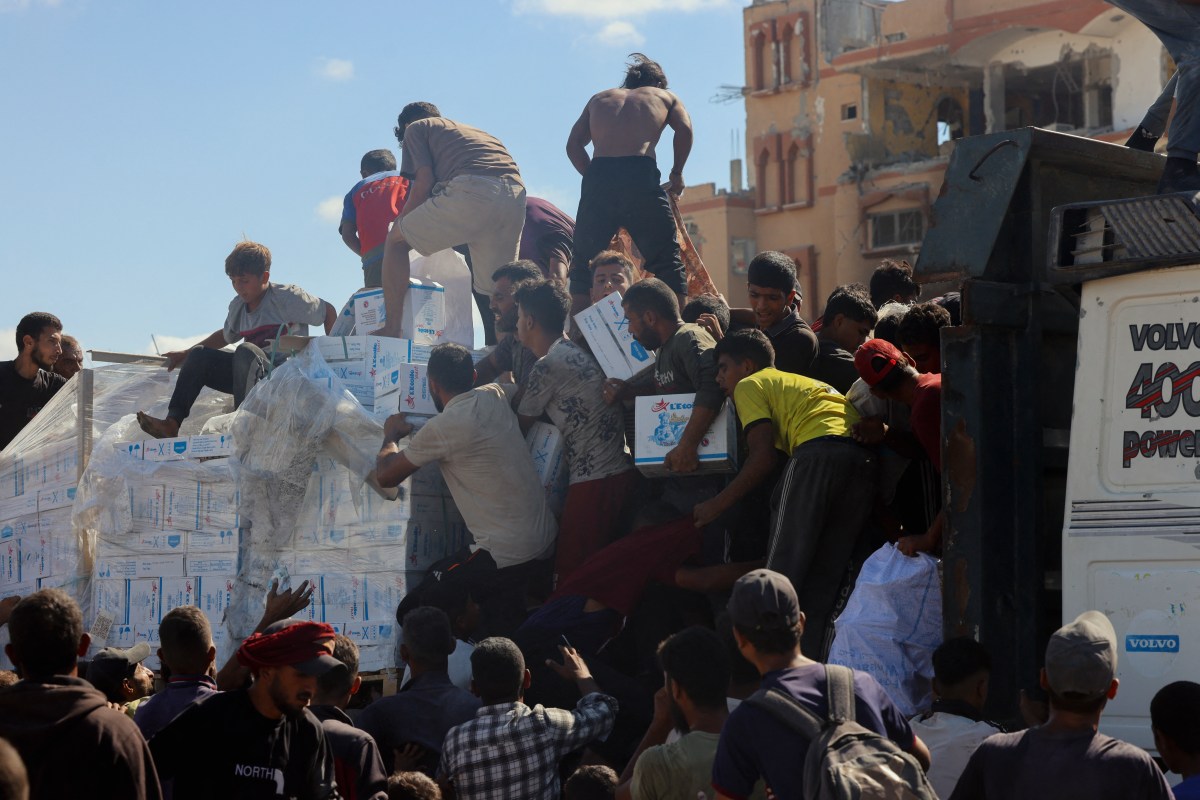
Johnnie Moore, chairman of the U.S. State Department-backed Gaza Humanitarian Foundation and a contributor to this research, encountered the same sequence. In August 2025, the U.N. famine authority declared a famine despite Moore’s operation actively delivering food. A forensic audit by NCRI found the declaration rested on a trend derived from six data points while a dataset of 15,000 children showed malnutrition below the declaration’s own threshold. Subsequent assessments found the declaration had significantly overstated conditions. No correction followed. The damage was done.
The human cost became visible three months before that declaration. In May 2025, a gunman killed two embassy staffers outside a Washington museum. He told police he acted for Gaza. His manifesto cited genocide and famine. He had a prior association with organizations closely linked to convenors of the protest network traced to the Singham infrastructure. The famine narrative that radicalized him was later found to have been significantly overstated. The two people killed by his radicalization remained dead. In North Korea and Sudan, hunger functions as an instrument of state control on a far greater scale. Declarations and protests have not followed with comparable urgency.
Authoritarian states are not passive beneficiaries. Each deployment of genocide or famine against American-backed targets degrades the credibility of the terms, consumes public attention and provides cover for documented abuses elsewhere. The logic driving this is straightforward: if America is guilty of imperialism, and China opposes America, then China is good. Causal inversion does not require complexity. It requires only a fixed conclusion and the willingness to work backward from it. Iran, China and North Korea have a demonstrated interest in sustaining the conditions that produce this outcome.
Once the causal structure of an argument is inverted, the conclusions it generates cannot be corrected from within. The accusation travels ahead of the evidence and organizes whatever evidence follows. The violation named tends to describe the innate character of those deploying it more accurately than its stated target. The accusation is the confession.
The famine declaration was not a neutral scientific assessment. It was a methodological failure with geopolitical consequences that undermined a functioning American initiative and raised unresolved questions about foreign-funded domestic operations under the Foreign Agents Registration Act (FARA). The broader vulnerability, an American public whose moral judgments are being systematically distorted, is a national security problem that has not been treated as one.
The research identifies a single primary entry point. It is anti-Zionism: a cause that appears to have nothing to do with America and everything to do with a conflict elsewhere. The appearance of being unrelated to America is what makes it effective. Yet a movement defined by its commitment to universal human morality turns out to be focused with remarkable consistency on weakening one country in particular. While American institutions are delegitimized, American aid operations undermined and American alliances eroded, the stated target is always somewhere else. The language is global. The target is American. The misdirection is not a byproduct. It is the point.
But the deeper question is why this pattern reproduces itself so reliably. The answer lies in a structure older than any particular ideology.
Every authoritarian movement requires a loyalty test. In the hypernationalism of the 20th century, the sacrifice was individual moral judgment: you subordinated it to the nation, which became the highest moral unit. Loyalty meant defending your country unconditionally, even when it was wrong.
What we are observing now operates in precise inversion. The sacrifice is the nation itself. Belonging is demonstrated by renouncing it, by treating national identity as moral contamination and replacing it with allegiance to a universal order. The entry price is identical to what hypernationalism demanded: surrender your judgment to the group. The direction is simply reversed.
And as the data shows, the destination is the same. An inability to evaluate one’s own country honestly. Measurably warmer feelings toward adversarial powers. A willingness to accept extreme accusations without evidentiary scrutiny because those accusations are doing social work, not intellectual work.
The movement that presents itself as the mirror image of hypernationalism has reproduced its essential structure. That is not a coincidence. It is the pattern.
Joel Finkelstein is the founding director of the Network Contagion Research Institute and oversees social-cyber intelligence research labs at Rutgers University, the University of Maryland and the University of Miami. Shawn Chenoweth is the director of cognitive advantage at the National Security Council. Judea Pearl is a Turing Award laureate and professor of computer science at UCLA, widely recognized as the founder of the modern field of causal inference. This piece draws on “Moral Inversion and the Rise of Authoritarian Sympathy,” conducted with Rutgers University, with contributions from Judea Pearl, Alice Wairimu Nderitu and Johnnie Moore.
The views expressed in this article are the writers’ own.
Read the full article here


