



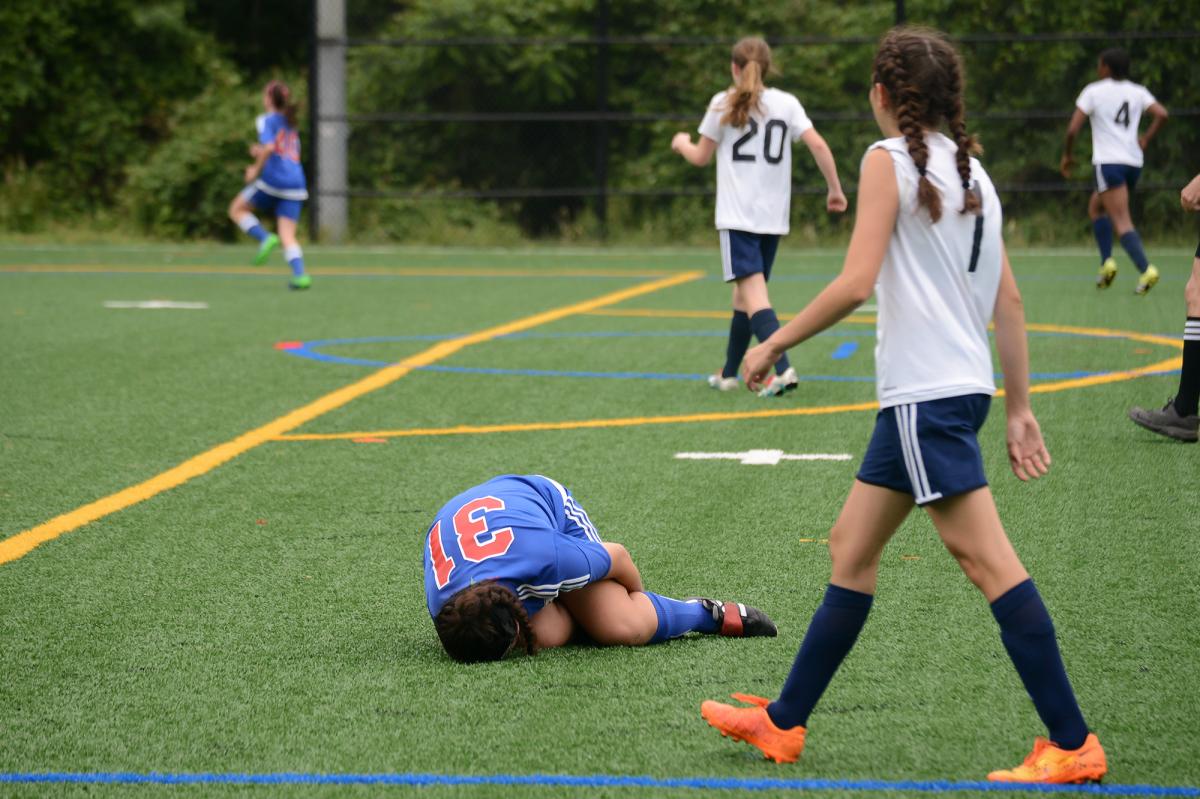
One of the most common sports injuries is increasingly affecting young women at alarming rates.
Teen girls are bearing the brunt of injuries to the anterior cruciate ligament (ACL) in the knees, experiencing up to eight times the rate of injury compared to their male counterparts.
So why are young female athletes suffering these setbacks, even while playing the same sports?
One of the most devastating injuries for athletes, from Lindsey Vonn to Patrick Mahomes, the ACL connects the thighbone to the shinbone and affects the knee’s range of motion and ability to bear weight.
Anatomical differences are key, according to Dr. Clifford Rios, an orthopedic sports medicine specialist with the Hartford HealthCare Bone and Joint Institute.
“The shape of a woman’s pelvis, the alignment of their thigh and knee, or thigh and shinbone, can put the knee at a particular angle that jumping and landing can bring them to a higher-risk position than their male counterparts,” Rios told The Post.
Women also have wider hips and more knock-kneed alignment, which places more strain on the ACL, according to Dr. Ariana Lott, a sports orthopedic surgeon at NYU Langone Health.
“[They] also have smaller knees, and the intercondylar notch (the space the ACL passes through) is typically narrower,” Lott told The Post.
On top of that, there are meaningful gender differences in how athletes control their landings, as “female athletes more often land with straighter knees and with less core and hip control,” she added.
Biology also plays a significant role.
The hormonal changes that occur during menstruation can worsen injuries, as fluctuations in estrogen are possibly linked to weakened collagen and tissues.
And then there’s the difference between male and female growth spurts throughout puberty. Rios explained that females start growing between the ages of 11 and 13, whereas men don’t hit that stage until 14 to 16.
“That often coincides with… where their level of sport is getting more complicated,” he said. “Their bodies and muscles are getting used to the new dynamic of altered skeletal shape and size and muscle development from their more pediatric muscle to their adult muscle.”
Rios also pointed out that teenage boys “tend to have higher muscle mass and a touch more coordination as it pertains to muscle balance.”
While these non-contact injuries generally happen the same way — by landing from a jump or pivoting to change direction — some sports have higher rates of ACL tears, with soccer, basketball and lacrosse often being the highest-risk activities for women.
Girls playing high school soccer have the highest injury rate, at roughly 12 to 13 per 100,000 athlete exposures.
One theory Rios has as to why these injuries are increasing at such an alarming rate is a lack of cross training or participation in multiple sports.
“If you’re doing the same thing over and over, you’re more likely to not develop other muscle groups [and] not be able to react to muscle fatigue or changes to that specific movement you’ve been doing,” he said.
In addition to single sport specialization among teens, Rios cites an absence of preseason injury evaluation and proper recovery time between seasons.
Lott agrees, championing strength training programs that focus on the hips and core as well as jump-landing mechanics to reduce ACL injury rates that are especially valuable for female athletes, having demonstrated “up to a 50% reduction in injuries with consistent adoption.”
Read the full article here


