



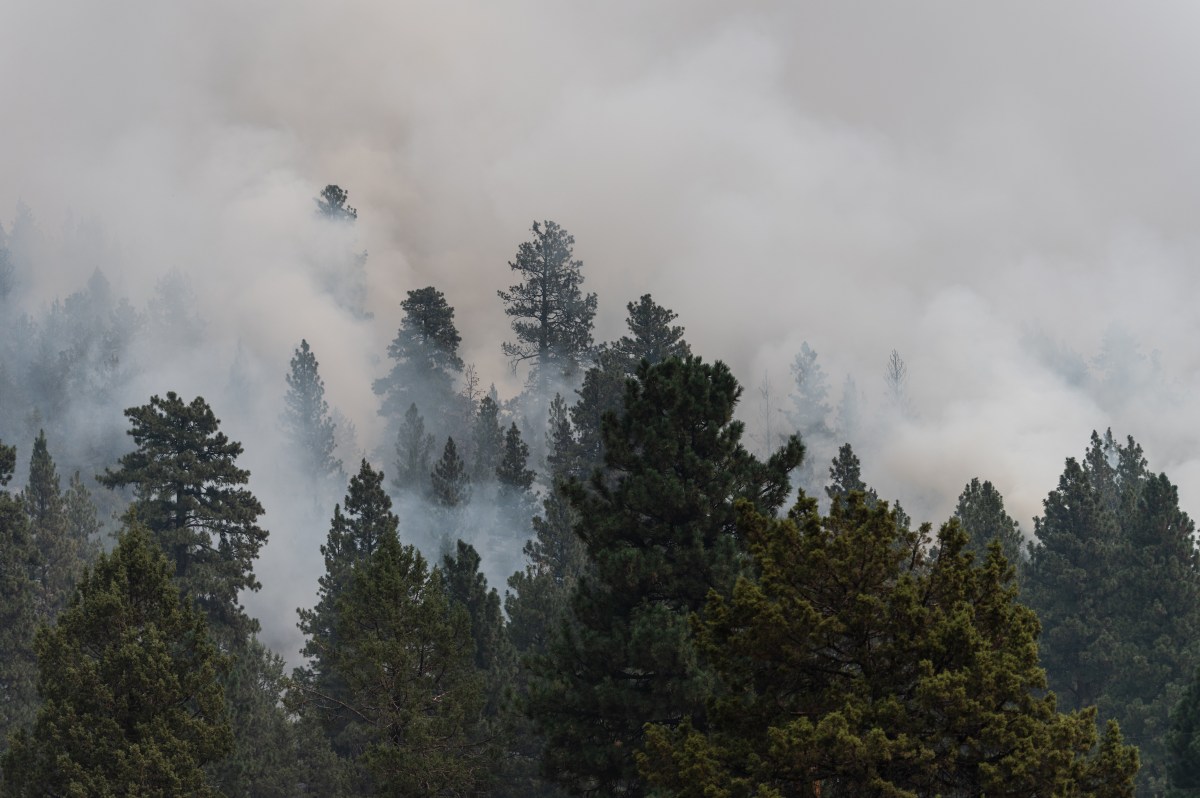
Thousands of residents across parts of Oregon are being advised to curb outdoor activity after air quality fell into the “very unhealthy” range in parts of central Oregon early Tuesday.
The Environmental Protection Agency’s AirNow map, which monitors air quality across America in near-real time, showed an area of highly polluted air lingering over the region as of 9:20 a.m. ET. This could be linked to smoke from multiple prescribed burns near Sisters and Bend, according to data from the EPA and Central Oregon Fire.
The EPA’s AirNow system recorded elevated levels of PM2.5, or fine particulate matter, affecting communities including Sisters, Bend, and nearby areas such as Brent. The readings placed parts of the region in the purple “very unhealthy” category on the Air Quality Index (AQI), a level that health officials warn can pose health risks to the general population, not just those in sensitive groups, which include the elderly, children, and those with existing heart and lung conditions.
Prescribed Burning Impact on Air Quality
Firefighters on the Deschutes National Forest began a prescribed burning initiative on Tuesday, according to Central Oregon Fire, on up to 366 acres located about three miles southwest of Sisters, along with an additional 200 acres roughly 15 miles southeast of Bend.
While prescribed burns are typically conducted under conditions intended to limit long-term smoke impacts, officials noted that temporary smoke accumulation, especially overnight and early morning, is common. Residents in and around Sisters were specifically advised to keep their doors and windows closed to reduce indoor smoke exposure, with visible haze expected to linger as fires continue to smolder.
Why PM2.5 Is Especially Dangerous
The EPA said the primary pollutant driving the poor air quality is PM2.5—microscopic particles of pollution, 2.5 micrometers or smaller, roughly 30 times thinner than a single strand of hair. Because of their size, these particles can be easily inhaled, penetrating deep into the lungs and sometimes even entering the bloodstream, triggering inflammation and worsening heart and lung conditions, such as asthma.
The EPA considers PM2.5 one of the most harmful air pollutants. Exposure has been linked to asthma attacks, heart disease, stroke, reduced lung function, and premature death, particularly during high-concentration events such as wildfire or prescribed-burn smoke episodes.
When AQI levels reach the “very unhealthy” range, officials warn that even healthy adults may experience symptoms like coughing, chest tightness, and shortness of breath.
What Residents Should Do
The EPA recommends that people in affected areas move outdoor activities indoors, avoid strenuous exercise, and reduce exposure to smoky air as much as possible. Using HEPA-rated air purifiers, keeping windows closed, and running air conditioning on recirculation can help limit indoor pollution levels.
On Monday, Central Oregon Fire posted, “Residents in Sisters and the surrounding area are encouraged to keep doors & windows closed to minimize smoke impacts. Smoke impacts are most likely overnight & in the early morning. Residents in Bend are also encouraged to keep doors and windows closed to help minimize smoke impacts.”
Those who must be outdoors for work are advised to take frequent breaks and consider wearing protective masks designed to filter out fine particles.
Children, older adults, pregnant people, and those with heart or lung conditions are urged to take extra precautions, as they face higher risks from exposure to elevated PM2.5 levels.
How Long Are These Conditions Expected To Last?
Officials say smoke impacts are expected to improve once the prescribed burns cease and weather conditions allow better dispersion, though some areas may continue to see poor air quality through the early morning hours due to temperature inversions that trap smoke near the ground.
Air quality forecasts and real-time updates are available through AirNow.gov, which residents are encouraged to check regularly, as conditions can change quickly.
Fire managers note that while prescribed burns may cause short-term air quality issues, they are intended to reduce wildfire risk later in the season, when uncontrolled fires can produce far more prolonged and dangerous smoke events.
Read the full article here


