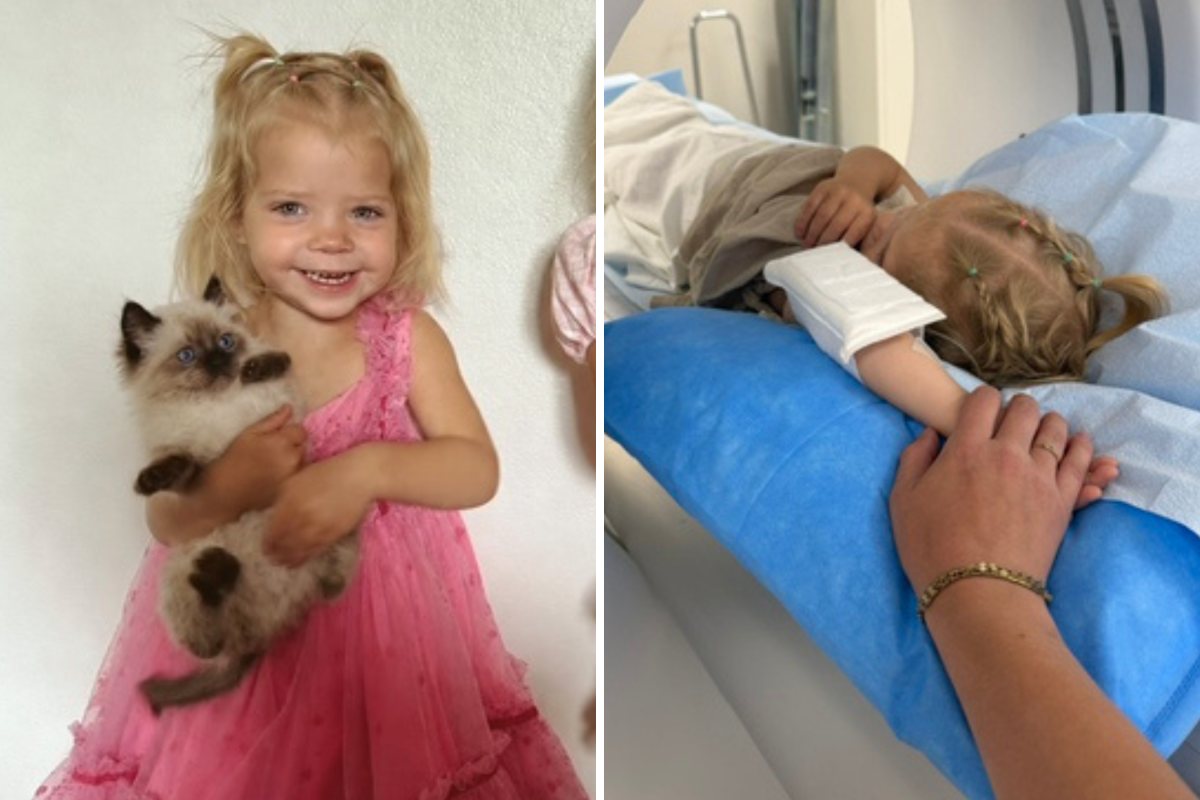
Less than a month ago, two‑year‑old Adalae was a lively, energetic toddler, bouncing through her days without a care. But on May 25, everything changed.
She became unusually tired, refused food and drink, developed a fever, and began clutching her stomach in pain.
What followed was every parent’s worst nightmare. Speaking from her daughter’s hospital bedside—where the family has remained since Adalae was admitted on May 28—Marissa Wheeler told Newsweek: “Everything has been a blur. I can’t believe this is real life.”
Misdiagnosed and Getting Worse
Their ordeal began nine days ago when Adalae suddenly became lethargic and refused to eat or drink, prompting her 31‑year‑old mom to take her to a local emergency room in Utah. There, she tested positive for a bacterial infection in the throat and tonsils called streptococcus and was sent home with antibiotics.
But Wheeler immediately sensed something wasn’t right.
“She tested positive for streptococcus, but when we were going over bumps in the car, she was saying ‘ow’ and holding her stomach, and I thought strep doesn’t cause that,” she recalled.
Over the next 48 hours, Adalae barely woke, refused to eat or drink, and grew increasingly weak.
“She was so sick,” Wheeler said. “She couldn’t walk anymore and was so dehydrated, her heart rate was 170 beats per minute while she was sleeping.”
Trusting her instincts, Wheeler took her daughter to a different hospital.
A Shocking Discovery

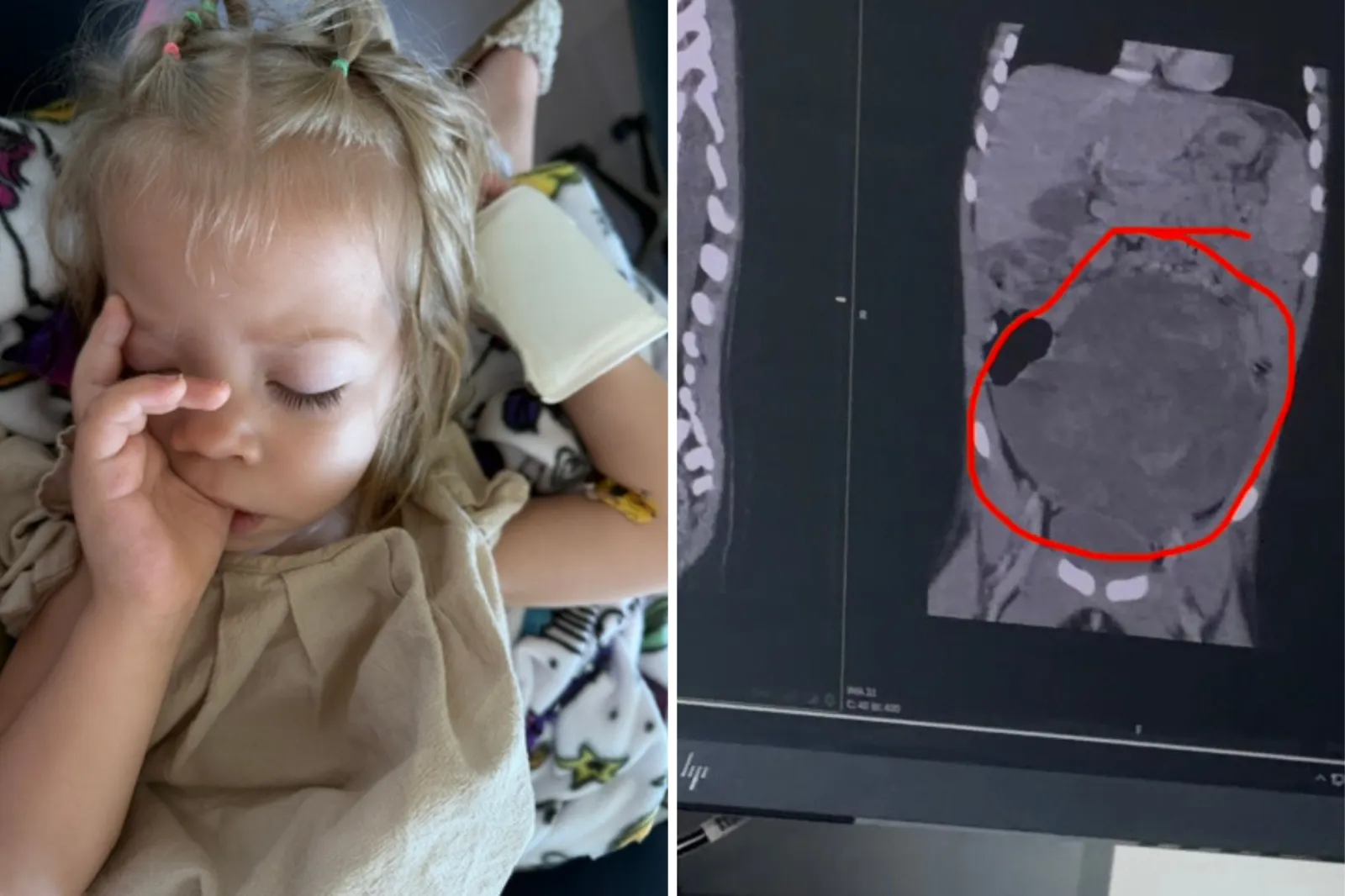
Doctors immediately ordered an ultrasound and computed tomography (CT) scan.
“She didn’t even cry during the scans,” Wheeler said. “She just lay there—usually she is a wild two‑year‑old who would fight any test or poke.”
Wheeler suspected appendicitis. Instead, the scans revealed a large mass filling her daughter’s abdomen.
“It was shocking, as a tumor wasn’t even on my radar,” she said.
Adalae was rushed three hours away to a children’s hospital, where an magnetic resonance imaging (MRI) scan revealed internal bleeding—the mass had burst. She underwent emergency surgery on May 29.
“Everything happened so fast,” Wheeler said. “I couldn’t believe they were taking my perfect baby to cut her open. It was terrifying, but I knew it needed to be removed.”
Surgeons successfully removed the mass, which had originated from her right ovary which was also removed.
After days of waiting, the family received the diagnosis on June 2: a germ cell tumor, a rare cancer that affects about 3 percent of children, according to research.
What Are Germ Cell Tumors?
Germ cell tumors are growths made from immature cells that would normally develop into eggs in females or sperm in males, according to Boston Children’s Hospital.
About 90 percent begin in the reproductive organs—the testes or ovaries—and are known as gonadal germ cell tumors.
When they appear in other areas of the body, such as the abdomen, chest, neck, head, or brain, they are called extragonadal germ cell tumors.
Germ Cell Tumor Symptoms
Common symptoms can include:
- A visible lump
- Bowel or bladder changes
- Shortness of breath
- Elevated tumor‑marker proteins in the blood
Boston Children’s Hospital notes that survival rates vary by tumor type and stage, but overall, most children now have a survival rate close to 90 percent.
“While this is not the news we were hoping for, we are incredibly grateful that it is a cancer with a very good prognosis and an effective treatment plan,” Wheeler told Newsweek.
A Mother’s Instinct
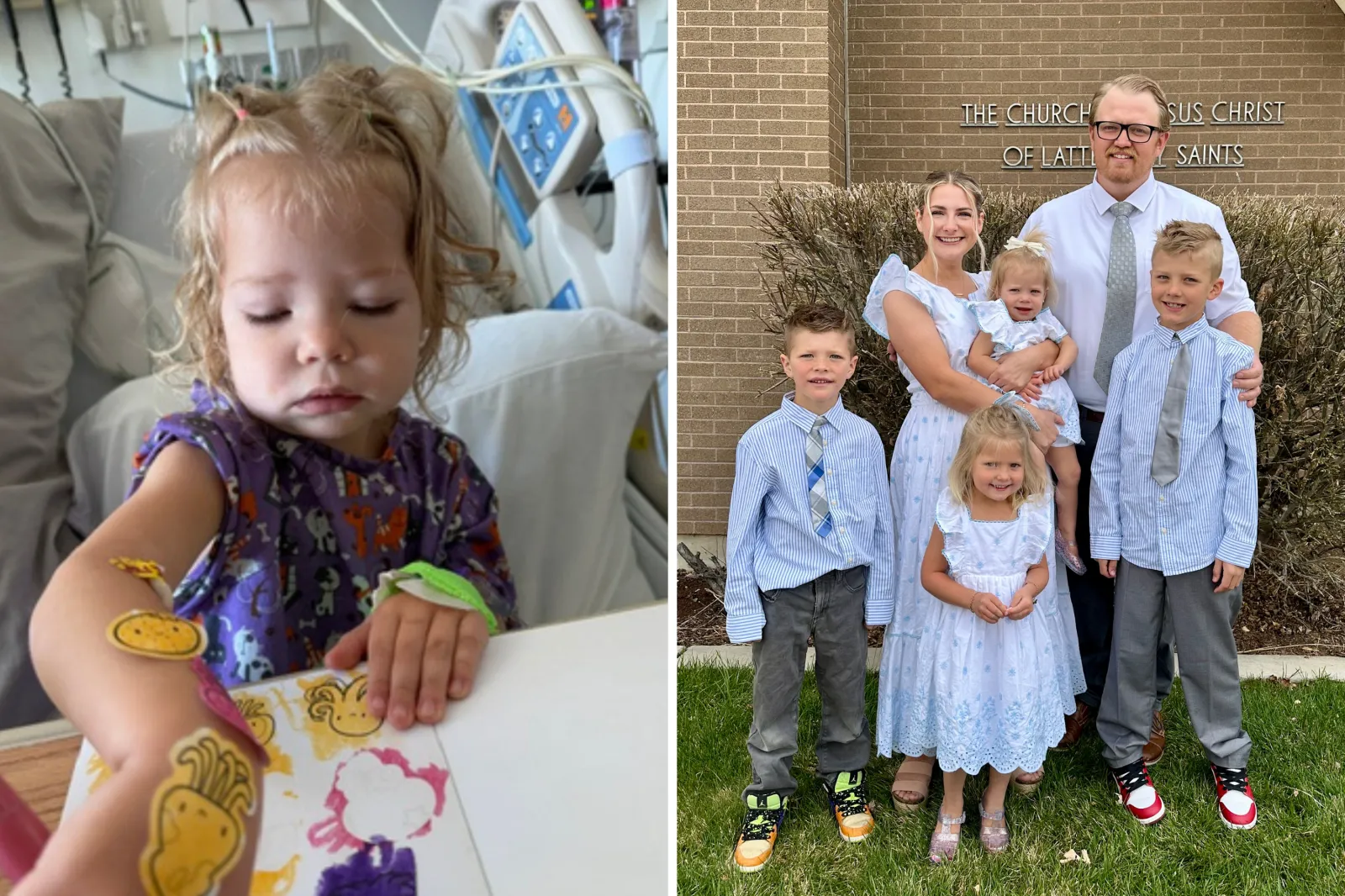
Looking back at photos, Wheeler now sees subtle signs.
“Toddlers always have cute round bellies, so I assumed that was the case,” she said. “But now that I know about the mass, I can see it. Adalae didn’t show any symptoms until the tumor burst.”
She hopes sharing their story will help other parents trust their instincts.
“Knowing what I know now, I would have insisted on further testing at the first hospital,” she said. “I want other parents to know they are not alone.”
Despite the whirlwind of fear and uncertainty, Wheeler says her daughter is slowly recovering from surgery, and glimpses of her joyful personality are returning.
“We are trying to find little bits of joy in this,” she said. “The nurses are amazing, the community has been incredible—we feel uplifted by all of that. The diagnosis has shaken our whole world upside down.”
The family remains focused on the road ahead, Wheeler said: “We are incredibly grateful that it is a cancer with a very good prognosis and an effective treatment plan.”
Read the full article here