



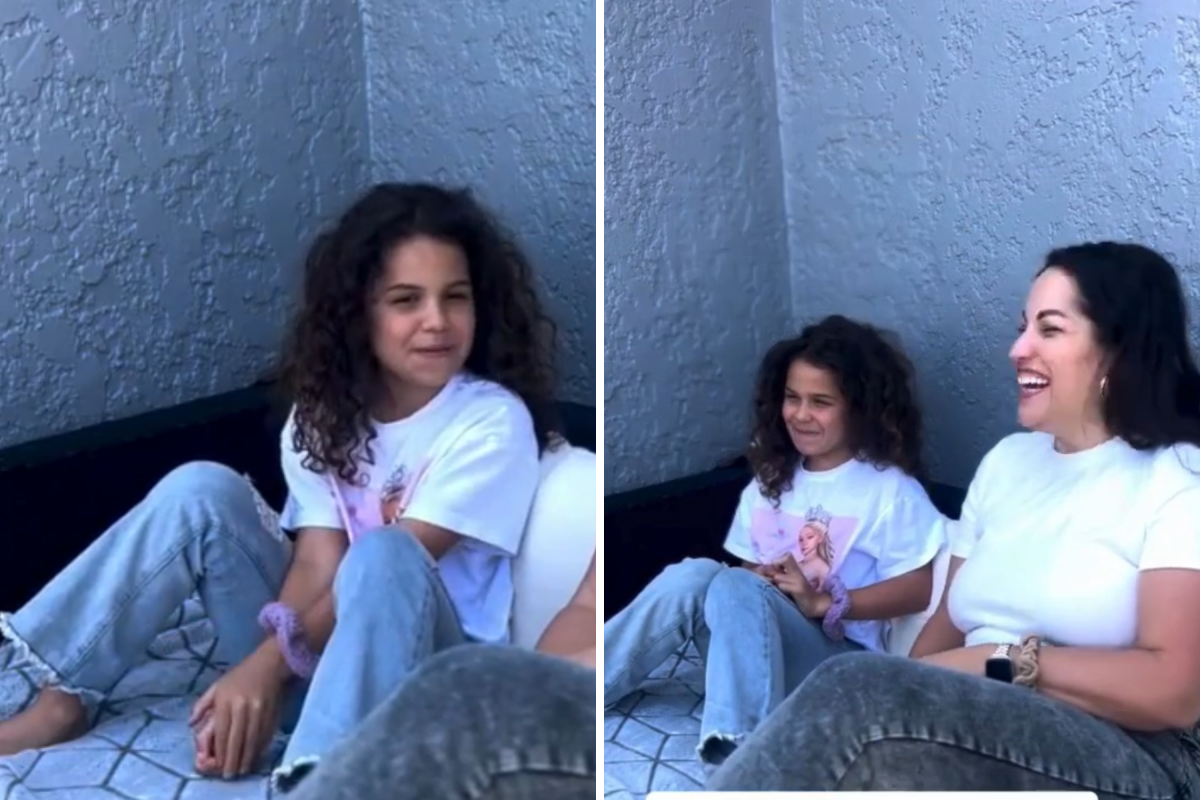
If you grew up with boomer parents, you probably heard: “Stop crying, or I’ll give you something to cry about.” But many kids today have never encountered those old‑school “tough love” lines—and one mom proved it in a viral video.
In the Instagram clip, Mariela De La Mora (@mariela.delamora) begins reciting the phrases she grew up hearing and asks her 9‑year‑old daughter to finish them. The child’s innocent, completely off‑base answers left De La Mora laughing, stunned, and eventually in tears.
She told Newsweek: “I cried because I felt overwhelmed at the simplicity of her answers and what they reflected about how she has experienced love.”
The Phrases That Sparked an Emotional Reaction
During the video, the 44‑year‑old mom says, “I want you to imagine how you the parent will finish” these sentences. The phrases include:
- “I’ll give you something” (to cry about)—but Adriana says: “to clean your room?”
- “I brought you into this world and” (I can take you out it)—Adriana says: “I love you”
- “As long as you live under my roof,” (you’ll obey my rules)—Adriana said: “you’re safe.”
De La Mora said: “Safe is all any of us ever wanted to feel. Her answers were a sign that the cycles I carried had been broken.”
Newsweek reached out to Simone Bell, a U.K.‑based therapist who supports adults and young people navigating anxiety, emotional overwhelm, relationship challenges and major life changes.
Bell said that boomer‑era parenting was often shaped by hierarchy, dictatorship and survival‑based values. Many parents of that generation were doing the best they could with what they had, but emotional safety was rarely the priority—obedience was.
Bell said: “Love was often assumed rather than spoken, and fear-based language was normalized as discipline, motivation or toughening up.
“Phrases like ‘I’ll give you something to cry about’ weren’t necessarily intended as cruelty, but they reinforced a power dynamic where children learned that safety, autonomy and even belonging were conditional.”
Describing her own parenting style, De La Mora said: “I would call my style ‘warm authoritative’ (not authoritarian).
“This means being an emotionally aware, regulated parent who knows expectations and boundaries help my child feel safe, but who also guides and loves her unconditionally as she makes mistakes.
“I aim to help her build a strong sense of self, and know that I’m her caretaker, she’s not mine. I’ve got us.”
A New Generation Breaks the Cycle
Today, younger generations have made it their mission to raise their kids differently.
De La Mora, who lives in San Francisco, California, told Newsweek that her parents are hard‑working immigrants from Mexico.
“They grew up poor and wanted a better life for my two little sisters and I. We didn’t have a lot of money but we had everything we needed,” she said.
“I was raised with a deep sense of work ethic, focus on academics and family values. So, I excelled in school and the workforce because, as the eldest daughter, I wanted to show my parents their sacrifices were worth it.
“But that also meant being raised by parents who grew up in survival mode, which was passed down in ways I didn’t fully understand until I became an adult.”
De La Mora said that millennials are the first generation to have resources such as self‑help books and therapy to understand how childhood can affect them into adulthood.
She added: “Realizing the connection between childhood and adulthood is what made millennials decide to re-parent themselves, and to raise their own children differently.”
What Therapists Say About Millennial Parenting
Bell told Newsweek that doing things differently is an intentional act of responsibility. She added that fear‑based discipline teaches children to comply, not to feel safe, and to behave, not to trust.
When parents heal their own relationship with power, anger and vulnerability, they create space to respond rather than react. This leads to children who don’t have to reinterpret love through threat because safety has been consistently modeled and felt.
Bell added that millennial parents are increasingly aware of the emotional gaps in their own upbringing. Rather than relying on fear or authority, they emphasize connection and emotional literacy.
The viral reel captures this shift: the child doesn’t hear threat in the phrases because her lived experience has taught her that love, safety and care are consistent.
For many millennials, vulnerability wasn’t always met with reassurance growing up, which pushed them to seek emotional safety elsewhere. This helps explain why millennial parenting places such importance on emotional openness and safety that is genuinely felt.
Why the Video Resonated So Deeply
Bell said that what makes the reel so moving is that the child’s responses reveal a completely different internal world. She hears love, protection and care because that is what has been consistently poured into her. This is the impact of being raised with emotional safety: authority is not experienced as threat, and boundaries are not confused with abandonment.
According to Bell, children raised this way are more likely to develop trust, emotional resilience and a secure sense of self—because fear was never the foundation of the relationship.
Read the full article here


