



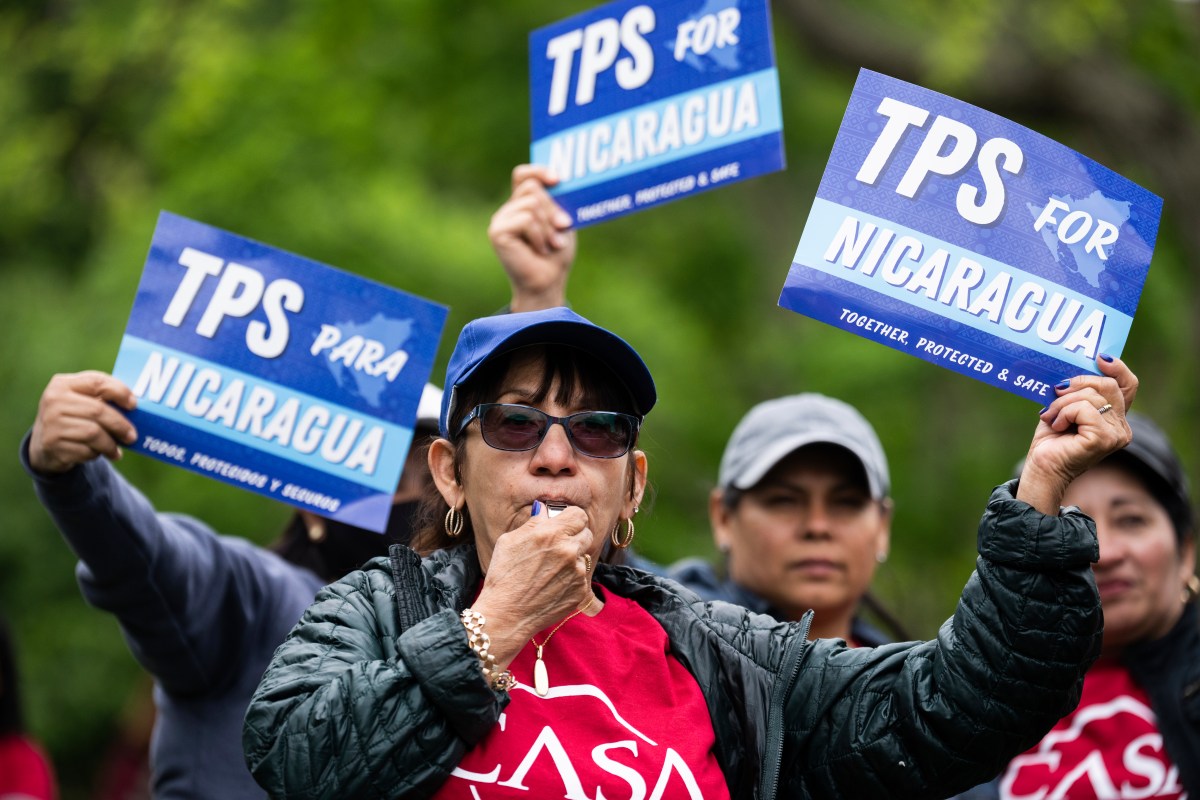
A federal appeals court in San Francisco on Monday temporarily lifted a lower court’s block on the Trump administration’s plan to end Temporary Protected Status (TPS) for nearly 89,000 migrants from Honduras, Nepal and Nicaragua, Reuters reported.
The 9th U.S. Circuit Court of Appeals paused a December ruling from U.S. District Judge Trina Thompson in San Francisco that had prevented the deportation protections from being terminated. The three-judge panel determined the government was likely to prove “legitimate” reasons existed to end the program for immigrants from those countries, finding the decision-making process was “not arbitrary and capricious.”
Newsweek reached out to the National TPS Alliance and Department of Homeland Security (DHS) via email on Monday for comment.
What Is Temporary Protected Status?
Congress authorized TPS as part of the Immigration Act of 1990. It clears the DHS secretary to grant legal immigration status to people fleeing countries experiencing civil strife, environmental disasters or other “extraordinary and temporary conditions” that prevent a safe return to their home country.
Honduras and Nicaragua received TPS policies in the late 1990s due to the catastrophic Hurricane Mitch that ripped through their countries. Nepal established theirs in 2015 after a deadly earthquake.
Who Benefits From TPS?
Under TPS, people from nations experiencing armed conflict, environmental disasters, epidemics or other extraordinary conditions cannot be removed from the United States or detained by DHS.
They may also be permitted to work or travel. TPS is a temporary protection, but people can still apply for other immigration benefits or protections while under the program.
What To Know
In July, DHS Secretary Kristi Noem sought to terminate TPS for Honduras, Nepal and Nicaragua, arguing the nations had recovered from the environmental disasters that originally justified the protections. Noem’s decision followed the Trump administration’s broader immigration agenda, with President Donald Trump making border security, mass deportations and ending federal benefits for people entering the country illegally key priorities during his second term.
In December, Thompson blocked Noem’s termination order in a 52-page ruling, finding the administration failed to adequately consider conditions in the three countries that would prevent migrants from safely returning. The judge also raised concerns that racial animus may have motivated the terminations, citing statements from Noem and Trump portraying immigrants as criminals and a drain on society.
The National TPS Alliance challenged Noem’s ruling, arguing it violated the Administrative Procedure Act. In response to Thompson’s blocking order, DHS Assistant Secretary Tricia McLaughlin accused the judiciary of usurping the president’s authority with “yet another lawless and activist order.”
The 9th Circuit panel—composed of Judges Stephen Hawkins (appointed by former President Bill Clinton), Consuelo Callahan (appointed by former President George W. Bush) and Lawrence Miller (appointed by Trump)—reversed course on Monday.
While Callahan and Miller appear to have written the main analysis, Hawkins wrote a separate concurring opinion agreeing with the result based on recent Supreme Court guidance. The court found the government was likely to succeed in proving that Noem’s decision-making process was rational and not arbitrary or capricious.
What People Are Saying
Noem, responding to the decision on X: “A win for the rule of law and vindication for the US Constitution. Under the previous administration, Temporary Protected Status was abused to allow violent terrorists, criminals, and national security threats into our nation. TPS was never designed to be permanent, yet previous administrations have used it as a de facto amnesty program for decades.
“Given the improved situation in each of these countries, we are wisely concluding what was intended to be a temporary designation.”
Myal Greene, president of World Relief, in a press release on TPS in September: “The administration says that they are deporting immigrants in the country illegally — but many Americans have missed just how many of the individuals now facing detention and deportation were here completely lawfully until the administration cancelled their TPS or humanitarian parole. Tragically, that puts people at risk of deportation to countries like Venezuela facing profound humanitarian crises, sending them into the hands of a dictatorial government that the U.S. does not recognize as legitimate.”
U.S. Attorney General Pam Bondi, on X: “This is a crucial legal win from @TheJusticeDeptattorneys that helps clear the way for President Trump’s continued deportations. As the court found, “the government is likely to prevail in its argument” that ending Temporary Protected Status for some immigrants is sound and lawful policy. We are proud to represent the Trump Administration in court every day.”
What Happens Next
The appeals court’s temporary lifting of the block means the administration can proceed with ending TPS for the three countries while the full appeal is considered.
Read the full article here


