



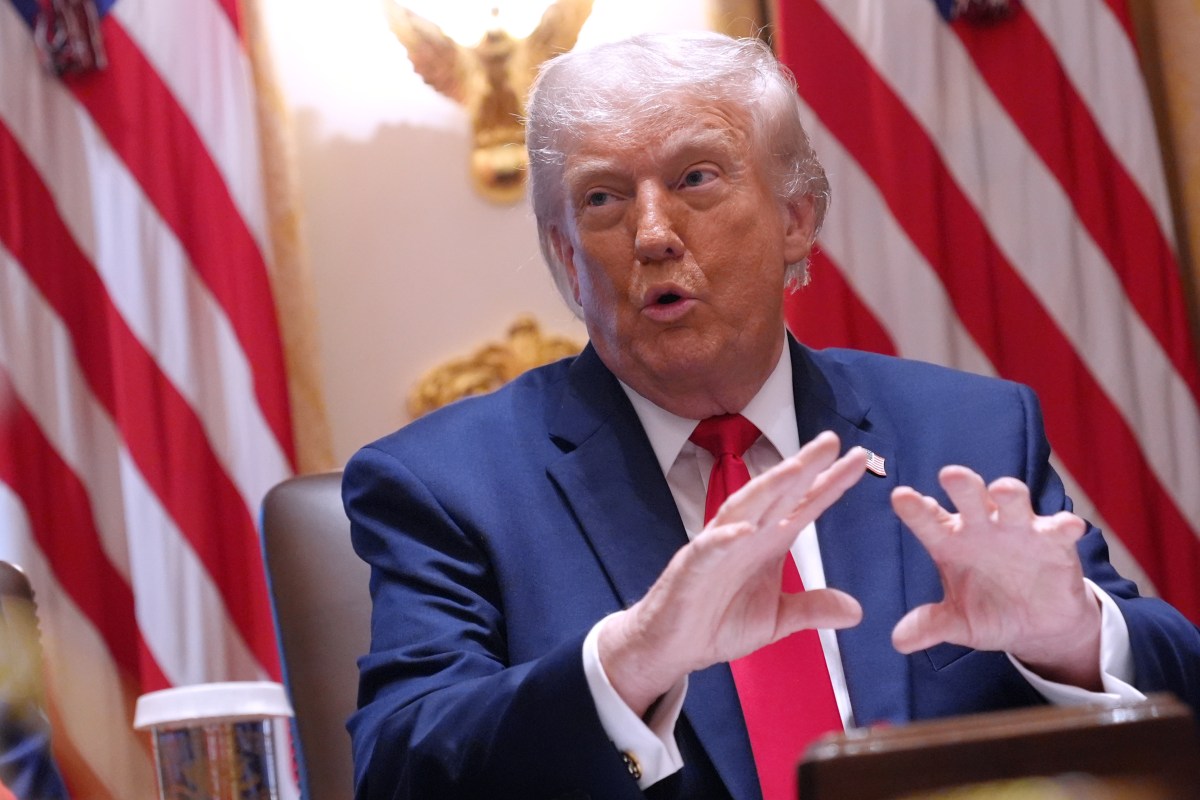
President Donald Trump intensified his rhetoric against two federal judges over the weekend, following a series of legal and political roadblocks tied to high-profile administration initiatives: a proposed White House ballroom expansion and a sweeping renovation of the Kennedy Center.
The legal battles mark a dual challenge by the administration against recent federal court rulings, with the White House arguing the judicial interventions compromise security and cultural infrastructure.
Escalating Tension Over the White House Ballroom Project
In a Truth Social post on Sunday, Trump warned that U.S. District Judge Richard Leon, appointed by President George W. Bush, would be held personally accountable if the administration’s planned White House ballroom expansion remains stalled. Trump dismissed the lawsuit blocking construction as “ridiculous” and characterized the plaintiff as a “serial” litigant lacking standing. The lawsuit was originally brought by the National Trust for Historic Preservation, alongside a local co-plaintiff and a coalition of historic preservation groups, who argue the administration lacks the constitutional authority to demolish the historic East Wing without explicit congressional approval.
“The DronePort at the White House Ballroom will be, perhaps, the most sophisticated anywhere in the World! It will safeguard our Nation’s Capital, Washington, D.C., long into the future,” the president wrote.
He continued: “Judge Richard Leon should stop playing games with America’s Security! If anything happens, he will be held responsible for the Death and Destruction caused to our Country. He has already created enough problems by allowing ‘Top Secret’ information to be released and exposed based on a ridiculous lawsuit started by a highly litigious woman (serial plaintiff!) whose ‘strolling,’ in her opinion, will be disturbed by the new, desperately needed structure.”
The legal battle over the ballroom has become a primary flashpoint in the administration’s broader friction with the judiciary. The White House has framed the judge’s injunction as a direct threat to national security, pointing last month’s shooting outside the White House Correspondents’ Dinner as a catalyst for the project.
Security Arguments and Project Timeline
Construction on the $400 million structure, which is designed to replace the demolished East Wing, is permitted to continue temporarily because the U.S. Court of Appeals for the D.C. Circuit granted an administrative stay pending a formal appeal hearing scheduled for June 5.
- The Administration’s Stance: Officials argue the facility is vital for secure operations, noting that delays have left the East Wing partially demolished, complicating security operations and forcing major executive events into temporary spaces. In his original order halting the project, Leon ruled that underground security infrastructure and bunker fortification could proceed but explicitly banned the above-ground construction of the 90,000-square-foot ballroom layout without a vote from Congress.
- Recent Legal Filings: The Department of Justice (DOJ) filed a motion arguing that a recent shooting near the White House serves as grounds to dismiss the legal challenge. Critics, however, maintain that the massive project requires far greater regulatory scrutiny.

The Dispute Over the Kennedy Center Renovation and Renaming
Simultaneously, the administration faces backlash over its management of the Kennedy Center. The venue’s planned two-year closure, championed by the White House to execute a sweeping structural overhaul beginning in July, has been blocked by a federal court.
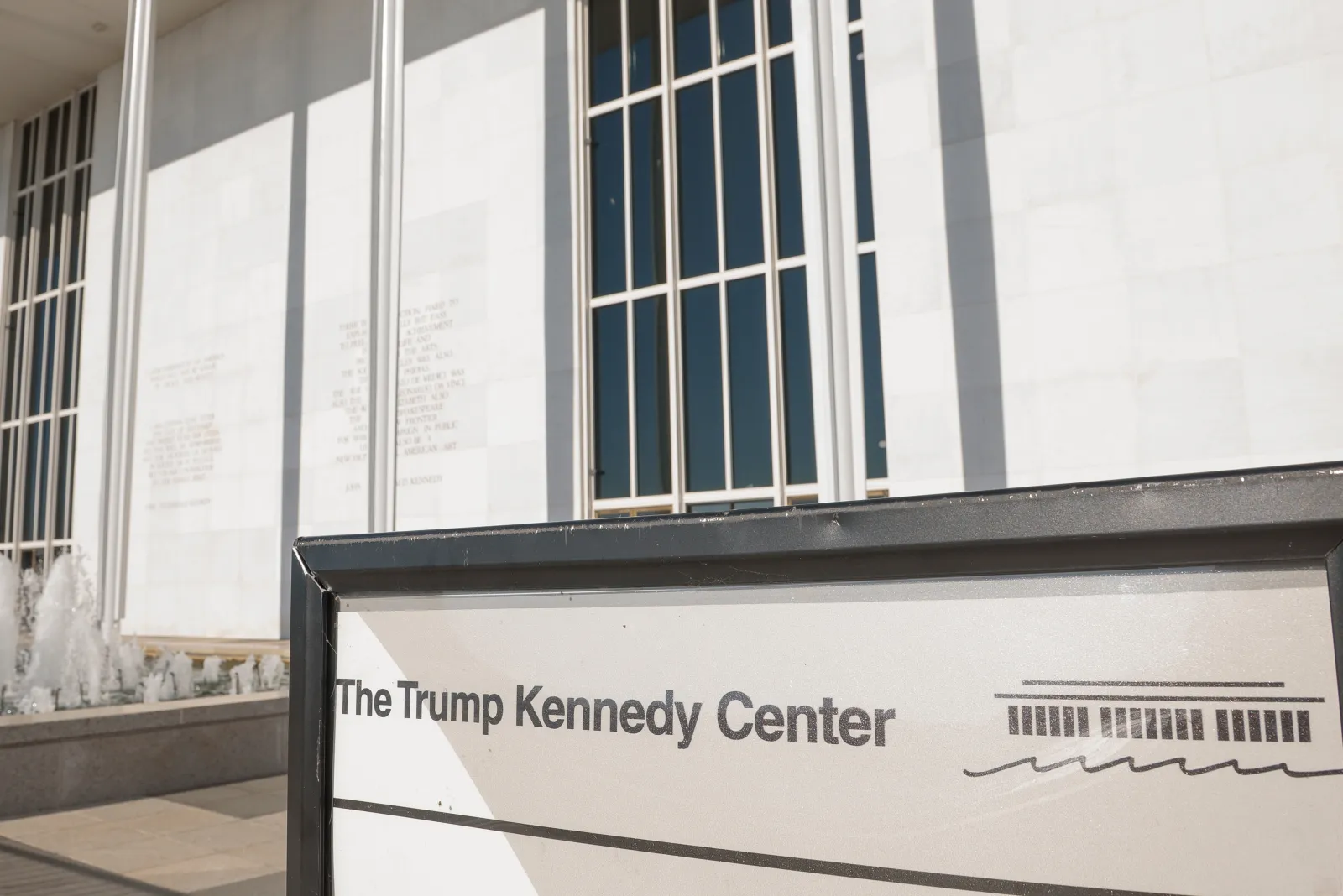
The operational friction follows a major legal defeat regarding the facility’s naming rights. In December 2025, a Trump-appointed board voted to change the venue’s title to the “Trump-Kennedy Center,” leading to the immediate installation of signage reading “The Donald J. Trump and The John F. Kennedy Memorial Center for the Performing Arts.”
Judicial Reversal of the Name Change
Because the Kennedy Center was established by an act of Congress, federal law explicitly designates it as “the John F. Kennedy Center for the Performing Arts.” Any modification to the name requires congressional approval.
U.S. District Judge Christopher Cooper, appointed by President Barack Obama, ruled last week that the board had overstepped its statutory authority. Ruling on a lawsuit brought by Representative Joyce Beatty, a Democrat and a former member of the center’s board—alongside parallel challenges from the DC Preservation League—Cooper issued a sweeping injunction. The court permanently struck down the name change and ordered the administration to completely strip Trump’s name from the building’s façade, website, and official documents within 14 days. Cooper also halted the scheduled July shutdown, ruling the board had been “derelict” in its duties by rubber-stamping an “ill-informed” closure without analyzing the devastating impact on revenues, sponsorships, and arts programming.
In response to the ruling, Trump criticized Cooper in a Truth Social post on Saturday, calling him “an anti Trump Hater” and suggested the venue may close permanently.
“Can you imagine? A Barack Hussein Obama Judge named Christopher Cooper has stopped a magnificent structural and aesthetic rebuilding of The Trump Kennedy Center where Millions of Dollars of material, marble, furniture, steel, air conditioning, heating, and so much else was ordered, or soon to be ordered, with the end result being a structure that would no longer be in a potential state of collapse, rusted, rotted, and rat and bug infested, to one that would be the Finest anywhere in the World,” the president wrote.
He later continued: “On top of that, he said, ‘Rip his name off the Building, he’s got 20 days to do so,’ even though a large Board of some of the most distinguished people in the Country voted unanimously to put the name up. I didn’t do it, the Board did because they thought it would be good for this dying Institution, which was doing Record Low Business and, especially after COVID, only getting worse — True for other such Institutions throughout the Country, but The Trump Kennedy Center was going to be a special one. It would have fully recovered, when none others will.”
Proposed Congressional Transfer
Following Friday’s ruling, the administration indicated it may walk away from the cultural landmark altogether. Trump wrote on Truth Social that he has instructed the Department of Commerce to coordinate with lawmakers to facilitate a full and complete transfer of the landmark back to Congress.
“Unless I am free to do what I do better than anyone else, bring this Institution back, physically, financially, and artistically,” he wrote. “I have no interest in continuing what could only be a hopeless journey into ‘NEVER NEVER LAND.'”

Read the full article here


