



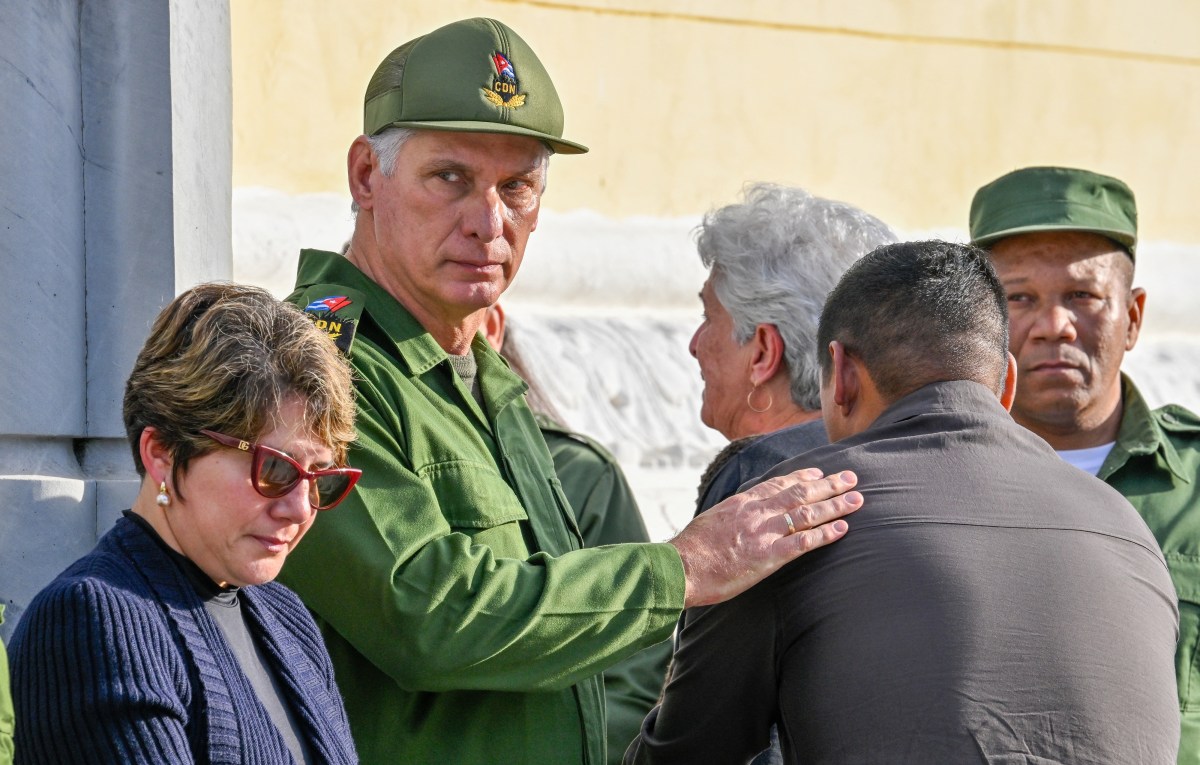
The Trump administration has made it clear that while negotiations with Cuba continue, no meaningful progress will occur until Cuban President Miguel Díaz-Canel leaves office, The New York Times reported.
Citing four people familiar with talks between the two nations, the Times noted that the White House seeks to force regime compliance rather than change as the basis of foreign policy.
Newsweek reached out to the White House via email outside normal business hours Monday for comment.
Why It Matters
President Donald Trump’s administration is chiefly concerned that Díaz-Canel, considered a hard-liner, is unlikely to support structural economic changes, and his departure would mark a symbolic win for Trump that would help him present his plans for Cuba to the American public and appear strong to the Cuban exile community. Ultimately, the administration is aiming to open up Cuba to American business, which would turn Cuba into a client state.
What To Know
Cuba is suffering an energy crisis that authorities have blamed on a U.S. energy blockade that started after Trump signed an executive order placing oil sanctions on the island nation.
The sanctions are just part of the ongoing effort by the administration to “take” Cuba: Trump has recently said that the “communist dictatorship in Cuba” is on borrowed time, and that he will ultimately have “the honor of taking Cuba.”
“Whether I free it, take it … I think I can do anything I want with it, if you want to know the truth,” the president said. “They’re a very weakened nation. Very violent leaders.”
The U.S. has so far not pushed for any action against the Castro family, who remain the country’s top power brokers, which has in turn forced the Trump administration to seek other means of meaningful change.
Díaz-Canel, 65, has been president of Cuba since 2018 and serves as president of the Communist Party. He has only two years left in his term.
It remains unclear how much the Cuban community would support Trump’s moves in Cuba if he did not also generate political change, with wholesale transformation of their homeland the likely goal.
And Díaz-Canel is not the only Cuban official that the administration is targeting. The Times also reported that the U.S. seeks the removal of some older officials still committed to the ideals of Fidel Castro—a revolutionary and Cuba’s leader for almost 50 years until retiring in 2008—and it has also pushed for the release of political prisoners.
Read the full article here


