



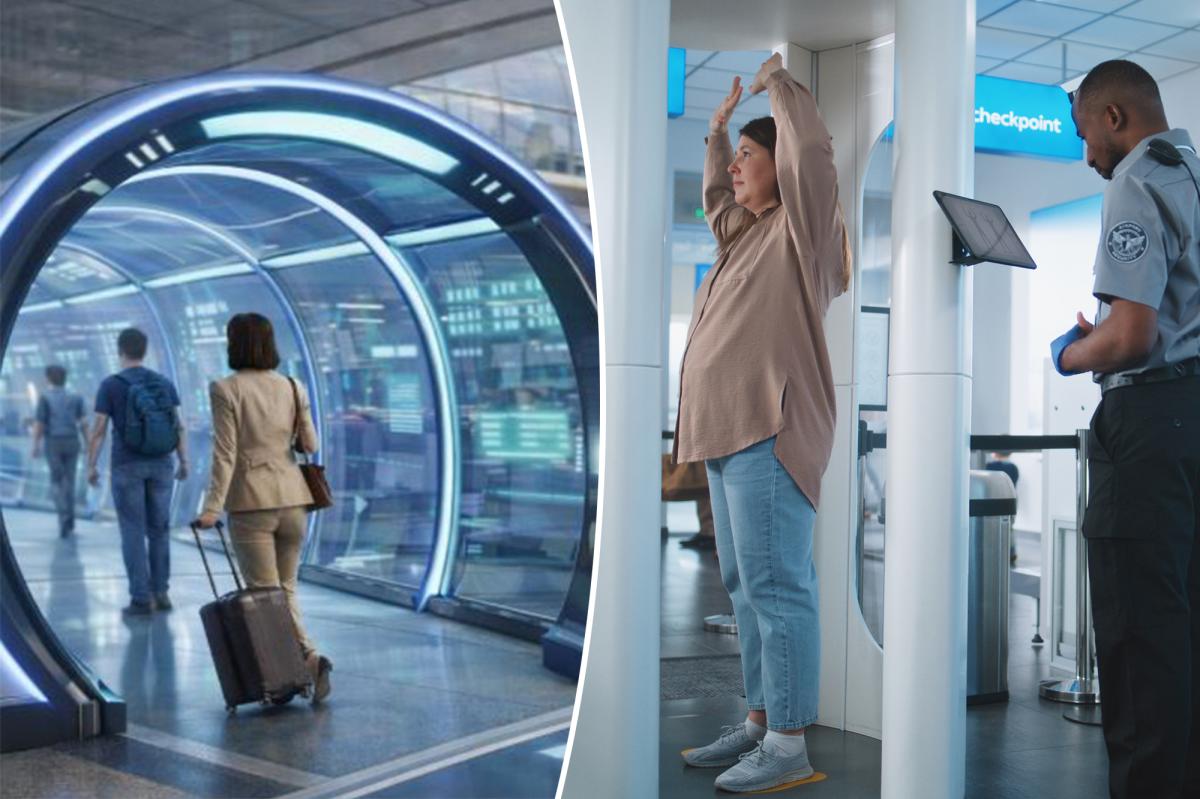
When you signed up for TSA Pre-Check, you were promised the dream of breezing through airport security, keeping your shoes on, and not having to sift through your strategically packed backpack to take out your laptop.
But the selling point of ease holds little value when the security lines are hours long, and there aren’t enough agents available to screen the millions of passengers traveling on any given day.
In the wake of a TSA funding crisis that caused security lines of up to three hours and ensuing travel nightmares in New York City airports, the agency went public on Monday with a new initiative, TSA Gold+, an expansion on the existing Security Screening Partnership, and what the TSA is referring to as “the future of aviation security.”
The new security model is a public-private partnership intended to modernize and enhance current airline security at select airports. Murmurs of the launch surfaced last year, but an internal memo sent by the company on Monday confirmed the initiative’s execution. Designed to optimize security and performance, the new program aims to set the standard for technology and efficiency in the screening process through long-term partnerships with private contractors.
“TSA Gold+ enables airports to both tailor operations to their unique needs and accelerate innovation, all while ensuring robust security standards,” the TSA said on its website.
As the travel industry faces increased scrutiny due to rising operational costs, threats, and an overall uptick in travel volume, the agency, which is approaching its 25th anniversary, took the opportunity to reimagine what security could look like amid these challenges.
Last year, it was reported that the TSA screened 900 million travelers, according to Travel and Tour World, even as technology lagged and maintenance costs for outdated systems continued to soar.
Under the current system, 20 airports operate under SPP, with TSA oversight and regulations, but under TSA Gold+, SPP will also be allowed to use their own technology to screen passengers and luggage, with the goal of taking some of the burden off the current staff.
For major airlines like Delta, JetBlue, United, American and Southwest, the appeal of opting in is clear, as timely checkpoints and screening are crucial to maintaining tight schedules. But they are cautiously optimistic, says Travel and Tour World, which reported that major carriers support innovation to reduce delays but stress the importance of security.
By continuing to privatize security, the TSA expects to offset thestaffing and financial burden, which was compounded by the partial government shutdown. Acting TSA Administrator Ha Nguyen McNeill told Congress in April that TSA workers had missed nearly $1 billion in delayed paychecks this fiscal year and argued in support of privatization to help insulate workers.
But despite the potential upside, not everyone is in favor, with some taking the opportunity to criticize the Trump administration’s “latest assault on the workforce,” according to posters on Reddit.
“In ‘Trump-Murica,’ EVERYTHING is for sale – including the public’s safety,” wrote another displeased user.
Others were more concerned about the inequity of safety standards.
“The concept of a ‘bespoke’ airport security experience should terrify people. Different standards based on different economic levels absolutely won’t be appropriate for providing national security,” said another Reddit user.
But for frequent fliers, the argument was that they are more prone to disturbances in the existing travel model.
“I can’t argue the economic means thing, but as a very frequent air traveler it is a mess to roll into a line composed of folks with little-to-no experience with air travel processes. If you fly once a year, taking an hour to get through security is a minimal impact. If you fly twice a week, you experience a lot more disruption,” wrote another user.
As the TSA remains at a crossroads, McNeill hopes that with continued support from Congress and industry partners, “a screening process that is more efficient, technologically integrated, secure and affordable to the American taxpayer is within our grasp.”
Read the full article here


