



Universities should set minimum standards for academics using AI and require third-party certification to guarantee work is “human-authored” before publication, according to a former Monash University chancellor.
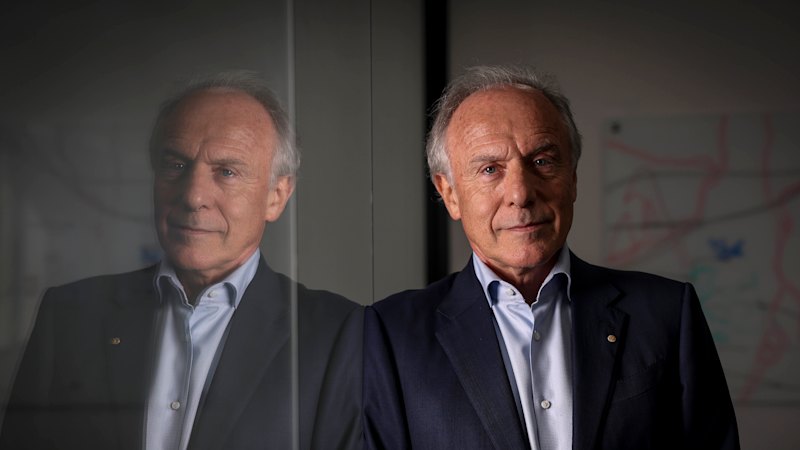
Dr Alan Finkel, who also served as Australia’s chief scientist, has urged tertiary institutions to set minimum standards for academics who use AI for their work.
“You can’t have something as loose as what we saw in the last couple of days,” he said.
On Wednesday, Western Sydney University professor Cath Ellis defended her use of AI in helping to write an article published in The Sydney Morning Herald after her peers noted unusual language patterns. The article was in defence of the university system, and it included advice like “Don’t cut corners” and “Don’t outsource your thinking”. The piece was also published on The Age website.
Ellis’ opinion piece was published in response to an earlier piece by academic Kylie Moore-Gilbert, who said widespread AI use meant universities were accepting money from students for degrees they had not earned.
Finkel said the matter was a case in point for why academics’ work should be independently verified. But universities, while aware of the significance of the issue, had been slow to move, he said.
“The caution is palpable,” he said.
“I think extremely highly of the ability and the ethics of academics and the senior members of universities because I’ve worked with them. But they are facing an onslaught of technology that has to be dealt with.”
Finkel said minimum standards for AI use in academic work should allow artificial intelligence to be used as a research assistant, to check spelling and grammar or to format a bibliography or an index.
However, using AI to draft a paragraph of text or to edit AI-generated text was unacceptable, he said.
“The use of AI is insidious, it creeps up on people. They use it a little bit, then they use a little bit more, but we have to start tackling this before it gets out of control.”
Finkel, an inventor and entrepreneur who says he doesn’t use AI, founded Proudly Human in 2023.
The certification start-up verifies and labels human-authored content for clients including universities, publishers, authors, filmmakers, artists and others working in creative industries.
His views have been backed by Toby Walsh from the University of New South Wales, who is a professor of artificial intelligence and a laureate fellow.
Walsh said academics should disclose how they used AI, and there should be a code of conduct.
He said if universities expected students to adhere to AI standards and disclosures, it should be the same for academics and tutors.
“We have to lead by example,” he said.
“I think it’s terrible that if we want students to adhere to one set of rules, and staff to follow another.”
However, he noted AI-detection tools were flawed and weren’t always able to detect whether something was written by a human.
The National Tertiary Education Union’s Alison Barnes said AI was being rolled out in universities without adequate regulation or oversight.
“There is a massive reputational risk to universities if unfettered AI hurts education quality,” she said.
Victorian branch president David Gonzalez said it was vital that academics were included in discussions about how AI could be used.
“We’re advocating in our next enterprise agreement to have a set of standards and understanding of what the policies around AI are because we’re basically being asked to use new systems, and we don’t really know what the implications of those are,” he said.
He said if an academic used artificial intelligence to help with their notes or organising papers, it didn’t need to be disclosed, but for scholarship it should be.
The Conversation website asks academics to disclose whether AI has been used to produce their work when submitting articles.
Australia and New Zealand editor Misha Ketchell said in most cases the news website didn’t accept articles created with AI but that there was room for editorial discretion if there were legitimate reasons.
He said The Conversation was receiving more submissions from academics that had been created using AI, however it wasn’t significant. And it didn’t always enhance the work.
“The problem with AI is the same problem every child encounters when they first try finger-painting. They want to show all the colours, but put them all together and you end up with brown slop,” he said.
Universities Australia chief executive Luke Sheehy said the key was making sure students and academics knew how to use AI responsibly, ethically and effectively.
“Like the internet before it, AI is a powerful tool. Our job is to ensure people are equipped to use it wisely and responsibly in their studies and in the workplaces of the future,” he said.
A Group of Eight spokesperson said the group of universities had clear guidelines for the appropriate use of generative AI technologies by academic staff, researchers and students.
“The responsible use of AI and generative AI tools can support and enhance student learning, teaching and research, but this must be balanced with the need for academic excellence and research integrity,” the spokesperson said.
Cath Ellis could not be reached for comment on Friday night.
Start the day with a summary of the day’s most important and interesting stories, analysis and insights. Sign up for our Morning Edition newsletter.


From our partners
Read the full article here


