



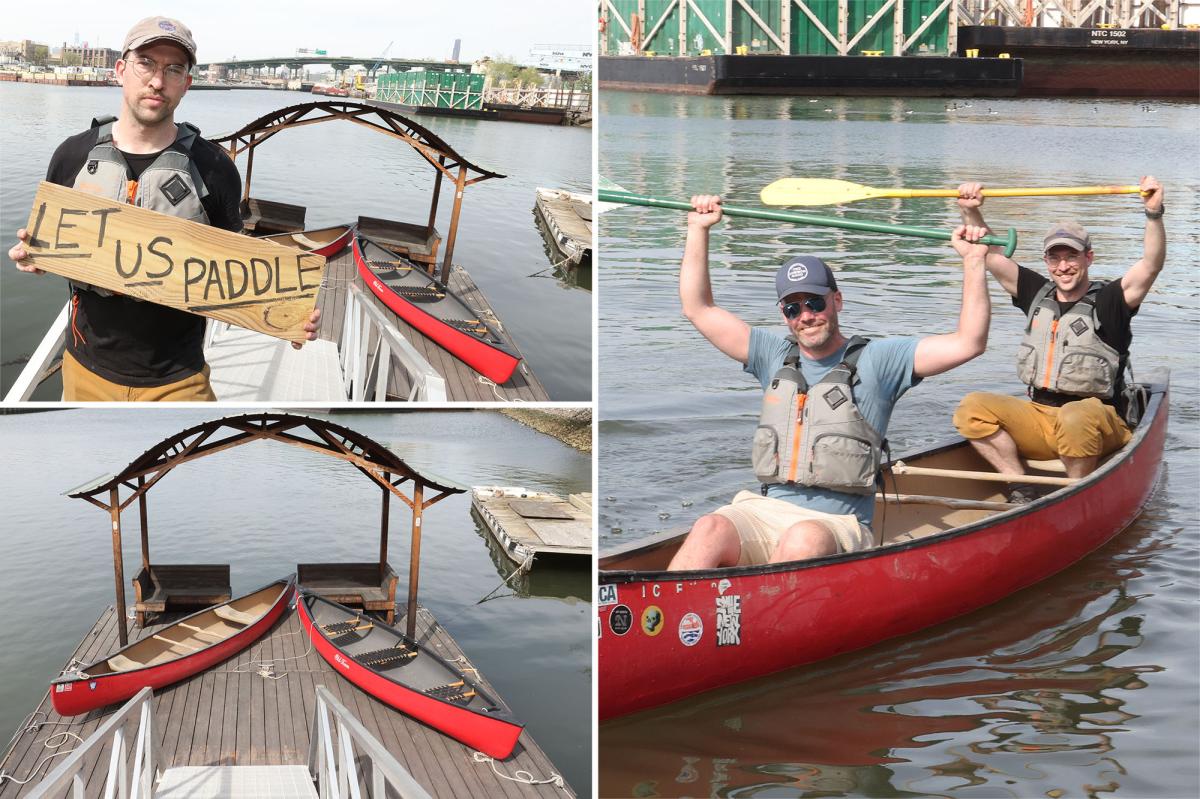
Canoe you believe this?
Kayakers, Canoers and rowboat-enthusiasts are fighting a proposed federal ban on all “human-powered” small vessels in the waters around New York City during this summer’s blockbuster maritime semiquincentennial celebration of tall ships called Sail 4th 250.
The US Coast Guard is floating a safety zone plan that would bar the tiny paddle-powered craft anywhere around the city during the Independence Day festivities — leaving fishing boats, yachts and other engine-powered ships free to watch as a massive flotilla of tall ships sails through the Harbor.
Some are calling a ban on the less expensive means of aquatic transportation positively un-American.
“I find it highly ironic that on the celebration of America’s independence, they want to crack down on people’s ability to get out on the water. This is everyone’s resource, and we should be able to be out there just as anyone else,” said Brad Vogel, of the Gowanus Dredgers.
The USCG is proposing the rowing restrictions to run from July 1 through 9, calling the rules “necessary to promote the safe navigation of vessels and the safety of life and property during these events.”
As part of the rules, paddlecrafts will be banned from the Hudson and East rivers and New York Bay during this period.
But that’s not all, the full length of the ban stretches from the Verrazano-Narrows Bridge all the way to the Throgs Neck Bridge in Eastern Queens — and from the mouth of Arthur Kill near New Jersey to the Spuyten Duyvil Bridge near the Bronx.
Since the flotilla of tall sailing ships will only be using the Hudson River, the small-craft lovers can’t understand why the ban includes even areas far away.
“The proposed rule is arbitrary and capricious in how overbroad it is. It doesn’t need to be banning paddlers from using the East River and Newtown Creek and the Gowanus Canal. That’s overkill in a major way … It goes all the way up to parts of the Bronx that seem to have nothing to do with this!” fumed Vogel, who previously served as the Dredger’s captain.
The proposed rule could even be described as prejudicial toward “human-powered paddlers,” Vogel added, pointing out that engine-powered vessels will still be permitted to use the sprawling waterway, though some estuaries will have tighter security restrictions than others.
The timing of the potential ban also coincides with peak season for kayaking, according to Downtown Boathouse President Martin Sweeney.
“We live in a space-starved city and this is essentially part of the parkland. It takes away a large recreation area for us and the public we serve,” Sweeney explained.
“The human power boating community is bigger than you might think in New York City … A lot of times people are like, ‘Oh, nobody goes on the Hudson River.’ But we go! There is a large community and it is pretty active.”
The USCG told The Post that the hundreds of comments submitted by maritimers could be enough to change the tide on the regulations.
“The federal agency is currently considering potential measures modifying access for commercial vessels, paddle craft, and other recreational water activities in New York Harbor, Sandy Hook Bay, and on the Hudson River,” a spokesperson for the agency told The Post.
A captain involved in the Port Planning process allegedly told the Gowanus Dredgers that the restrictions on paddlers would be reduced to just July 4th, the day of the event.
Read the full article here


