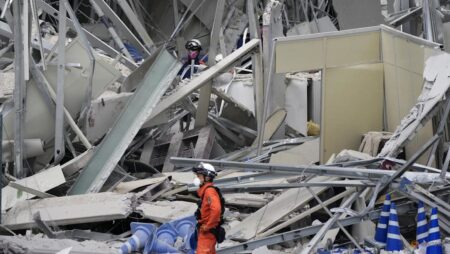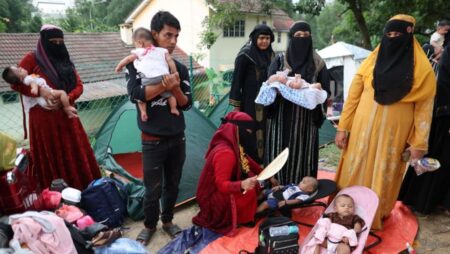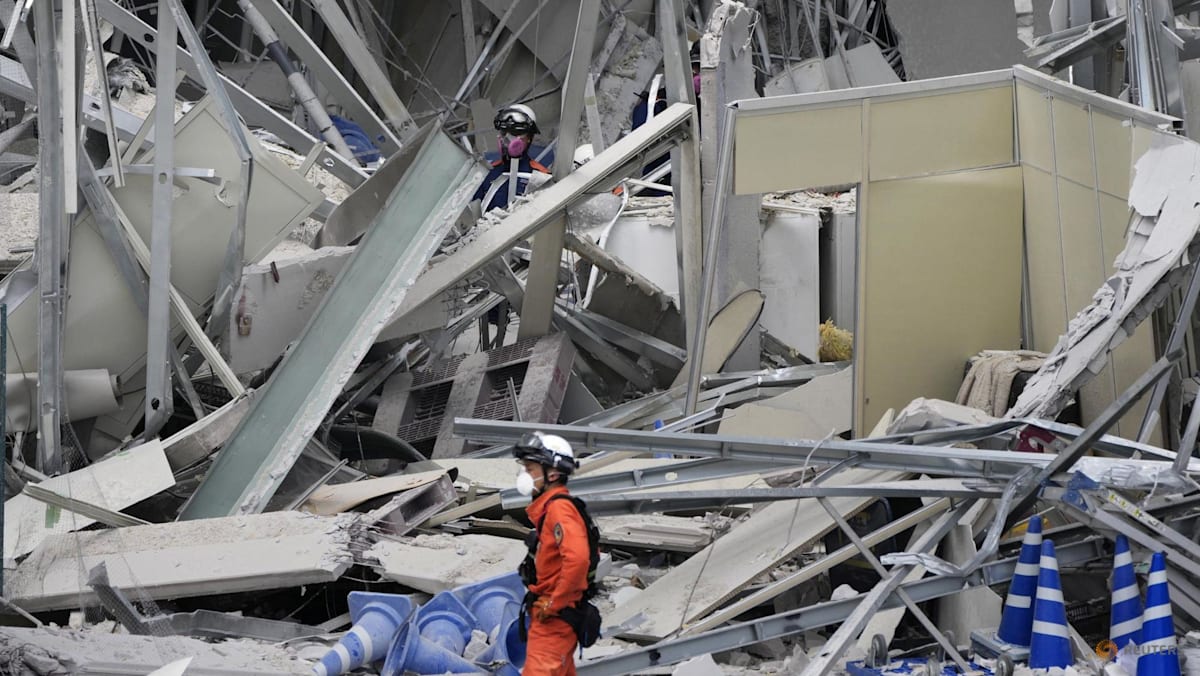
UTILITIES DISRUPTED
As of Thursday morning, some 22,670 households and facilities still had no power. Around 84,000 homes were suffering water disruptions as of Wednesday.
TV footage showed people queueing for petrol and drinking water.
The US Geological Survey measured the quake at 6.8, lower than Japan’s reading of 7.1.
Japan is one of the world’s most seismically active countries, sitting on top of four major tectonic plates along the western edge of the Pacific “Ring of Fire”.
Kumamoto itself was hit by two devastating earthquakes in 2016, which killed 273 people and injured more than 2,800.
The archipelago, home to around 125 million people, typically experiences hundreds of jolts every year and accounts for about 18 per cent of the world’s earthquakes.
The vast majority are mild, although the damage they cause varies according to their location and the depth below the Earth’s surface at which they strike.
Japan is haunted by the memory of a massive 9.0-magnitude undersea quake in 2011, which triggered a tsunami that killed or left missing around 18,500 people and wrecked the Fukushima nuclear plant.
Read the full article here