



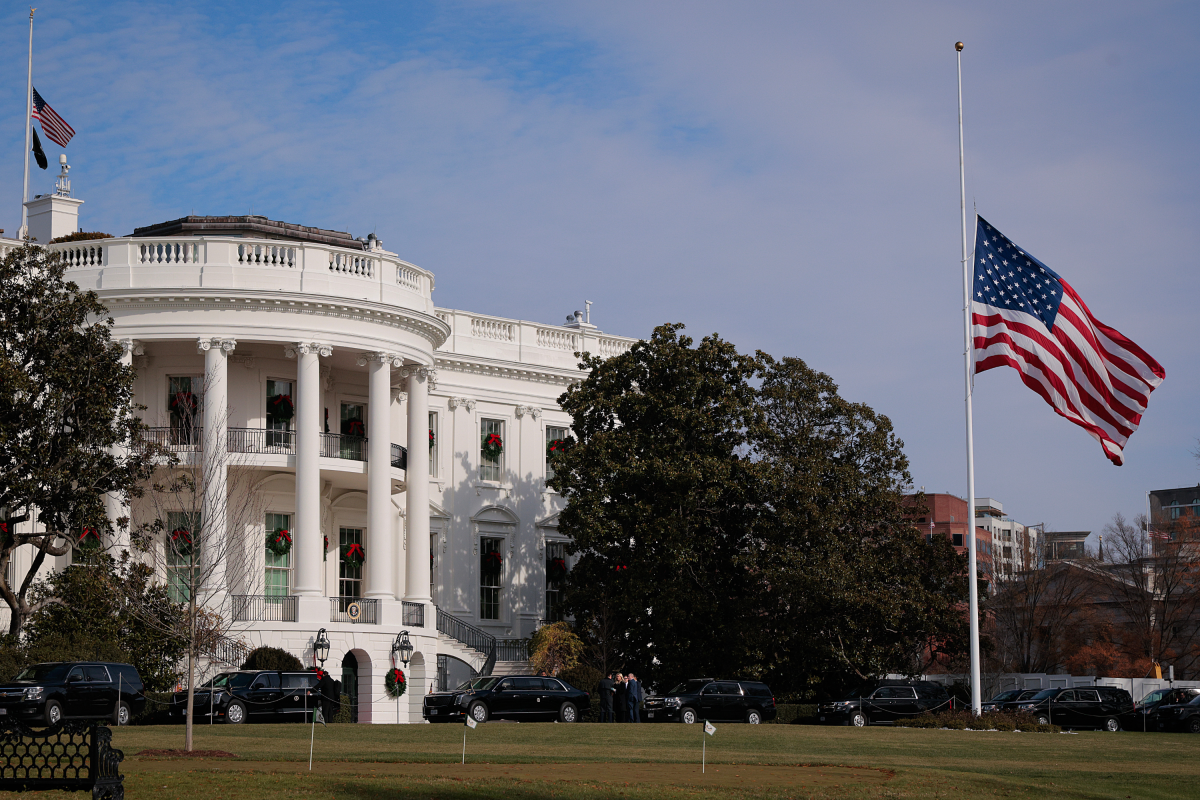
A newly introduced House bill would require U.S. flags to be flown at half-staff on a specific lunar-based date each spring.
Why It Matters
Congress periodically updates federal flag rules to formalize national observances.
This proposal would add a new, recurring half-staff requirement to U.S. law.
What To Know
Republican Representative Andrew Ogles of Tennessee introduced the legislation, H.R. 8150, in the House on March 27.
It would amend Title 4 of the United States Code, which governs the display and use of the American flag.
Under the bill, flags would be required to fly at half-staff on the first Friday and Saturday after the full moon that occurs on or after the spring equinox each year.
The measure would apply nationwide and would establish the observance as a standing requirement in federal law.
The proposal does not include a summary explaining the purpose of the observance, and no additional details have been published outlining how the dates would be calculated beyond the language in the bill text.
H.R. 8150 was referred to the House Committee on the Judiciary on the same day it was introduced. That referral places the bill at the earliest stage of the legislative process.
According to Congress.gov, the measure has not yet received a committee hearing, markup or vote, and no companion legislation has been introduced in the Senate.
Why Flags Are Flown at Half-Staff
Flying the flag at half-staff is a long‑standing symbol of national mourning and respect.
Federal law and presidential proclamations have established the practice as a way to honor the deaths of public officials, service members and victims of national tragedies.
Rules governing when and how the flag is lowered are outlined in Title 4 of the United States Code, which also sets standards for flag display and observance days.
While many half‑staff orders are issued by the president or state governors in response to specific events, Congress has also designated certain recurring dates for the observance.
What Happens Next
For the bill to advance, it would first need to be taken up by the House Judiciary Committee, which could hold hearings, amend the measure or decline to act.
If approved by the committee, it would then need to pass the full House, clear the Senate and be signed by the president to become law.
Read the full article here


