




China is criticised for its recent submarine missile test over concerns it makes our region less safe, (“China’s missile test is a hypocritical affront to Australia”, July 8) An alternate view is that it paradoxically makes us safer. By developing a “second strike” capability under a well-established nuclear war deterrence strategy of “mutually assured destruction”, China arguably stabilises our region. What is making the world less safe is the US not renewing the new Strategic Arms Reduction Treaty with Russia, removing vital caps on warhead numbers. On top of this, recent US national security and defence strategies have codified a major shift towards expanding their nuclear arsenal, which will inevitably lead to a dangerous new arms race. To ensure regional and broader stability, a more nuanced and focused approach would encourage all nuclear powers to start reducing their stockpiles. Carlo Ursida, Kensington (Vic)
It’s not surprising that China has launched a long-range ballistic missile from one of its nuclear submarines. Some may argue it was a predetermined event, programmed in advance, coinciding with Australia’s strategic talks with the Solomons (“PM seeks deal in Pacific and slams China over missile”, July 8). Whatever the case, it was a provocative act. Pacific Ocean of Peace? Its acronym says it all. China seeks to expand its influence there. The increased distance they can now project their missiles should alarm both DFAT and Defence. It exposes Australia’s vulnerability. Mike Fogarty, Weston (ACT)
Measures of productivity
Ross Gittins briefly mentions the lack of measurements available to show productivity progress in areas such as learning (“If productivity can’t be measured, how on earth can we improve it?”, July 8). But we do have success scales for learning achievement in NSW, such as those for NAPLAN and the HSC, and also the OECD reading results that compare Australia with other comparable countries. For students at the top level, according to these measurement scales, their years of school learning have been productive, we can rightly say. For those at the bottom level, however, their 10 or more school years have been unproductive. In terms of learning the basics that schools are supposed to teach, reading is always first on the list. The measurements show that thousands of our precious school leavers have been let down with this basic requirement. Greater productivity in learning to read is vital for the nation’s productivity as a whole. It is urgent. It is critical. Ross Gittins asks: “How can we improve it?” I say to the education tsars, there must be a way. Find it. Pen G. Layton-Caisley, Marrickville
After reading Ross Gittins’ article, I’m curious how the productivity of economists is measured. Is it proportional to how many times they advise others to lift their productivity? When I studied economics in high school, my teacher said economists got paid the most for doing the least. David McBain, Wollongong
One component of productivity that Ross Gittins didn’t mention is experience. In a world where the average job length for young workers is two years and the overall average is 3.3 years, where is the embedded knowledge? Where is the knowing what to do when something out of the ordinary happens? Where is “we tried that five years ago and it didn’t work”? Companies are ruthless with making people redundant. Loyalty is evaporating and workers chase bigger wages by jumping sideways. No wonder productivity is slipping. Neville Turbit, Russell Lea
This is rich
There are seemingly contrary economic opinions in today’s paper. One says we are suffering from a major collapse in living standards (“Australia’s real wages slump one of the worst in developed world”, July 8) and another that Australia is extraordinarily wealthy, with our economy growing faster than the average developed country (“The science of happiness, unemployment, inflation, populism and One Nation”, July 8). If both are true it suggests our neo-liberal economic model is failing the majority and making a few people extremely wealthy. Graeme Finn, Campsie
Backup needed
Disruption due to the outage of Telstra’s network illustrates how dependent we are on digital communication (“Telstra outage impacts Triple Zero call and regional train services”, July 8). We need a reliable system to manage not just Triple Zero emergencies but a plethora of other matters. Networks can be disrupted by system glitches, but also by malicious acts. National and personal security can be jeopardised when networks are damaged through electronic jamming, cutting of undersea cables, destruction of transmitter towers and many other methods. Our government must ensure that we have a reliable back-up system that will allow our communities to function if commercial telcos here or overseas fail. Brian O’Donnell, Burradoo

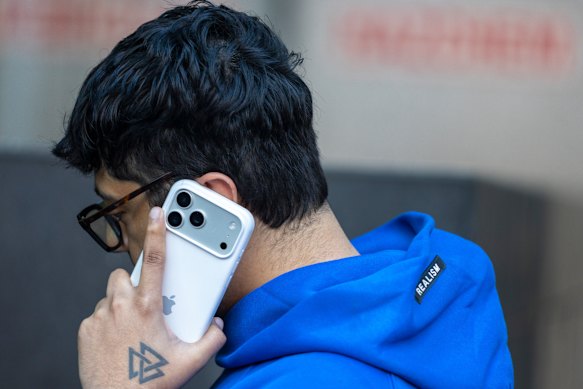
Surely after the previous serious outages involving Telstra and Optus, both companies would have a Plan B to keep our systems going. Being without coverage for more than half a day on Wednesday and causing huge business and transport issues around the country demands that they both have a viable option to fall back on. Just think what chaos a bad foreign actor could cause by deliberately interfering with our telecommunications systems. It’s well past time for us to get prepared for this as well as future technical problems. Ian Ferrier, Long Jetty
Once again a telephone network goes down in Australia. Apart from communications going down, those customers who use their mobile phones to pay for things like transport and food were caught short. We hear that governments and businesses want a cashless society, but with an outage like this it becomes clear that in the end, cash is still king. Robert Pallister, Punchbowl
Loss of faith
I expect many Catholics, practising and non-practising, would join Father Kevin Dillon in condemning the behaviour of Christian Brothers (“As a priest, I wonder what Jesus would say about the Christian Brothers crying poor”, July 7). Many of us have fond memories of the education we received from the Christian Brothers. However, their reputation was tarnished by the sexual abuse, the cover-ups and inadequate support for victims. The shifting of assets to limit compensation claims has compounded this shameful episode. It’s impossible to reconcile these issues with the teachings of Jesus. There is a clear divide between God’s church and the institutional church as a result of many failures, the sexual abuse crisis being the most recent. It is possible to be an active member of God’s church while openly condemning aspects of the institutional church. Nevertheless, I can understand why so many people find the inconsistencies unacceptable and walk away. Graham Lum, North Rocks
Father Dillon’s article inadvertently provides me with an answer to the question I’m often asked: How can you call yourself a Christian if you don’t have any religious affiliations? Answer: hypocrisy has chased me away from several religions that I almost joined. I still see some good in each, but I don’t think any organised group that claims it speaks for God can be relied on to get it right every time. Rather, I rely on what Jesus actually said. That’s more than enough for me. Andrew Cohen, Glebe
Blind to beauty
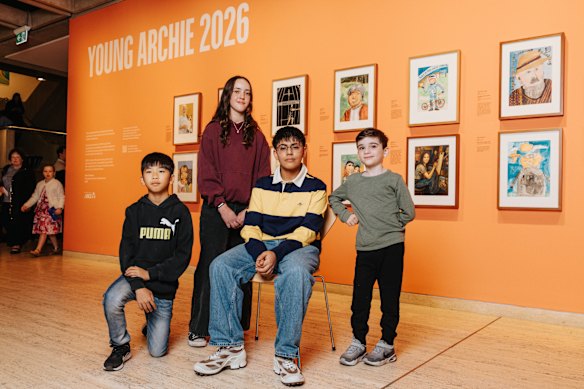
One of the highlights of my year is going to the Archibald Prize exhibition at the NSW Art Gallery. On those visits, I get the greatest pleasure from checking out the entrants in the Young Archie competition, which is run in parallel to the main gig and consists of portraits created by Australians aged five to 18 (“I drew my dad because I love him’: Young Archie winners announced”, July 8). It would be great if Pauline Hanson could spare the time from schmoozing with Gina Rinehart to peruse the finalists and note the surnames of the young artists. Along with a Jackson and a Jones there is a Guimenez, a Pizarkiewicz, a Zhao and a Ho. These names and their stories suggest that the artists have heritages that extend from Eastern Europe, India, China, Indonesia, to all corners of the globe. Some of the works reflect the dress and culture of the artists’ parents. It doesn’t look much like a monoculture. Almost all the portraits glow with the love the children feel for their siblings, parents, grandparents, teachers, and friends. You get the feeling they are all going to grow up into wonderful citizens of the wide brown land. Sadly, Pauline would probably prefer them to go back where they came from. Mike Reddy, Vincentia

We smiled at Paul Hogan’s description of Pauline Hanson as a pelican, but I won’t be the only Herald reader who recalls Mr Hogan, back in the 1980s, telling interviewer Mike Willesee, in all seriousness, that, politically, Australia would be better off under what he called “a benign dictatorship”. I clearly remember these remarks because it reminded me of the old saying from 1929, year of the great stockmarket crash: “If the shoeshine boy is giving you stock tips, it’s time to get out of the market.” So too, when an ex-Sydney Harbour Bridge rigger or a Queensland fish and chip shop owner start to tell us who we are and how we should be led, it’s time for this country to push the pause button and try to redefine what we stand for and who were are as a nation. Phil Haberland, Perth (WA)
NRL sidesteps local
We’ve come a long way since the time we followed area-based football clubs because the players were local, and when cake stalls funded facilities. Now the NRL wants to take over the world and money rules the roost (“Nine’s blockbuster $5.3b NRL rights deal”, July 8). But then again, maybe this juggernaut doesn’t need local support as television rights, advertisers and gambling revenue form their own cosy universe. Greg Baker, Fitzroy Falls
With the NRL striking the largest media deal ever for a sporting code, surely they will no longer need the banks of poker machines that line their clubs? Ann Clydsdale, Bathurst
Lolly pokies
Quite rightly, a great deal of attention has been given to the dangers of young people being exposed to online gambling advertisements. But there is something more insidious in the works. At a recent visit to a large “family friendly” club on the Central Coast, we saw a poker machine for children. Small kids were given tokens to play and could win various lollies. Talk about starting them young. Susan Groundwater-Smith, Tempe
Addiction to gambling is destroying people’s lives (Letters, July 6). The facts are with us yet the government seems reluctant to take a principled stance. As the compromises and deals are negotiated, I pray that all our elected representatives put children and families first. Protect children from betting promotion and enabling advertising. Break the nexus between sport and money making. Be nation changing and generously fund children’s sport. Invest in our little people. Frederika Steen, Chapel Hill (Qld)
Climate void
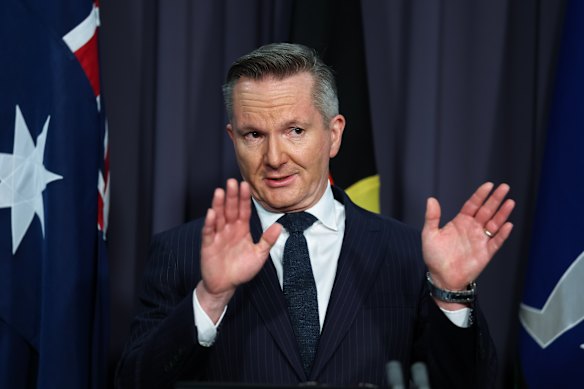
Your correspondents rightly highlight the ever-widening gap between escalating climate impacts and Australia’s political response (Letters, July 8). Climate and Energy Minister Chris Bowen will preside over negotiations at the annual global climate conference, COP31, later this year. Given the plight of our Pacific neighbours, who are living an existential crisis due to climate change, Australia should be using this global platform to lead the charge to phase out coal, gas and other fossil fuels. Yet, the Albanese government has not only approved 36 new polluting projects, it is also subsidising fossil fuel use by almost $15 billion a year. Appalling. We need a counterbalance to the rise of inadequate and climate‑denying politics in this country. Will Australians support the Greens, independents and the new Community Strong Australia party to occupy the climate leadership void? Amy Hiller, Kew (Vic)
Tips for Italy
Travel writer Lee Tulloch has learned some useful lessons (“Italy’s trains are fast but nothing else about them is slick”, July 7). Having travelled extensively by rail in that country, I can offer a few further suggestions. Life is theatre in Italy, and many of its dramas will be played out on trains. Second-class is the way to go. You will experience more of the dramas at closer range and likely find that the whole carriage will become involved. Smile, particularly at nonnas and their uncontrollable grandchildren. Engage. Italians love to talk, and will try to find a way to communicate with you. They are often curious about why you would want to visit their problematic, fabulous country. Maybe it’s because I’m a nonna, but young people in Italy often help me with my luggage and will offer me their seat on any type of public transport. Enjoy the ride. Frances Shannon, Orange
Tragic death
What amazes me is that any football code would allow a game, Australian rules, league or union, on a ground with a concrete cricket pitch (“Young footballer receiving end-of-life care after head injury”, July 6). This tragic death of a young man will hopefully bring permanent changes to where and what surfaces all football codes are allowed to play on. Peter O’Brien, Shoalhaven Heads
Sport and state
I am sure Donald Trump is aware of the separation of church and state, but he is obviously unaware of the separation of sport and state (“FIFA lifts ban on USA star striker after Trump calls Infantino”, July 6). Robyn Lewis, Raglan
Donald Trump admits that he never reads books. Spiro Agnew, vice-president under Richard Nixon, was not noted for his erudition either, so much so that when a fire in his White House office destroyed his small library, someone pointed out that it was a shame because some of the books he’d never even coloured in. Nedra Orme, North Sydney
- To submit a letter to the Sydney Morning Herald, email letters@smh.com.au. Click here for tips on how to submit letters.
- The Opinion newsletter is a weekly wrap of views that will challenge, champion and inform. Sign up here.
Read the full article here


