



NEWYou can now listen to Fox News articles!
The U.S. is positioning ground-capable forces in the Middle East after Iran rejected a ceasefire proposal Wednesday, a shift that gives Washington new — though limited and high-risk — options for potential operations inside Iran.
Military experts say the deployments are not a precursor to a large-scale invasion but instead position the U.S. for targeted, short-duration missions, options that have taken on new relevance as diplomatic off-ramps narrow.
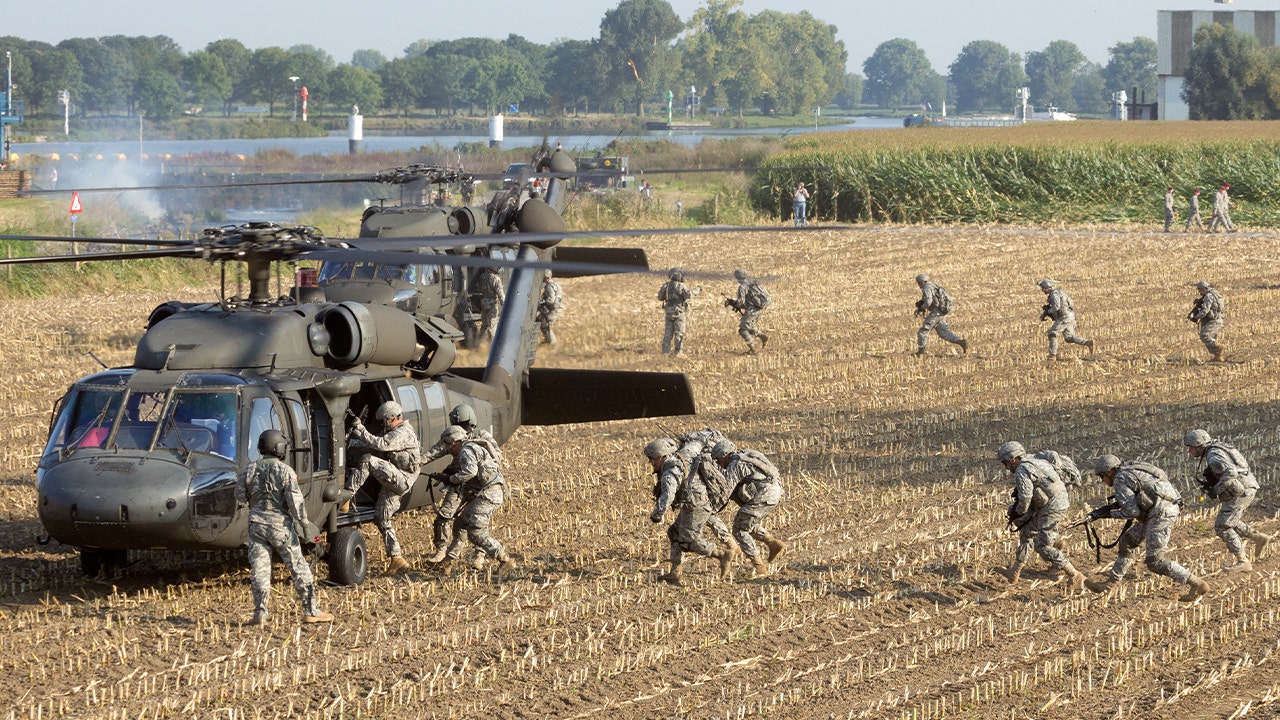
In recent days, the Pentagon has moved ground-capable forces into the region, including around 1,000 paratroopers with the Army’s 82nd Airborne Division. Among them is the 1st Brigade Combat Team, a core component of the military’s Immediate Response Force rapid-response unit designed to deploy on short notice to crises anywhere in the world.
Also deployed were a few thousand Marines and sailors assigned to the 31st Marine Expeditionary Unit and its Amphibious Ready Group, led by the amphibious assault ship Tripoli.
Marine expeditionary units and airborne forces often are among the first U.S. units deployed in a conflict to rapidly establish an initial presence and respond to emerging crises.
IRAN’S REMAINING WEAPONS: HOW TEHRAN CAN STILL DISRUPT THE STRAIT OF HORMUZ
The White House has emphasized the deployments are meant to preserve flexibility as the conflict evolves, a posture that now carries greater weight after Iran rejected a U.S.-backed ceasefire proposal.
“The president likes to maintain options at his disposal,” press secretary Karoline Leavitt said Wednesday at a White House press briefing. “It’s the Pentagon’s job to provide those options to the commander in chief.”
Lawmakers on the Armed Services Committees emerged from a classified briefing on Iran Wednesday expressing frustration over a lack of clarity from the administration.
“We want to know more about what’s going on, what the options are and why they’re being considered,” House Armed Services Chairman Rep. Mike Rogers, R-Ala., told reporters. “We’re just not getting enough answers.”
“Let me put it this way, I can see why he might have said that,” Sen. Roger Wicker, R-Miss., chairman of the Senate Armed Services Committee, said in agreement.
Military experts said the types of forces being deployed point to a more limited set of options on the ground.
“It is not for the type of ground invasion that we saw in Iraq,” James Robbins, Institute of World Politics dean and former special assistant to Defense Secretary Donald Rumsfeld, told Fox News Digital. “There simply aren’t enough troops.”
The U.S. already maintains roughly 40,000 troops to 50,000 troops across the Middle East, with recent deployments adding several thousand more, including Marines and airborne units.
The Pentagon did not respond to a request for comment.
What limited ground options could look like
If U.S. forces were used inside Iran, experts say operations likely would focus on specific, high-value objectives rather than holding territory.
One likely focus would be along Iran’s southern coast near the Strait of Hormuz, a critical global shipping lane that would become a central pressure point in any limited U.S. ground option.
Iranian forces have positioned missiles, drones and naval assets throughout the region, creating a persistent threat environment for any operation.
“The most logical step is to try to secure the straits by taking some key positions inside Iran,” Ehud Eilam, a former official with Israel’s Ministry of Defense, told Fox News Digital.

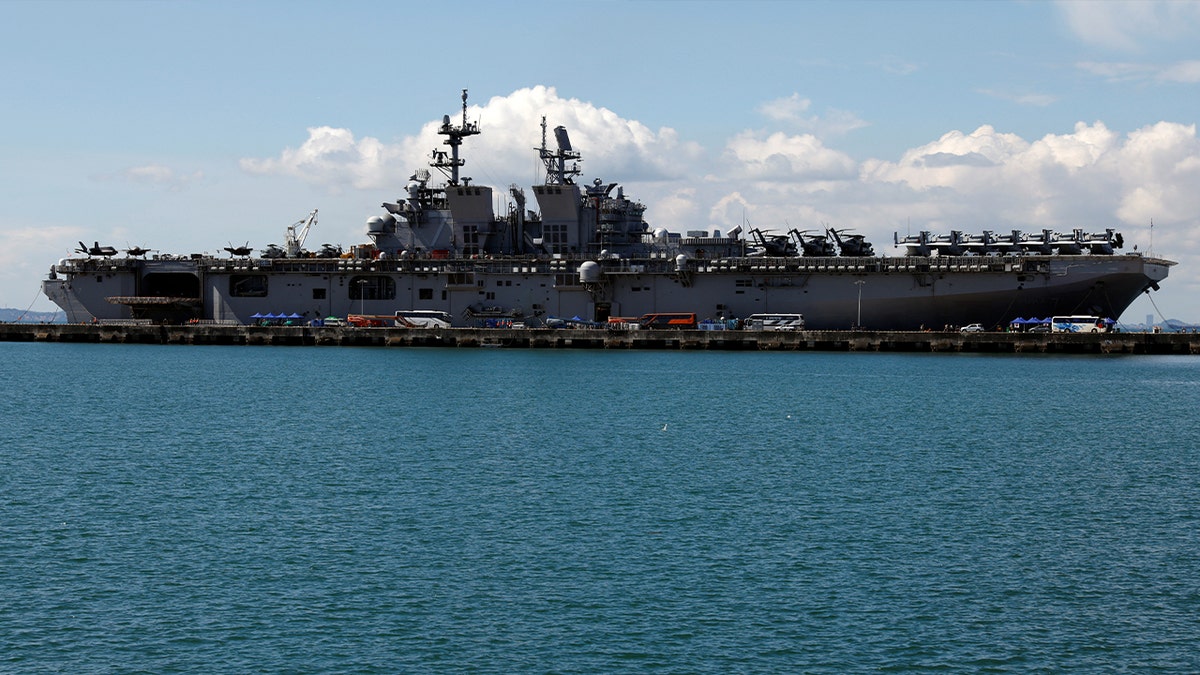
“For the Marines, it would probably be somewhere along the Iranian side of the Persian Gulf, around the straits or nearby to establish a base of operations,” Robbins said.
Trump has said the U.S. Navy could escort commercial tankers through the waterway if necessary after Iranian threats have disrupted traffic in one of the world’s most critical energy choke points. But no plans have been enacted to do so, according to officials.
But even limited objectives would be difficult to secure or sustain under constant threat.
“It’s a large gulf, and there’s lots of places you could drop a mine or shoot a cruise missile from or shoot a drone from,” said Adm. Kevin Donegan, former commander of the U.S. Navy’s Fifth Fleet.
Beyond coastal positions, U.S. forces could be used for short-duration missions targeting specific military assets, such as missile launch sites, radar systems or other infrastructure that cannot be fully neutralized from the air.
AFTER THE STRIKES, HOW WOULD THE US SECURE IRAN’S ENRICHED URANIUM?
Eilam said special operations forces could also be used for targeted missions inside Iran, including striking military infrastructure or capturing key personnel.
“They may come and capture a certain objective, destroy some Iranian radar or some Iranian facility, take some generals into captivity,” Eilam said.
Such operations would be aimed at degrading Iran’s capabilities and supporting broader air and naval operations, rather than holding territory.
Some experts noted that small special operations teams can operate inside Iran without public visibility, making it difficult to assess the full scope of current activity.
Securing nuclear infrastructure
One potential objective for ground forces would be securing Iran’s nuclear infrastructure.
Nuclear experts have insisted that the material could not be destroyed by airstrikes alone, that a presence on the ground would be essential.
Robbins said U.S. troops could be used to secure nuclear material or facilities but not under active fire.
“That would have to be more under a permissive environment,” Robbins said. “It could not really well be done under fire.”
Iran is believed to have roughly 970 pounds of uranium enriched to near weapons-grade levels, though international inspectors say they can no longer verify the size or location of that stockpile.
In past conflicts, U.S. forces have been tasked with securing weapons sites or sensitive materials even in unstable or contested environments, particularly during and after the 2003 invasion of Iraq, when specialized units conducted extensive searches of hundreds of facilities.
Any such operation in Iran would be complex. Key nuclear facilities are hardened, dispersed and, in some cases, buried deep underground, making them difficult to access or secure quickly.
What the US is unlikely to do and why
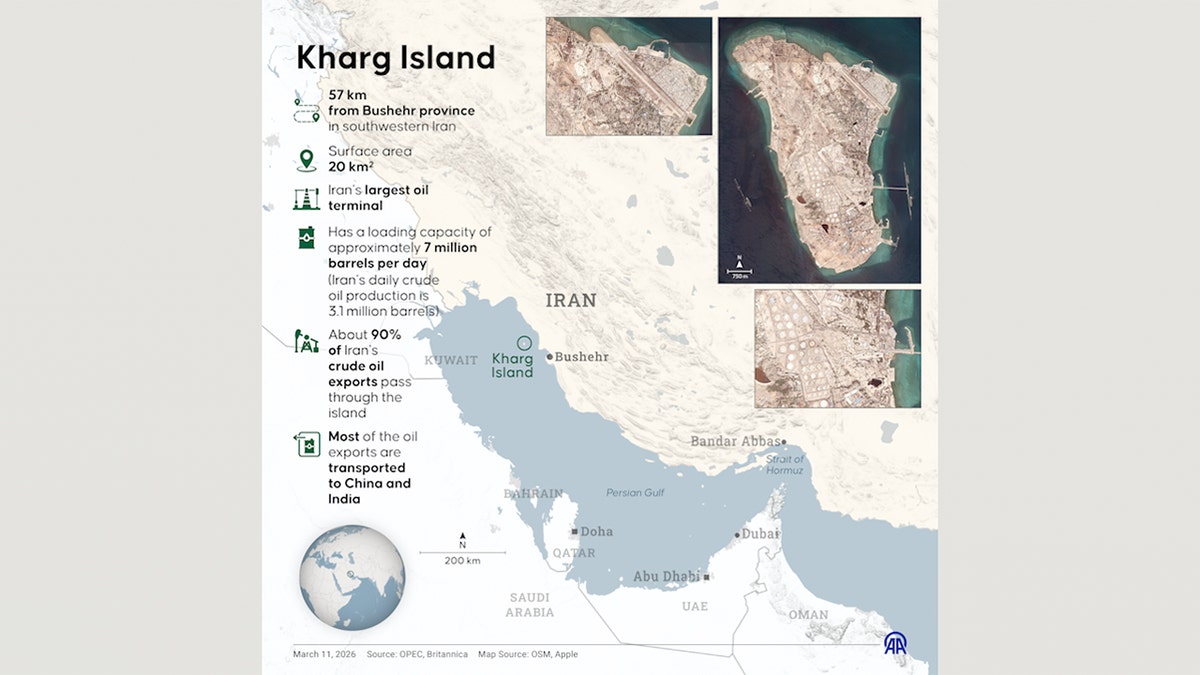
Experts cautioned that some of the more aggressive scenarios being discussed — such as seizing Iran’s key oil export hub at Kharg Island — are unlikely to be pursued.
While such a move could, in theory, choke off a major source of revenue for Iran, they said similar effects could be achieved through less exposed means.
“You could achieve that desired outcome just by constraining the flow that comes out of Kharg after it gets outside the Gulf,” Donegan said.
Robbins also questioned the strategic value of seizing the island.
“To what end would be the question,” he said. “I don’t see an endgame to seizing Kharg.”
Experts warned that occupying territory like Kharg would expose U.S. forces as fixed targets while creating major logistical challenges, requiring continuous resupply under the threat of Iranian missile and drone attacks.
“Occupying territory creates a vulnerability, because you now become a target,” Donegan said.
Instead, sources say, U.S. forces are better suited for limited operations ashore that do not require holding ground.
“Doing something ashore to eliminate things because you have to be on the ground to do it and leaving — that’s also a capability,” Donegan said.
The buildup also has included increased activity from U.S. military transport aircraft, including C-17 and C-130 airlifters used to move troops and heavy equipment into the region, part of the logistical groundwork that would be required for any potential ground operations.
Iran prepares defenses at Kharg and across the region
Behind the scenes, Iranians likely are preparing for all contingencies in a ground war. Iranian officials dismissed Trump’s talk of “productive” negotiations as “psychological warfare,” and negotiations weren’t happening.
Iranian Lt. Col. Ebrahim Zolfaghari, a military spokesperson, mocked U.S. attempts at a ceasefire deal Wednesday in a video statement, asking, “Have your internal conflicts reached the point where you are negotiating with yourselves?”
Any U.S. ground operation targeting Kharg Island would face an environment Iran already has prepared and militarized.
The island is not just an oil hub but a coastal military hub. Recent U.S. strikes hit more than 90 Iranian military targets on the island, including missile storage bunkers and naval mine facilities.
Iran has been moving additional forces and air defenses, as well as laying traps, at Kharg for weeks in preparation for a potential U.S. operation to seize the island, sources familiar with the intelligence told CNN.
CLICK HERE TO DOWNLOAD THE FOX NEWS APP
Beyond the island itself, Iranian forces have increased military readiness across the region.
Reporting shows the repositioning of missile units, expanded air defense activity and increased naval patrols in the Strait of Hormuz, part of a broader effort to disperse assets and reduce vulnerability to strikes.
Read the full article here


