



As 2025 draws to a close, the season of gift-giving seems to have extended to the world stage, with President Donald Trump receiving a remarkable assortment of presents this year—some symbolic, others worth millions or even billions of dollars.
From a luxury Boeing jet to gold bars and even an ancient royal crown, several foreign nations appeared eager to place something under the president’s Christmas tree. Each gift, presented amid formal diplomacy, was followed by consequential trade, defense, or technology decisions that benefited the donor countries.
Why It Matters
U.S. presidents are permitted to receive foreign gifts when they are properly disclosed and transferred to government ownership under federal ethics rules. This year, however, the value of gifts associated with Trump exceeded those received by any U.S. president in recent decades.
Several of the gifts were presented alongside or shortly before formal trade, defense, investment, or technology agreements involving the donor countries, including tariff changes, procurement contracts, and expanded security cooperation. The scale of the gifts and the timing of subsequent policy actions has placed renewed focus on how foreign gift exchanges can intersect with diplomacy, trade, and national security during a sitting president’s term.
What to Know
The following gifts were among the most valuable or significant presented to Trump in 2025 and were followed by U.S. trade, defense, investment, or security actions with the donor countries:
Qatar: Luxury Boeing 747 and Aviation Deals
In 2025, Qatar provided a Boeing 747 aircraft valued at about $400 million for possible use as the next Air Force One. The Pentagon accepted the plane, and the U.S. and Qatar then finalized multiple aviation and defense agreements. These included a historic commercial aviation deal in which Qatar Airways agreed to purchase up to 210 wide‑body Boeing aircraft, valued at roughly $96 billion, under contracts announced during Trump’s visit.
The broader package of bilateral agreements covering aviation, defense, technology, and related sectors was reported to exceed $243 billion in total value.
UAE: Crypto Investment and Technology Approvals
A state-linked Abu Dhabi investor purchased approximately $2 billion in a stablecoin, a digital currency designed to maintain a stable value, connected to a Trump-affiliated business venture. Around the same time, the Trump administration approved exports of advanced artificial intelligence chips and expanded technology cooperation with the United Arab Emirates, covering AI infrastructure and related technology partnerships.
Switzerland: Gold Bar, Rolex Clock, and Tariff Reductions
A delegation of Swiss business leaders presented Trump with a one-kilogram engraved gold bar, valued at approximately $130,000, and a Rolex desk clock. Days later, the U.S. reduced tariffs on Swiss goods from 39 percent to 15 percent under a new trade framework, which also included commitments for future Swiss investment in the U.S. While the gold bar itself was modest in value, it coincided with a major trade adjustment benefiting Switzerland.
South Korea: Ceremonial Crown and Investment Commitments
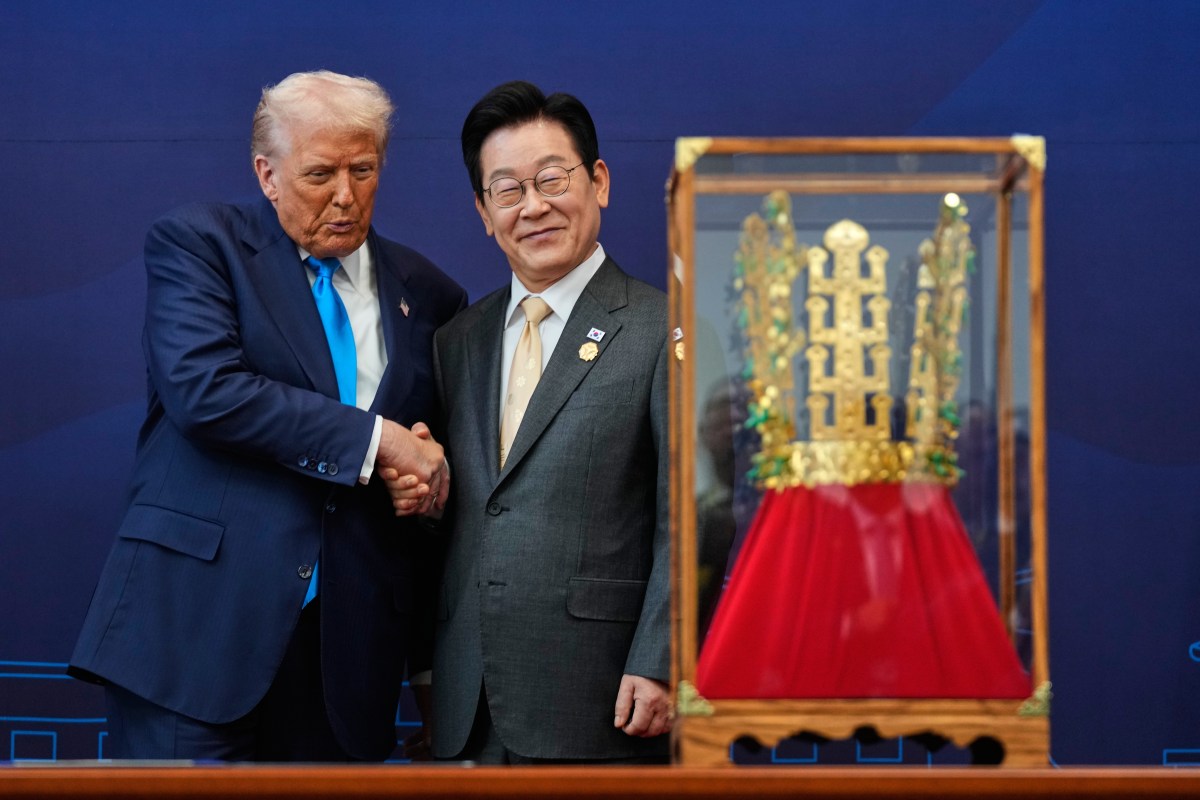
During a visit to South Korea in late October, Trump received a replica Silla-era gold crown and the Grand Order of Mugunghwa, the country’s highest civilian honor. During the same visit, South Korea committed approximately $350 billion to U.S.-based investments in manufacturing and technology sectors. The two countries also moved forward with trade measures affecting automotive and industrial goods.
Pakistan: Rare Earth Minerals and Nobel Peace Prize
In September, Pakistani officials brought President Trump samples of rare earth minerals, highlighting the country’s mining and tech industries. They also formally recommended him for the 2026 Nobel Peace Prize for helping ease tensions with India.
In return, the U.S. cut tariffs on Pakistani goods to 19 percent—below India’s 25 percent rate—and a U.S. firm pledged $500 million for rare earth mining and processing in Pakistan.
What Happens Next
As President Trump’s second term continues, the foreign gifts received this year remain subject to federal disclosure and oversight requirements. Additional documentation regarding the valuation, custody, and disposition of these gifts may be released. The trade, defense, investment, and security agreements associated with the gifts are expected to continue under existing bilateral frameworks, with follow-up actions and contract implementations likely in 2026. Federal reporting and congressional oversight may provide further details on the timing and scope of these agreements.
Read the full article here


