



A Virginia trial judge from the state’s rural southwest has blocked the certification of a closely watched redistricting referendum that voters supported, suddenly becoming a central figure in a high-stakes political fight.
Judge Jack S. “Chip” Hurley Jr.’s ruling on Wednesday centers on the conclusion that the redistricting measure was never legally valid in the first place. Hurley, a circuit court judge based in Tazewell County, ruled that the measure was “void ab initio” on multiple grounds, including lawmakers’ failure to follow mandatory constitutional requirements for adopting amendments and the use of misleading ballot language presented to voters.
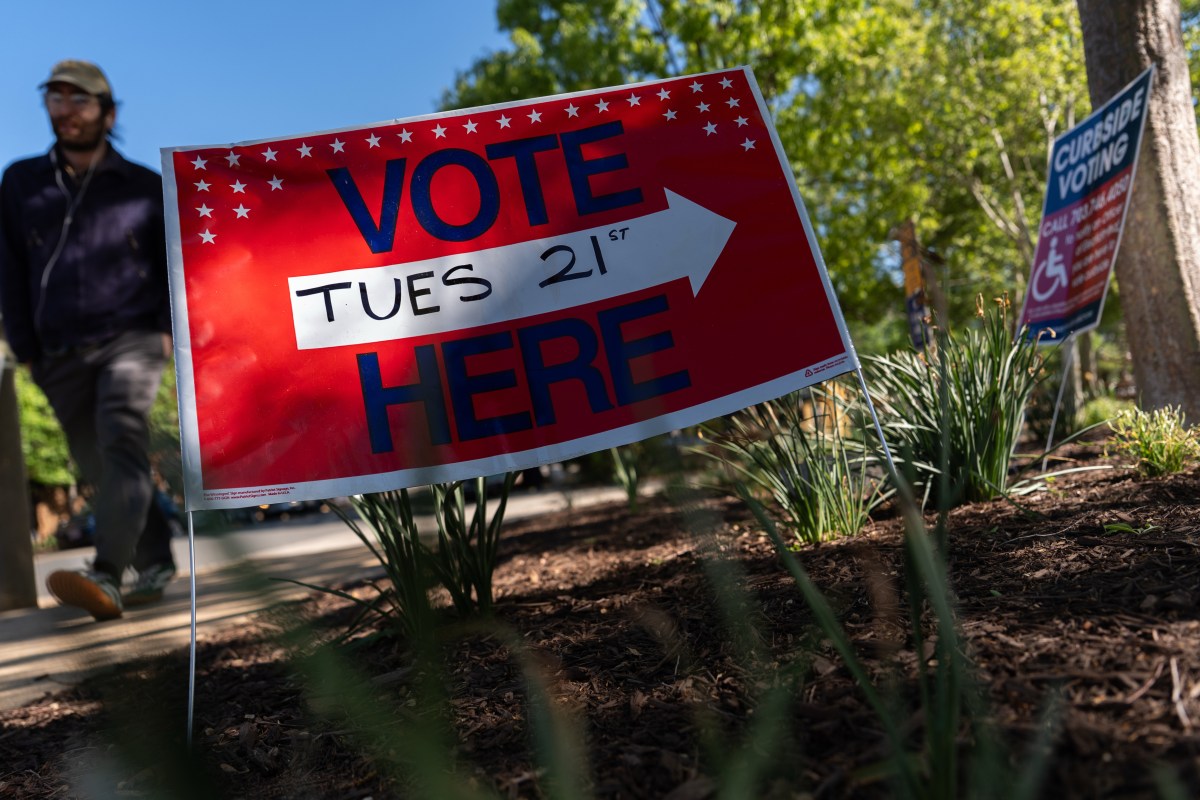
His ruling came after Virginia voters approved a Democratic-backed congressional map on Tuesday that could add up to four seats for the party, the latest referendum in an ongoing national redistricting race that has seen new maps adopted in seven states since last summer.
Hurley’s move has thrust the local jurist into the middle of a dispute with statewide and national implications.
Who Is Jack Hurley?
Judge Jack S. “Chip” Hurley Jr. is a longtime Virginia jurist who has spent decades working in the state’s rural southwest.
Hurley serves as a circuit court judge in Virginia’s 29th Judicial Circuit, based in Tazewell County. He was appointed to the role in 2012 by then-Republican Governor Bob McDonnell, after previously serving as a General District Court judge in the same region, according to Ballotpedia.
Before taking the bench, Hurley worked in private practice and as a local prosecutor, building much of his career within the communities he now serves from the bench. He is a graduate of Davidson College and the University of Richmond School of Law.
Hurley’s involvement in Virginia’s redistricting war started in January, when he ruled that Democrats’ proposed constitutional amendment to redraw the state’s congressional districts failed to comply with procedural requirements under state law.
Virginia law requires proposed constitutional amendments to be passed and published by the clerk’s office at least three months before a general election, a deadline the legislature did not meet.
In February, Hurley granted a temporary emergency injunction barring state and local election officials from moving forward with the April 21 referendum on similar grounds.
The Virginia Supreme Court stepped in and took over these disputes in March—it allowed the referendum to go ahead but has not yet ruled on the underlying legal questions, with the case still pending before the court. Oral arguments are still to be scheduled.
What Does Jack Hurley’s Virginia Legal Ruling Say?
In his final judgment this week, Hurley declared the amendment “void ab initio,” meaning it was invalid from the outset, and therefore could not be enforced or certified.
The judge made gave the following reasons for his decision:
• Lawmakers failed to follow required constitutional procedures for passing an amendment
• The amendment was not validly approved in two separate legislative sessions
• The referendum was not lawfully authorized because of those defects
• The ballot language was “flagrantly misleading” for voters
As a result, Hurley ordered that state officials are “enjoined from certifying the results” of the vote.
The decision does not erase the ballots already cast, but it prevents the outcome from taking legal effect while the broader dispute continues to play out in the courts.
What Now?
State Attorney General Jay Jones said in a post on X that his office would “immediately” file an appeal.
“Virginia voters have spoken, and an activist judge should not have veto power over the People’s vote,” Jones said. “We look forward to defending the outcome of last night’s election in court.”
Virginians for Fair Elections, a group backing the redistricting amendment, said in a statement that “voters understood exactly what was on the ballot, and they chose YES.”
“Republicans lost. Now they’re trying to overturn the will of the voters in court and trying to relitigate an election they couldn’t win,” it said.
What Is The Redistricting Picture Nationwide?
Redistricting battles are unfolding across the United States in what analysts describe as an unusual mid-decade “arms race” over congressional maps ahead of the 2026 elections. Traditionally, districts are redrawn once every 10 years after the census, but recent efforts have broken that norm, with both parties seeking an advantage.
President Donald Trump triggered this mid-decade remap when he pressed Texas leaders to create additional GOP-leaning districts, which spurred countermoves in Democratic-led states—most notably California, where voters approved a plan expected to add several Democratic-tilting seats.
States that have adopted new maps since last summer include Texas, California, North Carolina, Ohio, Utah and Missouri.
Most of them took up redistricting voluntarily except Ohio, which was required to by its state constitution and Utah, which did so under court order.
If Virginia ends up going ahead with its redistricting, Democrats will have redrawn or secured maps that could net about 10 favorable seats, while Republicans are positioned for roughly nine, a near draw that assumes past voting patterns hold this November, according to analysis by The Associated Press.
Read the full article here


