



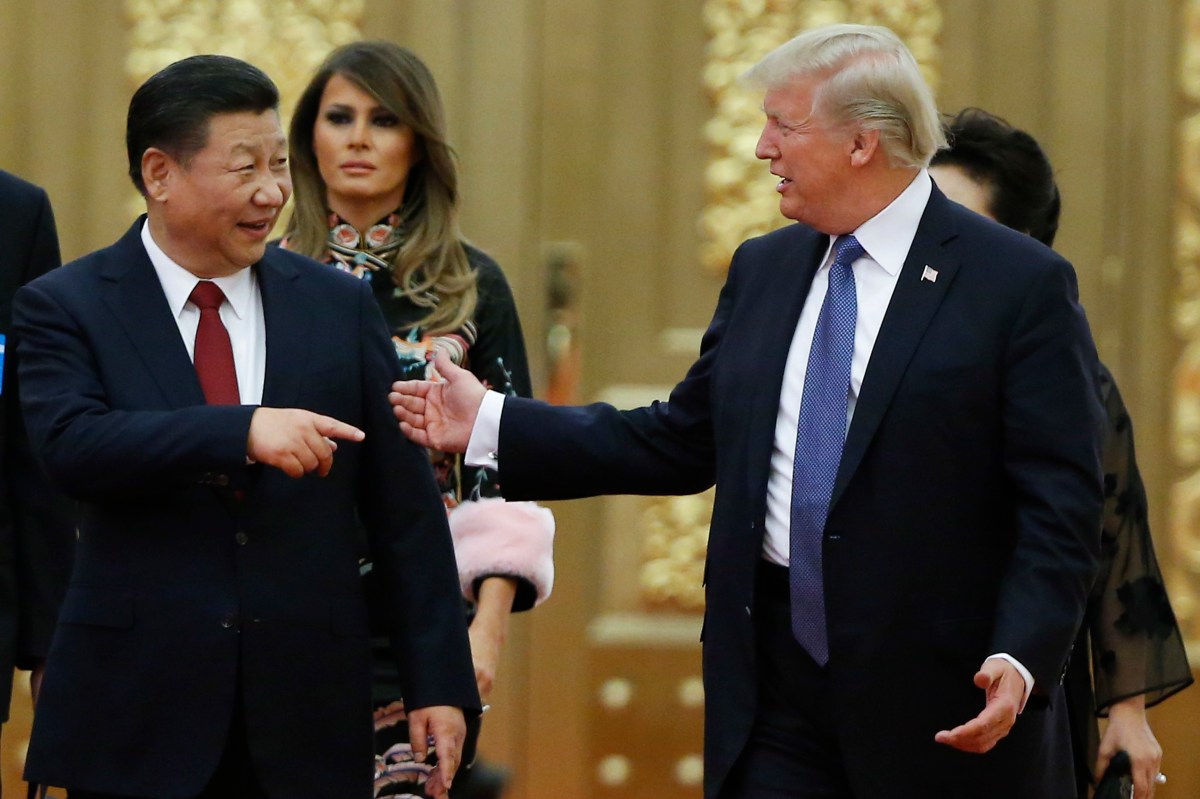
About a dozen U.S. executives are joining President Donald on his trip to China to meet with President Xi Jinping later this week, marking the first visit by a sitting U.S. president to China since Trump in 2017.
China is the world’s second-largest economy and maintains a tense relationship with the U.S. over trade and economic policy, emerging technologies, artificial intelligence and national security issues.
Who Is With Trump?
Top technology executives from the chip industry, finance, agriculture, aerospace, technology and payments are traveling with Trump, highlighting his administration’s economic and business priorities.
- Tim Cook, Apple
- Elon Musk, Tesla/SpaceX
- David Solomon, Goldman Sachs
- Kelly Ortberg, Boeing
- Brian Sikes, Cargill
- Cristiano Amon, Qualcomm
- Steven Schwarzman, Blackstone
- Larry Fink, BlackRock
- Jane Fraser, Citi
- Jim Anderson, Coherent
- Henry Lawrence Culp, GE Aerospace
- Jacob Thaysen, Illumina
- Michael Miebach, Mastercard
- Dina Powell McCormick, Meta
- Sanjay Mehrotra, Micron
- Ryan McInerney, Visa
- Chuck Robbins, Cisco (was invited but will not attend because of the company’s earnings this week, Cisco said Monday)
The list of executives and representatives from certain sectors not attending is also notable, with no major oil and gas leaders amid the ongoing war with Iran, which has disrupted exports and rattled global energy markets. Nvidia CEO Jensen Huang was not invited as the company works to try to sell AI chips to China despite ongoing restrictions. He previously said it would be a “great honor” to attend the summit.
Two people familiar with the matter told Reuters that the U.S. executives going are in seeking an agreement, presenting a “tangible ask” or pushing for regulatory discussion.

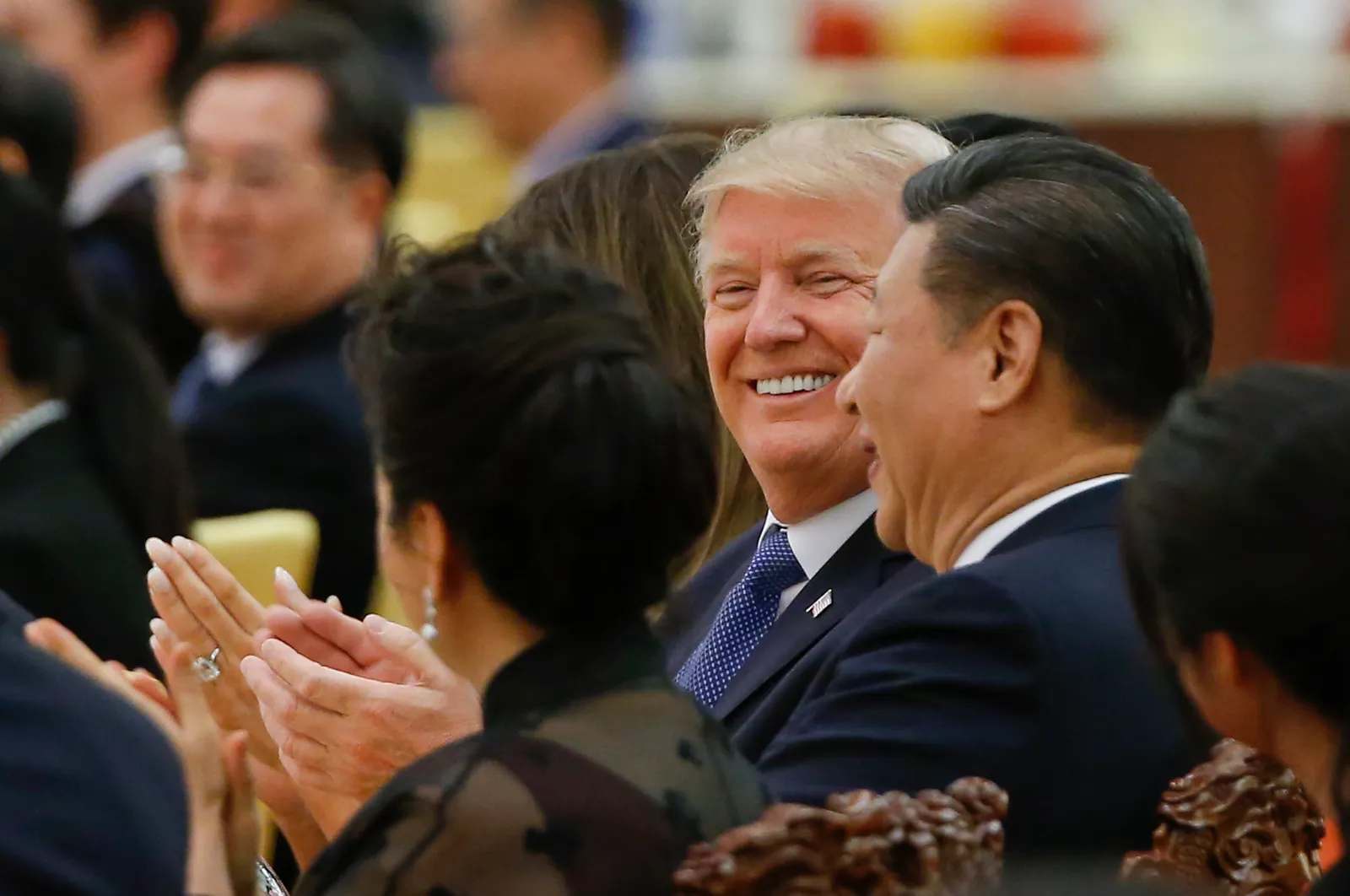
What Is the Meeting About?
In an exclusive interview with Newsweek, Chinese Ambassador to the United States Xie Feng discussed his hopes for improved relations between the two countries, saying “a stable and constructive China-U.S. relationship not only serves the fundamental interests of both our peoples, but also meets the shared expectation of the international community.”
Regarding the tariffs that the Trump administration has levied on Chinese goods, Feng said: “History has proven it once and again that a tariff war or trade war produces no winner, damages the interests of both sides, and hurts the whole world,” later adding, “We hope the U.S. side will move further ahead, and completely remove the unilateral tariffs and other restrictive measures.”
Trump spoke highly of Xi on Monday, telling reporters: “He’s a great gentleman. I find him to be an amazing, amazing man.”
In addition to efforts to stabilize relations strained early in Trump’s second term by the escalating U.S.-China tariff dispute, Trump and Xi are expected to discuss artificial intelligence, trade and the Iran war, particularly its impact on global supply chains and energy markets. China is one of the world’s largest importers of oil, much of which passes through the Strait of Hormuz, a key shipping route that has faced disruptions, including attacks on commercial vessels and closures since the war began.
It is expected that discussions will also dip into Taiwan, nuclear arms, agriculture and energy. China is also expected to announce various business agreements, including one with Boeing.
The delegation reflects the Trump administration’s focus on key industries, including technology, finance and energy. Many of the companies have ongoing business with China, including Meta, which China has ordered to undo its $2 billion acquisition of AI startup Manus, and Tesla, which is seeking clearance to expand its autonomous driving system into China as well as dissuading China from curbing solar manufacturing exports that the company needs to expand factories.
The presence of Cargill, the only agriculture company to attend, signals that the White House may be seeking a farm deal or a bigger commitment from China on soybean and agricultural purchases.
Payment and financial firms are hoping to edge deeper into the tightly regulated country.
“Besides Boeing and Cargill being linked to purchase agreements, the others are mainly there to deliver demands on critical input supply,” Reva Goujon, a geopolitical strategist at Rhodium Group, told Reuters.
Last month, U.S. Trade Representative Jamieson Greer said that the two countries are working to create a “Board of Investment” and “Board of Trade” to help navigate strategic investments and when to trade on issues that do not compromise national security.
“This could help the U.S. administration’s messaging that to even be able to discuss a board of investment, China needs to be a reliable investment partner and not weaponize supply,” Goujon added.

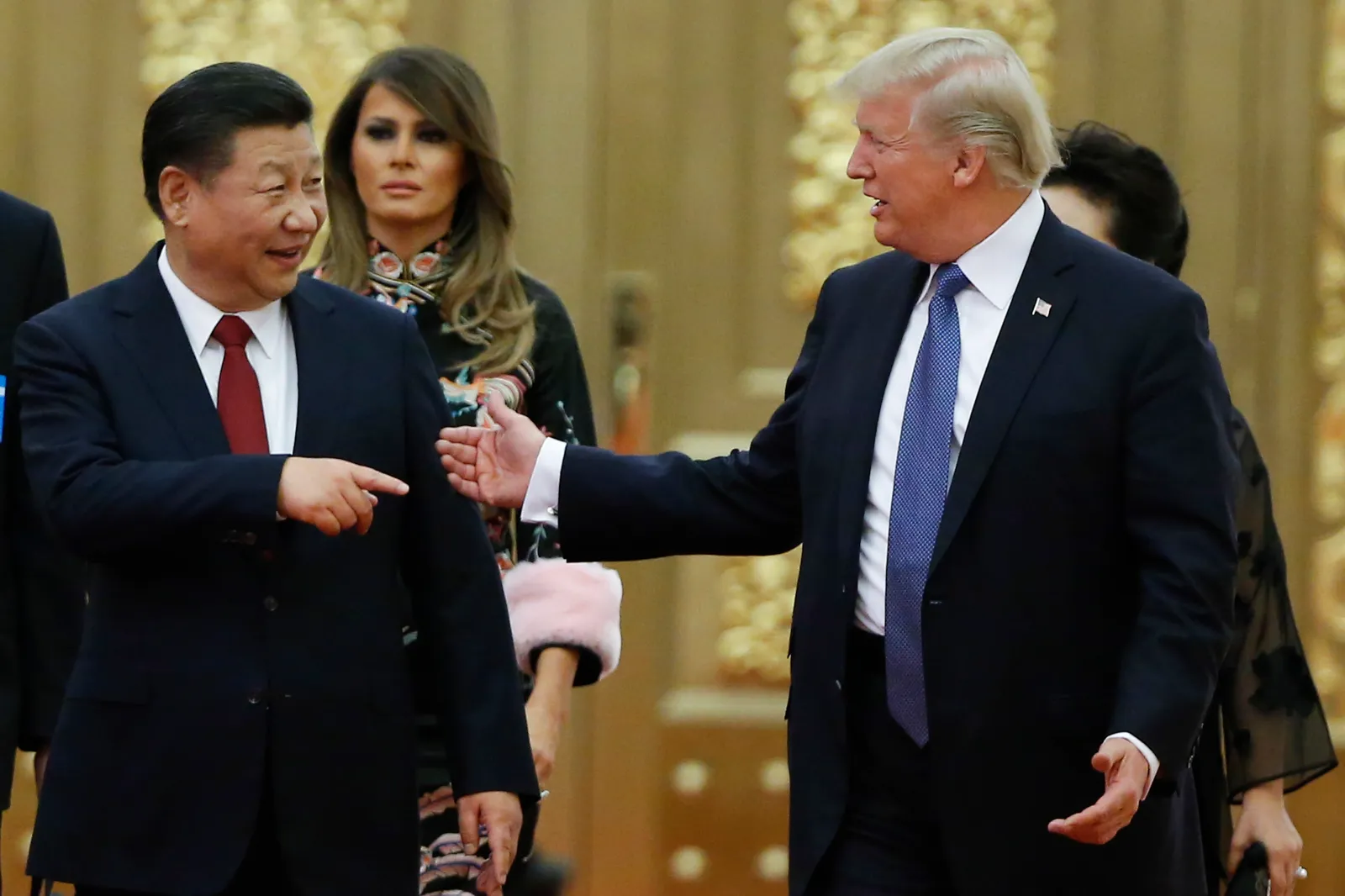
When Will Trump and Xi Meet?
Trump is leaving the U.S. on Tuesday and is set to arrive in Beijing late Wednesday local time. He is scheduled to have two days of meetings with Xi.
Who Went to China With Trump in 2017?
Trump’s 2017 visit involved a larger delegation, with 29 high-profile executives, about 10 of whom were representatives of the energy or gas industries, and others in retail, according to CNBC.
“Deals can provide a solid foundation for a stronger relationship that is more free, fair and reciprocal between the U.S. and China,” then-Commerce Secretary Wilbur Ross said at the time.
- Lloyd Blankfein, Goldman Sachs
- Kevin McAllister, Boeing
- Steve Mollenkopf, Qualcomm
- Andrew Liveris, DowDuPont
- Ajay Banga, Mastercard
- John Rice, GE
- Seifollah Ghasemi, Air Products
- Keith Meyer, Alaska Gasline Development Corp.
- Alaska Governor Bill Wallker
- Donald Chen, Archer Daniels Midland Co.
- Daniel Revers, Arclight Capital Partners
- Mitch Snyder, Bell Helicopter
- Jack Fusco, Cheniere Energy Inc.
- Timothy Tangredi, Dais Analytic Corps.
- Frederick Jones, Delfin Midstream
- Luka Erceg, Drylet
- David Messer, Freepoint Commodities
- Shane Tedjarati, Honeywell
- Vance Hum, I.M. Systems Group Inc.
- Theodore Walker, Partner Reinsurance Company of the United States
- Nick Lisi, SAS
- Kevin Smith, SolarReserve
- Li Zhao, Stine Seed Co.
- John Garrison, Terex Corp.
- Langtry Meyer, Texas LNG Brownsville LLC
- Paul Doherty, The Digit Group Inc.
- Gianluca Pettiti, Thermo Fisher Scientific China
- Jim Miller, U.S. Soybean Export Council
- Paul Koenig, Viroment
- Joe Emeterio Gutierrez Elso, Westinghouse Electric Co.
Following the visit, China reported signing $253 billion worth of deals with U.S. companies during the visit, including agreements with Boeing and Qualcomm. The Commerce Department noted that 37 deals were signed during Trump’s broader Asian tour in 2017.
Read the full article here


