



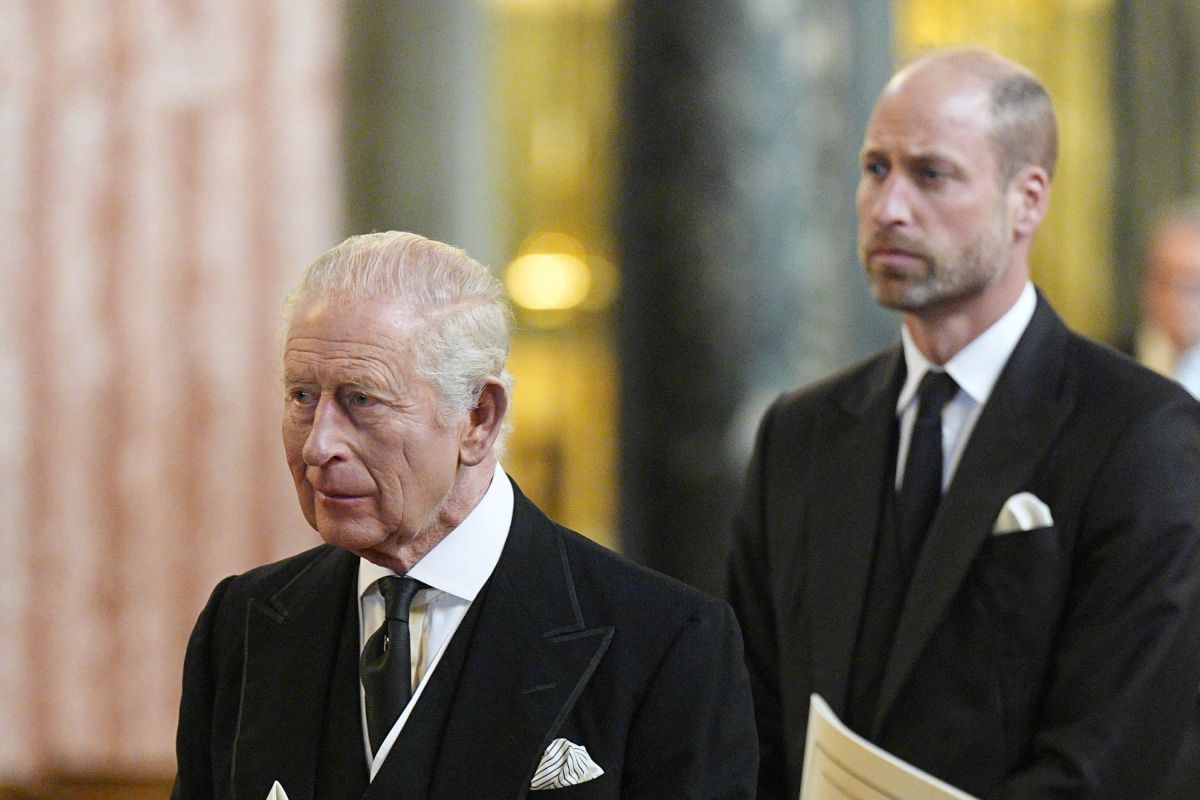
King Charles III has been under pressure in recent years, including stemming from the scandal surrounding Andrew Mountbatten-Windsor’s relationship with Jeffrey Epstein, prompting renewed debate about whether it could ultimately contribute to calls for Britain to abolish the monarchy.
Mountbatten-Windsor is being investigated by Thames Valley Police on suspicion of misconduct in public office, following reports alleging he leaked confidential Government documents to Epstein. Separately, Virginia Giuffre accused him of sexually assaulting her when she was 17 and said she had been trafficked to him by Epstein. Mountbatten-Windsor denied Epstein-related wrongdoing.
In that context, debate around whether the British monarchy has a future has been on the increase, though the discussion is longstanding, with royal popularity rising and falling over decades.
Newsweek has examined available data on support for abolition in the U.K. to determine a timeline for when Britain might see a majority in favor of becoming a republic, based on current trends.
Why It Matters
Supporters of abolition often point to declining popularity, while royalists argue past crises—such as the aftermath of Princess Diana’s death—were followed by recoveries, including the surge around Prince William and Princess Kate’s wedding. They say the same may happen again when a new generation of royals, Prince George, Princess Charlotte and Prince Louis, take the spotlight.
Newsweek has plotted the trend in public attitudes toward the monarchy over a 41-year period, seeking to look past the transient highs and lows associated with specific royal moments to paint a more reliable long-term picture of the likelihood that Britain might abolish the crown.
What the Data Says About Support for Abolition
A key dataset comes from the long-running British Social Attitudes survey, run by the National Centre for Social Research, which has been collecting data since 1983, meaning it has a detailed breakdown of the slings and arrows of royal fortune spanning more than four decades.
This survey is unusual in that it gives respondents multiple options for expressing their opinion on the Monarchy beyond a binary decision between abolishing and keeping the crown.
Instead, the question was phrased: “How important or unimportant do you think it is for Britain to continue to have a monarchy?”
Optional answers included “very,” “quite,” “not very” and “not at all,” along with “the monarchy should be abolished,” “don’t know” and another option for those who “refused” to answer.
In 1983, 3.1 percent of British people said they wanted to abolish the Monarchy compared to 15.3 percent in 2024, the most up-to-date figures collected 41 years later. That means support for scrapping the crown has, on average, been increasing by around 0.3 percentage points per year.
If that trend continues, it would give the royals a significant lifespan of around 120 years before a majority of British people would support actually abolishing the Monarchy. Royalists will no doubt be encouraged by that.
These projections are based on a simple linear continuation of long-term trends and do not account for potential shocks—such as changes in public perception driven by major royal events, leadership transitions or political developments.
What the Data Says About Royal Popularity More Broadly
However, popularity is another matter, and the survey shows a growing exodus from the belief that continuing to have a Monarchy is “very important” for Britain.
In 1983, this figure sat at 64.6 percent, and by 2024, it had dropped to 24.1 percent, a slide of more than 40 points over 41 years. In fact, the total figure for “very” and “quite” interesting slid from 86 percent to 51 percent while the total for “not very,” “not at all” and abolish the monarchy rose from 13 percent to 46 percent over that 41-year period.
Based on a continuation of current trends, in just five years, British people who either want to abolish the Monarchy or see it as unimportant would rise over 50 percent, giving them an outright majority. By that time, the total percentage who view the Monarchy as either “very” or “quite” important would be around 47 percent.
That is quite a change from back in the 1980s. Project 10 years into the future and the percentage answering “very important” would, if current trends persist, drop by 9.9 points to 14.2 percent.
The categories “very” and “quite” together would drop to 42.5 percent, while the negatives of “not very,” “not at all” and abolish would rise to 54 percent.
More worrying still for the Monarchy is that, when given a binary choice between keeping an elected head of state and abolishing the monarchy, the scales tipped further toward abolition in the 2025 data. In total, 58 percent wanted to keep the monarchy compared to 38 percent who wanted a democratically elected head of state.
This suggests that some respondents who express dissatisfaction through softer categories may shift toward abolition when presented with a binary choice—such as in a referendum.
Factors in Public Attitudes to the Monarchy
Of course, there is no guarantee that changing public opinion would trigger a referendum, which would come down to politics and attitudes within the Government of the day, whoever might be running it at any given time.
Prime Minister Unlikely to Abolish Monarchy
The current Prime Minister, Keir Starmer, is unlikely to abolish the monarchy but is also expected to face a leadership challenge that could end his premiership from within his own party if rival Andy Burnham gains a seat in Parliament via an upcoming by-election.
Either way, there have been two major events in recent months that could contribute to the debate about the value of the monarchy in Britain in the near future.
Andrew Stripped of Title
King Charles stripped Andrew Mountbatten-Windsor, his brother, of his “Prince” and “Duke of York” titles in October, following newly released emails between Mountbatten-Windsor and Jeffrey Epstein and Ghislaine Maxwell.
Mountbatten-Windsor was then arrested by police and released under investigation in February in the aftermath of the release of the Epstein files, which contained previously private emails between him and Epstein.
The saga has tested public opinion and led to discussions among U.K. Members of Parliament about a potential select committee inquiry into Mountbatten-Windsor.
King Charles’s III Standing Ovations
On the other hand, King Charles III’s recent State Visit to America, during which he got multiple standing ovations before Congress and at a State Banquet at the White House, won praise across both sides of the political divide in Britain.
The king’s relationship with Trump may well also have shown the U.K.’s political class that the royal family remains a valuable tool for international diplomacy in a post-Elizabethan era.

Read the full article here


