



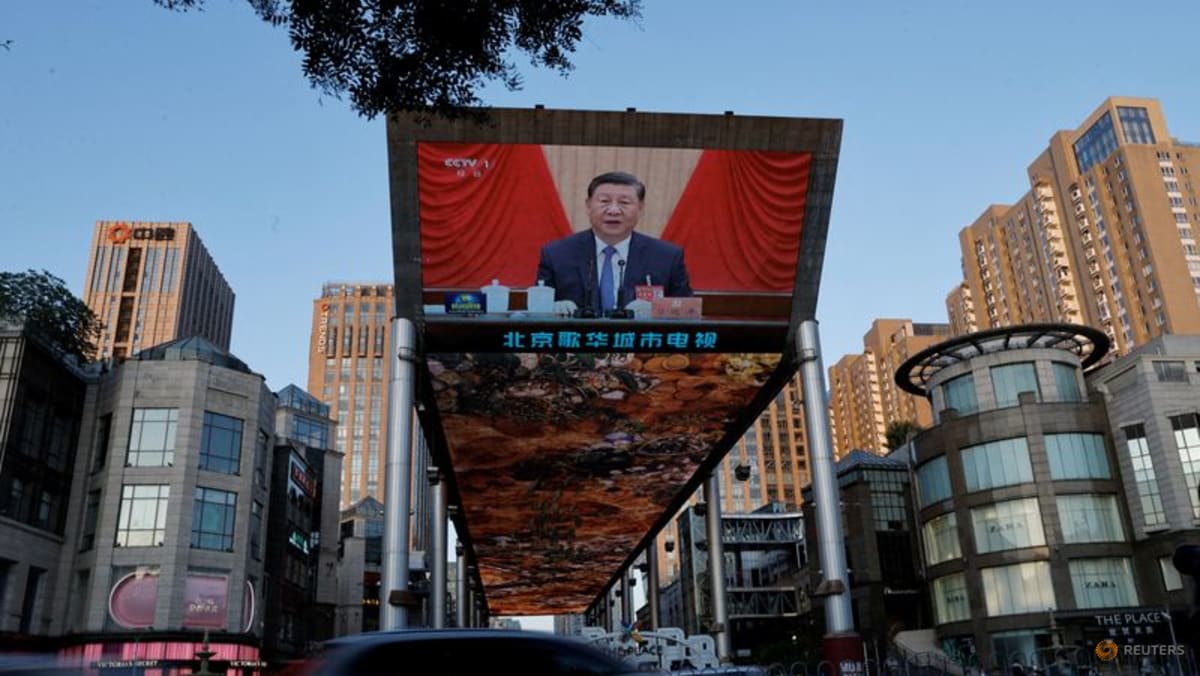
In a 40-minute speech on Monday, Xi called on the Communist Party to carry forward Jiang’s legacy, presenting the current leadership as the continuation of his political and ideological project. That message was also carried in state media coverage in recent days.
Under Jiang and Zhu, China pushed through painful changes: shuttering chronically unprofitable state firms, dismantling the old housing system in favour of a commercial property market, weathering the Asian financial crisis of the late 1990s, and joining the World Trade Organization in 2001.
Xi now faces considerable challenges of his own as he seeks to weather trade frictions with the United States and Europe, tensions over Taiwan, slower economic growth and demographic decline.
“On the new journey ahead, we must heighten our sense of vigilance against potential dangers,” Xi said during Monday’s event.
“With an indomitable fighting spirit and superb skill in struggle,” we must “proactively meet the major tests posed by high winds and rushing waters, or even by raging storms,” he added.
Events involving President Xi, like the one on Monday, are closely monitored by China watchers for clues to the political pecking order and for indications of the health and continued standing of the country’s retired elite.
Former President Hu Jintao, Jiang’s immediate successor, now 83, was not immediately seen on state media footage of the event, which was attended by current and retired officials.
Hu’s premier, Wen Jiabao, as well as former Vice President Wang Qishan, Xi’s one-time anti-corruption chief, were seen at the event, suggesting that they remain in favour with the leadership. A number of officials once associated with Wang have come under corruption probes in recent years.
Read the full article here


