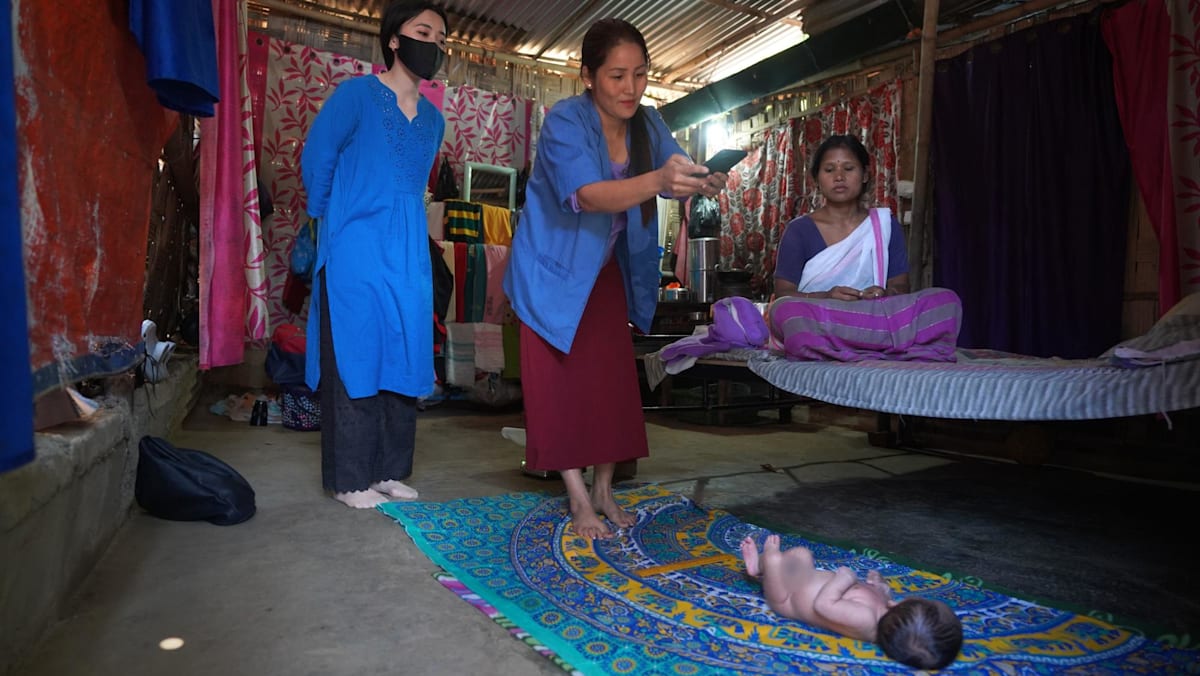
Hundreds of kilometres west, health workers are using an AI app called Shishu Maapan. It estimates a newborn’s weight and other measurements from a short video taken on a smartphone, replacing bulky equipment traditionally carried from home to home.
“At first, we wondered how weight could be captured on a mobile,” said Jyotsna Patel, an ASHA worker who has worked in Kachigam village in Daman district for 14 years.
After training and practice, she said, workers were able to use the app routinely and track whether babies were gaining or losing weight.
What connects these two instances in rural India is not the technology itself, but the healthcare workers using it.
Across the country, doctors, radiologists and community health workers in India’s public health system are already “so loaded with tasks”, said Sagar Sen, senior vice-president at Qure.ai, that adding another layer of work can defeat the purpose of the technology. The Mumbai-based firm builds AI tools to analyse medical scans for diseases like TB and lung cancer.
“The challenge is to build AI around the way they already work, so that it can take on parts of the workload while leaving clinical judgement with the healthcare worker,” he said.
In large parts of the country, where the first point of care for millions of people may be a community health worker or a doctor without a specialist down the corridor, AI is increasingly being built around the people already standing at that front line, experts said.
AI MEETS THE FRONTLINE IN RURAL INDIA
India has about 1.02 million ASHA workers, forming the world’s largest community health worker programme. Each is typically expected to serve about 1,000 people, with the programme spanning some 586,000 rural villages, according to government data.
India’s National Health Mission describes ASHA workers as the “first port of call” for health needs, particularly for women, children and others who struggle to access health services.
Their responsibilities already span maternal and child health, immunisation and TB screening, while newer duties such as household enumeration, maintaining health registers and data validation have added to their workload.
Read the full article here