



When cardiac arrest occurs, every second counts—but, according to a new study out of the University of Pittsburgh, the cardiopulmonary resuscitation (CPR) techniques shown on television are misleading people about best practice and risking them waste precious time in the event of a real-world emergency.
The study, published in the journal Circulation: Population and Outcomes, is the first to analyze how TV shows portray bystander CPR, highlighting the need for more accurate depictions to better instruct the public in cases of emergency.
In 2008, the American Heart Association (AHA) endorsed hands-only CPR, a simplified technique focusing only on chest compressions without the need for mouth-to-mouth resuscitation.
This method has since been shown to be equally as effective in rushing oxygen to vital organs, compared to the approach used by healthcare providers that also incorporates rescue breaths.
However, despite this shift, television still often continues to depict older, less efficient CPR techniques.
“In my volunteer work training Pittsburgh youth in CPR, there’s a lot of confusion. We ask students, ‘What’s the first thing you do?’ and they say, ‘Check for a pulse.’ But we don’t do that in bystander CPR anymore,” said professor Beth Hoffman of Pitt Public Health.
She continued: “And in our pre-course surveys, a lot of students say that they’ve seen CPR on social media and television. Those two observations inspired the study.”
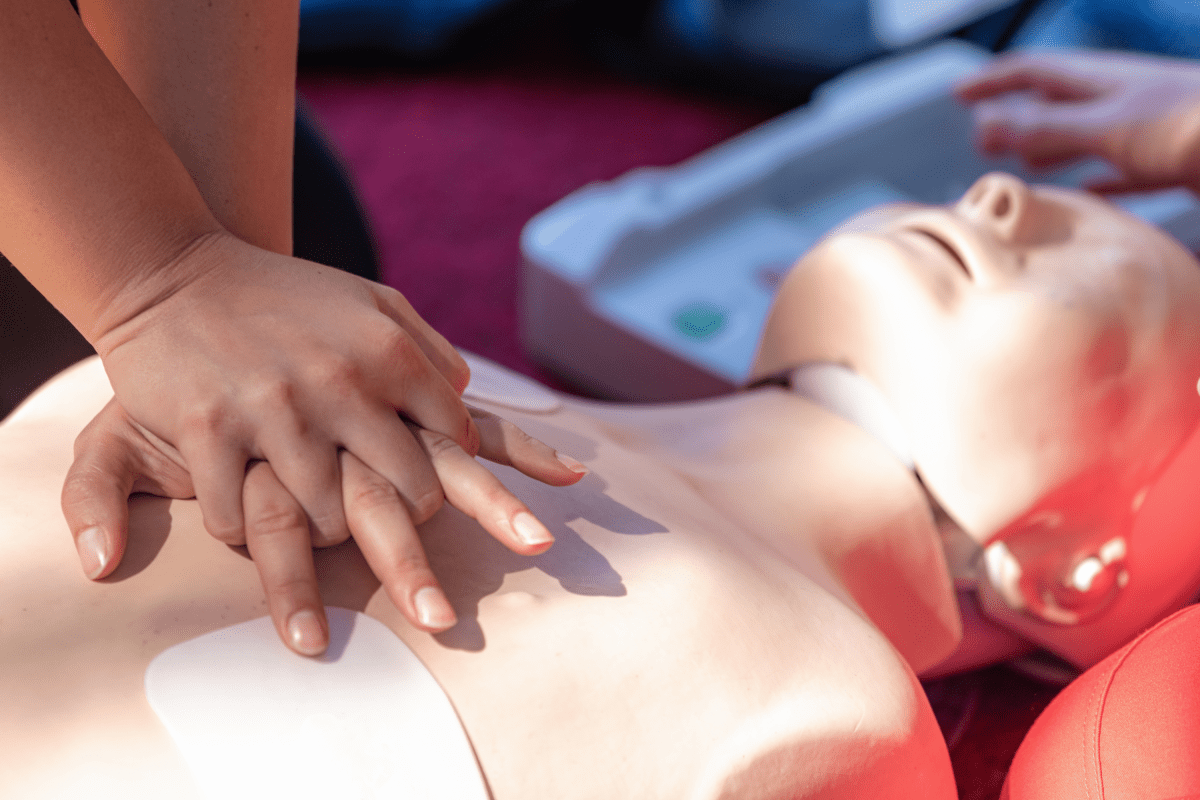
The correct hands-only CPR procedure contains just two steps: first call 911—and then start chest compressions.
However, the researchers’ analysis of 169 TV episodes featuring hands-only CPR that have aired since 2008, the researchers found that fewer than 30 percent depicted the procedure correctly.
In addition, nearly half of the scenes still showed outdated practices, such as mouth-to-mouth resuscitation (48 percent) and pulse checks (43 percent).
Furthermore, on screen, 44 percent of CPR recipients were between the ages of 21 and 40, while the average age of cardiac arrest victims in reality is actually 62. TV CPR scenes are overwhelmingly set in public places, but in real life 80 percent of cardiac arrests happen at home.
“This can potentially skew public perceptions,” said paper author Ore Fawole. “If viewers think cardiac arrest only happens in public or to young people, they may not see CPR training as relevant to their own lives. But most cardiac arrests happen at home, and the person you save is likely someone you love.”
The study also uncovered disparities in who receives CPR on TV—and in this case, fiction and reality were aligned. Most cardiac-arrest victims receiving hands-only CPR on-screen were white men. Today, women and Black and Latino people are less likely than white men to receive the lifesaving intervention from a bystander.
“Whether this is reflecting reality or whether it’s shaping reality, we don’t know, but that would be a good question to explore in future studies,” said Hoffman.
Hoffman also suggested that media creators and public health experts could collaborate to ensure more accurate portrayals of CPR. Such efforts could better equip viewers to act quickly and correctly in emergencies.
Do you have a tip on a health story that Newsweek should be covering? Do you have a question about CPR? Let us know via science@newsweek.com.
Reference
Fawole, O., et al. (2026) Out-of-Hospital Cardiac Arrest and Compression Only CPR on Scripted Television. Circulation: Population and Outcomes. https://doi.org/10.1161/circoutcomes.125.012657
Read the full article here


