



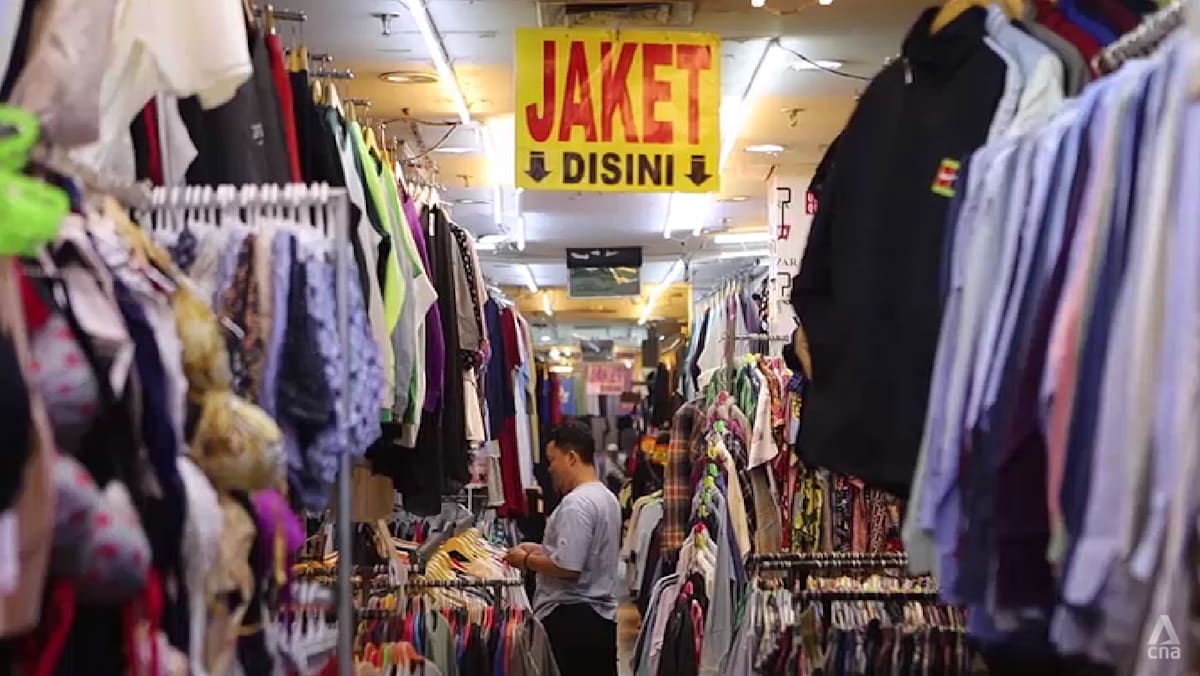
UNCERTAIN FUTURE FOR SELLERS
At Jakarta’s Senen Market, a go-to destination for pre-loved fashion, shoppers can piece together a complete outfit for as little as US$10.
For years, thrifting has flourished in Indonesia, driven by demand for affordable and unique clothing. Most of these garments are imported, and sellers operate across the country.
Although Indonesia officially banned such imports under a 2022 trade ministry regulation, enforcement has been patchy.
Syndicates continued to exploit porous borders, weak oversight and rogue customs officers to smuggle in the goods.
In 2024 alone, Indonesia imported more than 3,800 tonnes of used clothing.
But that changed in November, when authorities warned that anyone caught illegally importing such goods would face strict action. Recalcitrant importers, for instance, could be banned for life from importing any goods.
With imports halted, stocks are dwindling and traders are feeling the pinch.
“Our hope as sellers is to be allowed to continue doing business,” said second-hand clothes seller Andika, who like many Indonesians, goes by one name.
“They can impose quotas or tax us, it’s not a problem. What matters is that we can still sell and earn an income.”
Authorities have also ordered online thrift stores to shut down immediately.
Read the full article here


