



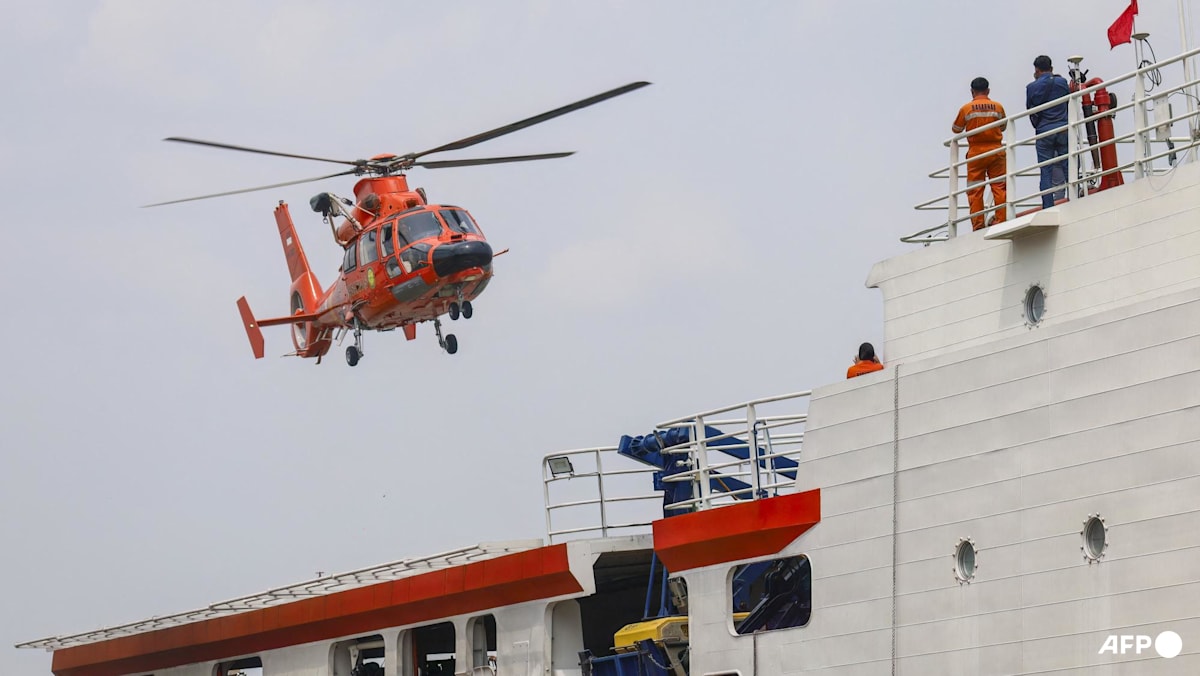
CURRENTS, WAVES, HIGH HULL COMPLICATE EFFORTS
Despite the time that the ship has been capsized, the mission remains a rescue operation, given the possibility that survivors may be trapped in watertight compartments.
Currents at the site were initially measured at nearly 7 knots, far above the 1.5-knot safety limit for diving, the agency said.
They have since eased to between 1.8 and 2 knots, allowing navy divers to approach the ship on Thursday during about eight hours in the water, said Yudhi Bramantyo Nur Sasongko, head of operations at the national rescue agency.
Also complicating the effort have been waves of up to 2.5m and strong winds near the vessel.
The ship drifted about 1.8 nautical miles after the accident, officials have said. It has now sunk and is on the seabed, officials said late on Thursday. The Java Sea is between 40m and 50m deep, according to government data.
Part of the difficulty of getting into the ship is its enclosed design, Arianto told Reuters in a telephone interview. The 119m Virgo Transport 8 is a “roll-on/roll-off” vessel built to carry vehicles as well as passengers between islands in Indonesia’s sprawling archipelago.
“Generally, ships like this have high hulls on the right and left side,” he said, unlike passenger ships with rows of windows from the second deck up.
The structure would have made evacuation difficult and now limits how rescuers, once they reach the vessel, can get inside, he said, estimating the ship likely has two or three decks, with vehicles below and passengers above.
Read the full article here


