



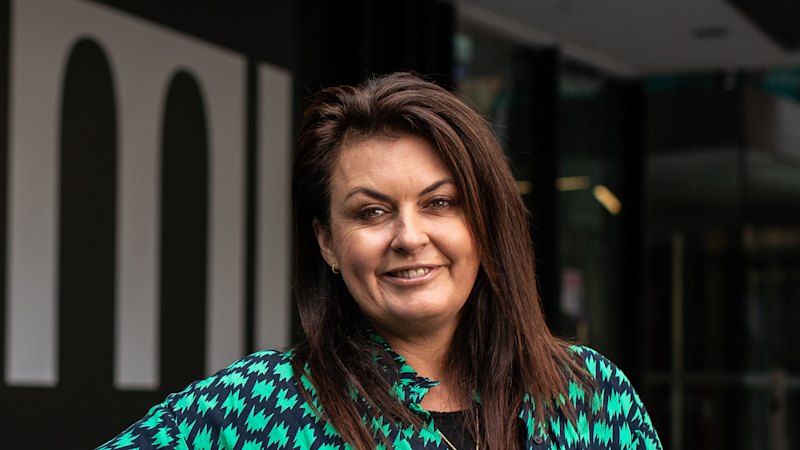
It was the perfect Melbourne story. One of the city’s major cultural institutions revived for a new decade. Inside, a restaurant helmed by a TV-famous chef and former Queen of Moomba. The backdrop of Federation Square. Art and dining – two of the city’s driving passions – would be united in a package that couldn’t happen anywhere else.
But there would be no fairytale ending to this story. Hero, celebrated chef Karen Martini’s restaurant at ACMI, closed abruptly in October 2023 after the museum issued what was, essentially, an eviction notice. The restaurant was to be out by 8pm that day.
The project should have been a roaring success when it was first announced in 2019. It had been years since anyone had tackled dining with any seriousness at Melbourne’s cultural institutions, despite our city priding itself on its strength in both arenas.
It was Martini’s first restaurant in the city, and her first new venue in 17 years.
The headlines anticipating the venue’s opening in 2021 portray a city yearning for a return to its favourite pastimes of dining and gallery-hopping after two years of stay-at-home orders due to the pandemic. “A hero comes along”; “Hero to help spur city revival”; “Martini may provide the Hero city needs”.
But, in less than three years, that narrative turned into a war of words between a cultural institution and a high-profile chef.
ACMI, the museum that housed the restaurant, said that the venue was in breach of contract and had accrued “significant unpaid debt”.
Martini and the Hero team wanted a new agreement that reflected the significant downturn in foot traffic that had plagued the Federation Square precinct from 2020 onwards.

It was a public fall for a chef who has spent nearly 30 years as one of the city’s most consistent culinary stars – defined by cutting-edge cool, critical success, TV appearances and awards. But Martini’s path to the top didn’t start with a high-profile gig; it began on the bottom rung of the kitchen ladder.
Garlic prep to the George: The making of a culinary queen
It all started, like so many great meals, with peeling garlic. During work experience in year 10 at the famed Melbourne restaurant Mietta’s, Martini says she spent two weeks doing nothing else while watching the inimitable Jacques Reymond run the kitchen of toque-wearing chefs like he was conducting an orchestra.
Going back to school wasn’t an option in her mind, and so began her cooking career.
She did the majority of her chef’s apprenticeship in her late teens at one of the most exacting kitchens of the time in Melbourne, Tansy’s in Carlton North, which Andrew McConnell, Philippa Sibley and Rita Macali also passed through. She recalls 60-hour work weeks plucking pheasants, boning hares, skinning eels and making buckets of mayonnaise.
“It was pretty punishing,” she says.
Ready for her next lesson, Martini hopped on a plane, falling headlong into the food-worshipping cultures of Italy and France. Markets were full of people talking about what they’d cook for lunch that day, shops displayed tray after tray of terrines and pâtés, there were “people on the street shucking oysters and having a cigarette, and [then] having oysters and a glass of wine”.
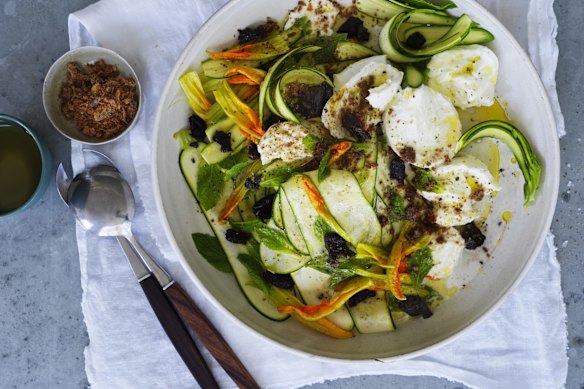
That trip overseas set her on a career-long quest for lively flavours in her cooking, always built around a core of produce chosen at its absolute peak. Her menus over the years feature recurring words: mozzarella, anchovies, olive, artichoke, chorizo, and pine nuts.
Julie Gibbs, publisher of Martini’s first cookbook, describes her as a quintessentially Australian cook, taking influences and flavours from many different places and cuisines but in a way that makes sense.
The 54-year-old chef’s upbringing included time in her grandmother Grace’s kitchen, where French, Tunisian and Italian flavours mingled, but also with the English-Irish side of her mother’s family.
Chef Diana Desensi, who worked with Martini in 2024 at St Kilda venue Saint George, says a typical Martini dish takes every component to the brink. “If you added one gram more [of anything], it would be inedible.”
After Europe, a young Martini didn’t go back into the kitchen of another big-name chef at the time. She landed at Haskins Hotel in Fitzroy North, where she says she trialled successfully for the sous chef role. When she declined the offer because of some concerns with the head chef’s menu, the owners gave her the top job.
Then, in 1995, she helped put the Kent Hotel in Carlton North on the map, working alongside her Haskins accomplice Rita Macali. The two looked like raven-haired sisters, turning out dishes such as veal with eggplant puree, and a wood-fired pizza topped with basil butter and just-warm oysters.
What they were doing with pub dining was exciting enough to catch the attention of Rinaldo Di Stasio, Donlevy Fitzpatrick and Maurice Terzini, at the time some of Melbourne’s most cutting-edge restaurateurs, who dined at the Kent regularly.
Fitzpatrick and Terzini tapped Martini to lead the kitchen at a new wine bar they were opening in the corner of the George Hotel in St Kilda. To secure the job, she cooked for them – an audition essentially – serving radically simple dishes such as orecchiette pasta with wilted greens, chilli and anchovy.
It opened in 1996 with a humble name, Melbourne Wine Room, which only underscored the groundbreaking package on offer.
“It was a new energy,” says Anthea Loucas Bosha, head of Food and Drink Victoria.
“It was just a magnet,” adds book publisher Julie Gibbs, who lived in Melbourne at the time. “There was everything you wanted: a big bar and music and beautiful wine and her [Martini’s] food. It was such a scene.”
But a bigger scene was waiting.
From the Bondi Surf Club to every Australian kitchen
The Olympics had just brought the world’s gaze to Sydney, and in 2000 the city was riding high on a cocktail of new investments, ambitious ideas and new-millennium enthusiasm. Locals were dazzled by the images of their own gorgeous, glittering city that were reflected back at them, and basked in the success of the games and the global adoration. For an encore, an ambitious group of investors were brewing something big at the city’s most famous beach.
With an outlay of $3 million dollars and the unlikely location of Bondi’s surf club, Icebergs Dining Room was easily Sydney’s most anticipated restaurant opening of the new century. The Sydney Morning Herald wrote at the time that “the path to opening has been steep”, with “waves of industry rumour and scrutiny” crashing around its mastermind, restaurateur Terzini.
“I did feel like we were under a magnifying glass,” says Martini, looking back.
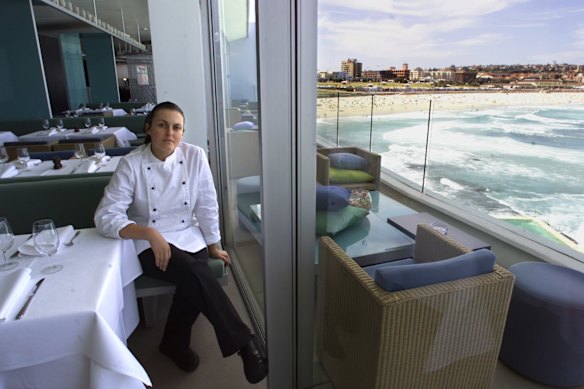
After twice declining the executive chef role, Martini finally joined her former boss, Terzini, to oversee the opening of a venue that would forever change Sydney – perhaps Australia’s – dining. She was 31. It was the advice of her partner, Michael Sapountsis, that swayed her.
“She needed a stage that was bigger than a corner in St Kilda,” he says now. “[Icebergs] feels like another planet.”
He remained in Melbourne at the Wine Room, where he and Martini were investors, and would visit on weekends.
Her Icebergs menus included lemon-roasted suckling lamb, swordfish with quantities of salsa verde, and a bright tomato seafood stew. The SMH’s restaurant reviewer Matthew Evans wrote that “chef Karen Martini has the kind of hand you want to kiss, blessed as it is with the lightest touch” and awarded the restaurant two hats upon opening.

“There was this elegance in a place that perhaps hadn’t seen that before, and then just that expansive view,” says Loucas Bosha. “It was the whole package.”
Martini recalls feeding huge numbers of diners from a tiny kitchen, lunch services that rolled into dinner, with three seafood deliveries a day to keep up with demand (and little storage space). Work weeks ballooned to 100 hours. To deal with the stress, she walked from Bronte to Bondi each morning to get to work.
A generation on, it’s hard to imagine Bondi without Icebergs the restaurant. And it’s just as difficult to think of Australian dinner tables without a Martini dish, whether once a year or once a week.
Icebergs went on to win Best New Restaurant in the Good Food Guide 2004. The Karen Martini touch, a trademark among savvy Sydney and Melbourne diners, was on the way to becoming a national brand.

The question that shocked a head chef
“Karen is always seeking flavour, without complicating the dish. And that is an art,” says Julie Gibbs.
The publisher and editor worked on Martini’s first three books, beginning in 2006 with Where The Heart Is. Interest in Martini was huge, but Gibbs secured the white-hot chef as she was fresh off her success at Icebergs and making strides into the media landscape.
Eagle-eyed Fairfax magazine editor Lisa Hudson, based in Sydney, had already tapped Martini to write recipes for Sunday Life. Recipe writing wasn’t easy at first. “You’ve got to remember that I didn’t actually have the skill set because I left school so early,” says Martini. The first recipes she submitted were handwritten. But she remained a regular contributor to the stable’s lift outs, including Good Weekend, until early 2024.
TV also came calling. Channel 7’s Better Homes and Gardens came knocking in 2006 and she continued to present the weekly show’s food segment until 2024.
Although her tenure at Icebergs was only two years, Martini had in that time gotten onto the right people’s radars to cross the often elusive divide between restaurant chefs and home cooks.
“She was a new voice,” says Loucas Bosha.
Her signatures, out of a repertoire that would easily exceed five thousand recipes, include Persian chicken, richly spiced lamb shoulder, and vibrant salads strewn with herbs. Her former head chef at Saint George, Diana Desensi, describes a generosity to Martini’s cooking, with plenty of spices and acid used. And always lots of oil.
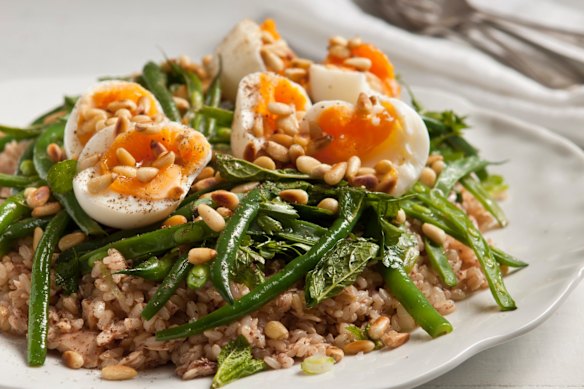
Pearl couscous, honey, bay leaf and sumac show up frequently in Martini dishes, but so do sesame oil and kombu, the highly flavoursome seaweed used in Japanese stocks and soups.
“Her recipes for the most part are simple but … there’s always a twist,” says Loucas Bosha.
The engine room of all these ideas is Martini’s palate.
“She’s on it, she knows the flavours that she expects to have,” says Nicky Riemer, head chef at Melbourne Wine Room for two years. “If you didn’t salt a piece of meat correctly, you were told.”
Desensi recalls one time her boss visited Saint George for lunch and, after her meal, came into the kitchen and asked why they had changed the charcoal over which they cooked the steaks. She couldn’t believe Martini could taste the difference.
But sparkling flavours aside, “the bonus is that her recipes actually work,” says Desensi. “It’s very rare.”
It’s a big reason why Nagi Maehashi (RecipeTin Eats) has become a household name: people trust her.
“Trust is something that I built over the last 30 years, I suppose,” says Martini. “I can experiment, but I don’t do it on someone else’s time.”
“Any recipe that hits a book has been cooked by me at least three or four times.”
Those who have worked with Martini confirm this meticulousness, with round after round of refinement.
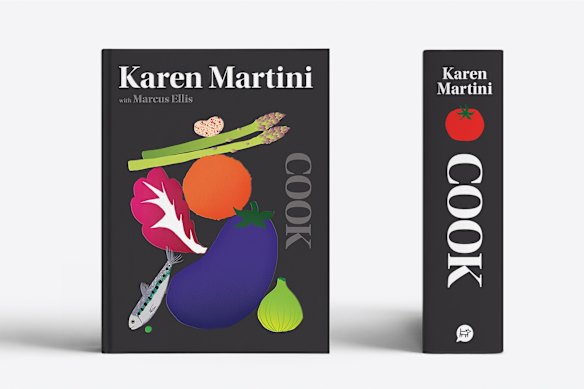
Her 2022 book, Cook, spans a whopping 900 pages, a project in the realm of Stephanie Alexander’s generation-defining A Cook’s Companion, published exactly 30 years ago this year.
“There aren’t that many people who can share that much between two covers,” Gibbs says.
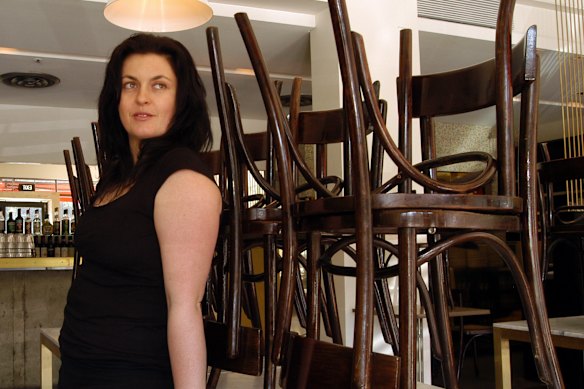
As Martini’s media career began, she opened a casual pizzeria, Mr Wolf, in St Kilda, another instant hit that joined Melbourne’s exciting new wave of contemporary pizza in the early 2000s: minimal toppings, slow-rise dough, an artisan touch. She and Sapountsis were also starting a family.
“When I had children, that was also part of the journey [of writing recipes],” she says. “I understood how time poor you are at home and you just need to cut to the chase.”
Gibbs remembers Martini during this time always clutching a handful of lists, written on the back of shopping dockets, menus, anything. It was the only way things got done.
Goliath and the glass house: The fall of Hero
Years in the public eye help bring people through the doors of Martini’s restaurants, a fact that doesn’t escape her. “We have customers coming from Brighton, from Carlton or Northcote, they come from everywhere,” she says today of South Yarra’s Bar Carolina, where she’s been culinary director since September.
Big opportunities come to a chef with a public profile. But so does scrutiny.
At the end of 2020, the year that shell-shocked Melbourne, news broke that Martini would open a 150-seat restaurant in the brand-new ACMI (formerly Australian Centre for the Moving Image), which had just undergone a $40 million transformation.

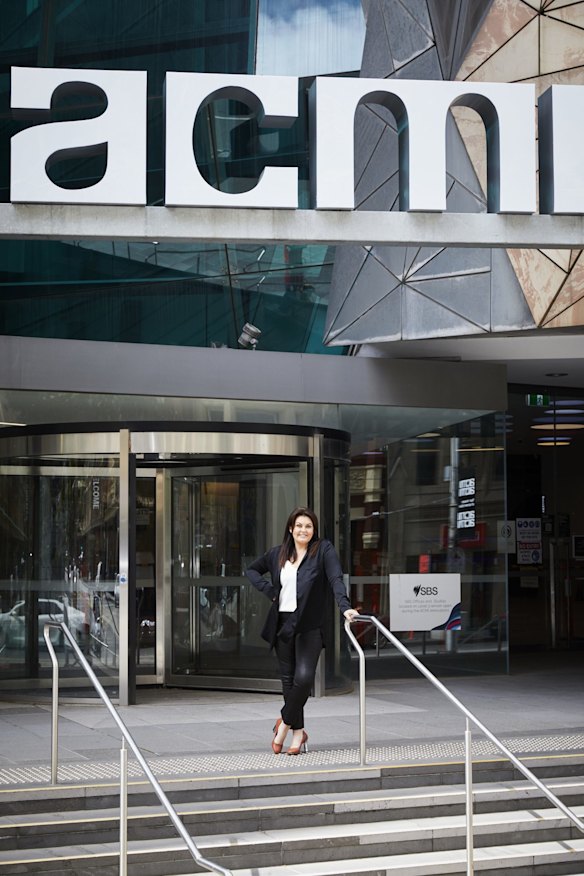
Melburnians embraced the story. The chef who had graced people’s TV screens weekly for more than a decade would be spearheading a restaurant at the museum devoted to screen culture. And it wouldn’t be your usual ho-hum gallery cafeteria. This was to be a dining destination in its own right.
On February 11, 2021, Hero opened at ACMI. Two days later, Melbourne went into a snap five-day lockdown.
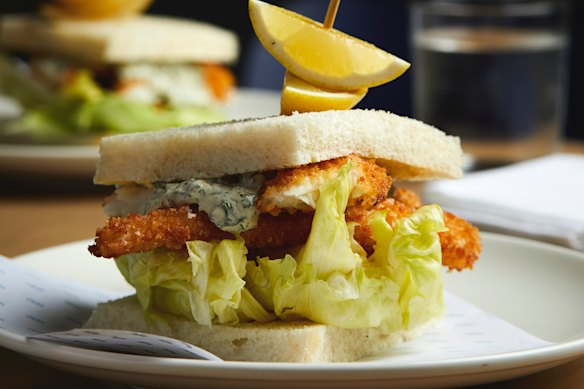
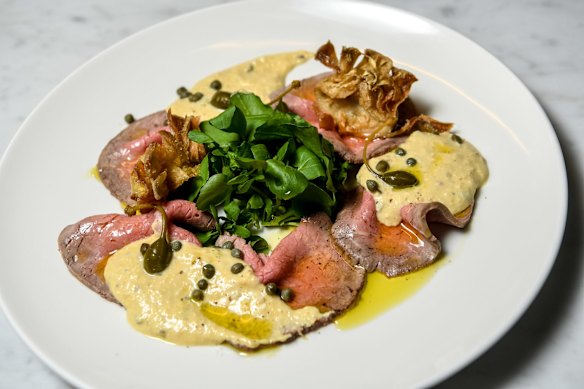
Still, with its menu of cornerstone Italian dishes including vitello tonnato, and easygoing lunch options like a crumbed fish sandwich, the restaurant soon earned a Good Food chef’s hat from chief critic Gemima Cody.
But Hero wasn’t just responsible for pre-theatre fine dining. ACMI needed a typical cinema candy bar stocked with food to take into its cinemas, plus a kiosk serving takeaway coffee, snacks, breakfast items and grab-and-go lunches. Events catering was also part of the remit.
Justin McManus
The city was shut down three more times in the restaurant’s first year due to the pandemic, and returned to play slower than expected following the easing of restrictions.
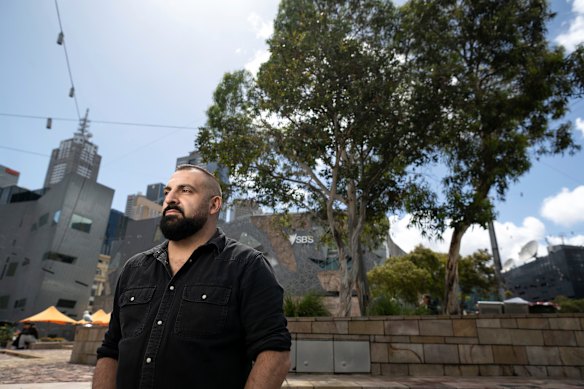
Visitation to ACMI Federation Square before the pandemic was well over 1 million people each year. But after reopening, ACMI reported 375,338 visitors in its first full year of operation, climbing to 831,151 in the year ending June 30, 2023.
Asked about footfall in the year to date, ACMI responded that figures were in line with last year’s numbers of around 907,000, still below pre-pandemic figures.
Martini and Sapountsis, at the time and today, say that the foot traffic projections they were given by ACMI were unrealistic, and the true figures did not make the restaurant viable.
“The business [including events, cinema and dining] ended up doing something like 90 per cent of its revenue after 5 o’clock when the museum was actually shut,” says Sapountsis. “That just shows where the weight of effort was, which was us bringing people to the museum rather than the museum bringing people to us.”
“The expectations of traffic and numbers and so forth were completely mismatched with reality,” he continues. “COVID wasn’t helpful but at the same time I think they were looking at their space from the inside out if that makes sense.”
The restaurant’s run came to a dramatic end after just 2½ years, with ACMI shutting it down, citing a breach of contract. The Hero side took to social media immediately to criticise the communication and the decision. Legal action was threatened.
The museum did not answer specific questions when contacted by this masthead about the breakdown of the partnership and the breach of contract that triggered Hero’s shuttering.
“ACMI has a settlement agreement with [Hero’s operating company] HospitalityM, which includes a confidentiality obligation that limits the answers we can provide,” wrote acting CEO Sarah Slade.
It reiterated its statements from 2023 that it provided ongoing support “including payment concessions and multiple contract renegotiations”.
Martini responded: “To begin with, they were very supportive. There was just a shift, towards the end, in management”.
While Martini was the face of the restaurant, the company operating it, HospitalityM, was led by a collaborator, Michael Gebran. Gebran was unable to comment on this story due to the legal settlement with ACMI.
HospitalityM was wound up in 2024 owing more than $1 million. The majority of that was to Gebran, listed as the sole company director, and to his parents, who provided startup capital. ACMI drew a $125,000 bank guarantee out of an ANZ account to recover some of the money it was owed. The museum did not respond to questions about the total amount it was owed.
Public documents show that the names of Martini and Sapountsis were never officially linked to HospitalityM; Gebran bore all the liability.
Today, the former Hero space is empty, ready to be configured for events; upstairs, a small ACMI kiosk sells sushi rolls and banh mi, yoghurt pots and coffee, ancient grain salad and prosciutto baguettes.
Even now, there’s anger in the voices of Martini and Sapountsis when they talk about Hero.
“They wanted us out,” Martini says. “The restaurant that we had created didn’t necessarily satisfy the new needs of the new management.”
“At the end of the day, you’ve got a Goliath squashing one small person,” says Sapountsis.
A few months later, Martini and Sapountsis moved onto their next project: Saint George, a reinvigoration of the Saint Hotel in St Kilda by a large hospitality group. It was to be a homecoming of sorts for the couple, a return to the strip where they first wowed people with Melbourne Wine Room. Sapountsis initially had reservations about the potential to revive a difficult site on what had become a difficult street. But Martini says the deal also included opening two sites in Sydney, which was attractive to her – and still is.
Behind it was Jon Adgemis’s Public Hospitality, which quickly rose in Sydney and to a lesser extent Melbourne, owning about 20 venues at the group’s height before collapsing in 2025 under $1.8 billion of debt. The group’s strategy was to partner with successful hospitality names, including Maybe Sammy cocktail bar in Sydney and Melbourne chefs Guy Grossi and Martini.
Saint George opened in February 2024 and quickly gained a hat, but by spring there were rumours of trouble with Public’s finances and, some weeks, staff weren’t getting paid. It closed for Christmas that year and never reopened.
Jon Adgemis was contacted by this masthead but declined to comment.
The third act of a cautious Karen Martini
Fifteen years of Melbourne Wine Room. Sixteen of Mr Wolf. Eighteen on Better Homes & Gardens. And then, two short-lived projects with rather sensational endings, in quick succession. It must have stung.
Speaking about the venue she currently oversees, South Yarra’s Bar Carolina, Martini is at pains to use words such as cautious, precise and strategic. “We’ve made a very cautious decision to make sure we’re not encumbered by other people dictating or [by] an overarching view on what we could or should be.”
In fact, she uses the word cautious four times in our conversation.

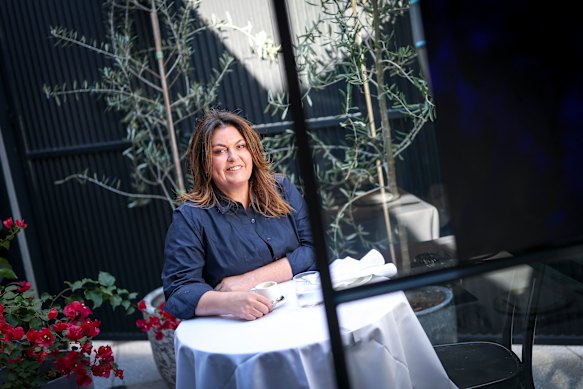
There’s a sense of relief that the Carolina opportunity fell into place last year, a chance to take over a well-patronised restaurant on busy Toorak Road, first opened in 2017 by Joe Mammone, one of the founders of trailblazing venues Caffe e Cucina in South Yarra and Il Bacaro in the CBD.
From 2002 onwards, there was no pursuit in the culinary world that Martini didn’t turn her hand to. She wrote cookbooks (10 at last count), very successful ones. She appeared on two prime-time shows – the other being My Kitchen Rules from its 2010 premiere to 2019 – and served as an ambassador for everything from food charities to the Sydney Opera House. There were lucrative consulting gigs, festival appearances, Good Food chef’s hats, peer-nominated awards, her recipe columns in major newspapers.
The longevity of her media career places her among some of the country’s most recognisable cooking stars, on par with Neil Perry, Maggie Beer and Adam Liaw.
At her restaurants, she’s cooked for John Travolta (he wanted hamburgers), Destiny’s Child (they asked for fried chicken), Kylie Minogue, Prince Harry, Nicole Kidman, Michael Hutchence and Helena Christensen. She was at the helm of some of Australia’s most influential restaurants when they were dictating the dining conversation, and she led those kitchens when it was rare for a woman to do so. She speaks with unabashed confidence about her culinary credentials.
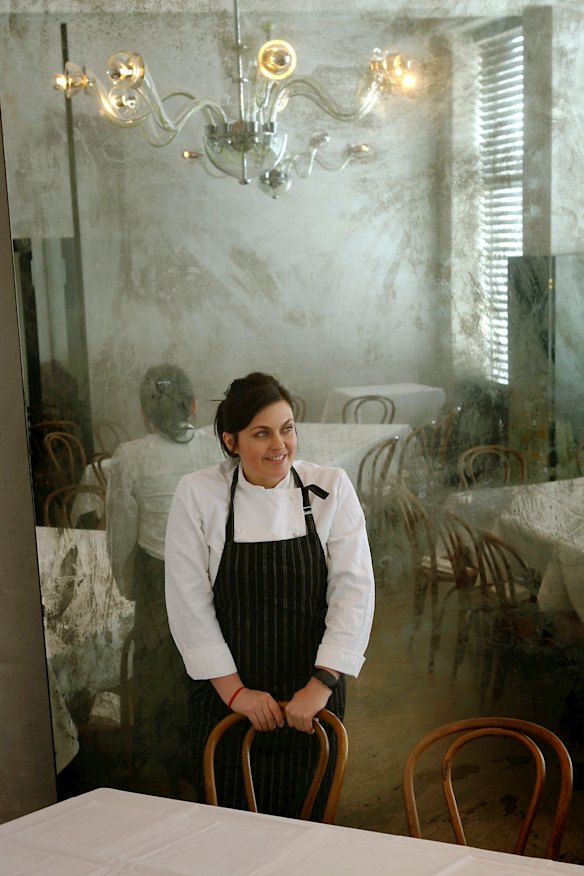
Despite this, Martini says her wish is still the pursuit of a business she can truly cherish.
While many assume she’s already achieved it, her friend Riemer notes that for chefs like Martini, the “sweet spot” — balancing a successful restaurant with family, expectations, and profit — is an elusive and often fleeting chase.
“She’s had the sweet spots and it’s the constant maintaining it, getting it again, losing it, getting it again. That constant battle.”

Martini has a mantra. “I say it all the time: I’d rather be consistently very good than inconsistently brilliant.”
Her husband says: “She’s very ambitious; very, very driven; very, very focused on what’s in front of her. She’s always been like that. I wouldn’t say obsessive, but kind of obsessive.”
How do the couple handle the overlapping domains of work and home? “It’s like any other marriage, but sometimes the volume gets turned up to 12,” he says.
Over time they’ve worked out ways of drawing a line under business discussions when they’re at home. But he admits sometimes they do have frank conversations that “leave minor scars”.
At Bar Carolina, a new upstairs barwill reopen in coming weeks. Two cookbooks are coming out next month, with two more arriving in September, all themed spin-offs from her enormous tome Cook.
Desensi is excited about the next steps – and has signed on to work with her former boss at a new restaurant opening this winter in what was the King & Godfree deli in Carlton.
Martini is involved as culinary director and has already overseen the opening of a pizzeria, Garfield, within the well-known corner site.
Martini views herself today as part of a bigger groundswell in women’s power in Australian hospitality.
And there’s more to come. From a Rick Stein-style travel show to a pantry-staple retail line, Martini says she remains driven by possibility.
For her, a chef’s life is a perpetual pursuit of the next great meal and a new “sweet spot” of success just around the corner.
Start the day with a summary of the day’s most important and interesting stories, analysis and insights. Sign up for our Morning Edition newsletter.
Read the full article here


