



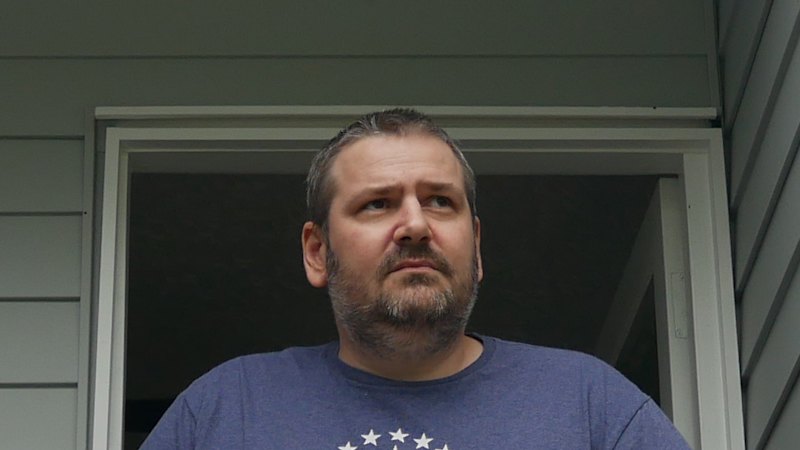
After years of searching, Dave Szabo thought he had found his dream home in the idyllic Sunshine Coast town of Landsborough, at the foot of the Glasshouse Mountains.
Then, two days after moving in, he smelt it.
“It smells like boiling meat. Like really strong, and sometimes with a mix of burning hair or sometimes almost like septic,” he said.
His family had moved around the corner from a plant where unwanted meat and byproducts were rendered – a process that separates fats and moisture from proteins – for products like dog food.
Szabo said he canvassed some people in the area before they bought the house, but most downplayed the smell.
“We’d heard some rumours and reached out to some individuals, and they assured us that it was nowhere near as bad as people had made out,” he said.
Living with it has been a different story. After moving in last December, the family cancelled plans to put a pool in the backyard and have spent almost $8000 on air conditioning for the days they cannot keep the windows open, Szabo said.
“The kids were sweltering during the summer heatwaves,” he said.
Szabo, who works from home as a cybersecurity expert, said there were days when clothes drying on the line took on the smell.
The odour has resulted in the department of environment issuing an Environmental Enforcement Order to the company, Norganic Proteins.
It was not the first time the company, owned by businessman Kent Quinn, had been warned.
Norganic, which has operated at the site since 2018, was handed a protection order in 2022, with the department citing records of the smell back to just months after the business took over.
In the new enforcement order, issued on March 12, the department said officers had visited sites around the plant multiple times in late 2025 and early 2026 after a run of complaints began in November.
“Odour was experienced consistently by authorised officers and described as strongly offensive and of strong intensity,” Ben Grant, a compliance delivery officer, said of a visit in February.
Should Norganic not comply with the order, the maximum penalty is five years’ imprisonment or a $276,000 fine.
Norganic has acknowledged the smell publicly. In November 2025, the company posted in a local Facebook group apologising and asking residents to catalogue their experiences and write in.
“We are truly sorry for the distress and inconvenience the recent odours have caused you and your families. We completely understand how unpleasant this must be, especially on warm evenings when you simply want to open your windows and enjoy the fresh air,” the post read.
The post noted Norganic had installed new filtration systems and adjusted their processes to reduce issues.
But Szabo said the smells had persisted, and argued Landsborough was a changing place, one no longer suited to hosting a meat rendering plant.
While there are still signs of the town’s logging and farming history, gentrification has settled in.
At a real estate agent in town, there are no houses worth less than a million dollars in the window, and the train station car park is filled by the vehicles of commuters headed to Brisbane.
“A facility like this unfortunately needs to be kilometres away from residential,” Szabo said, adding his issue was not with the Norganic’s type of business, just the stench it created.
“I don’t want them to close down, I just want them to stop the stink,” he said.
Quinn, contacted through Norganic, did not respond by deadline.
Start the day with a summary of the day’s most important and interesting stories, analysis and insights. Sign up for our Morning Edition newsletter.
From our partners
Read the full article here


