



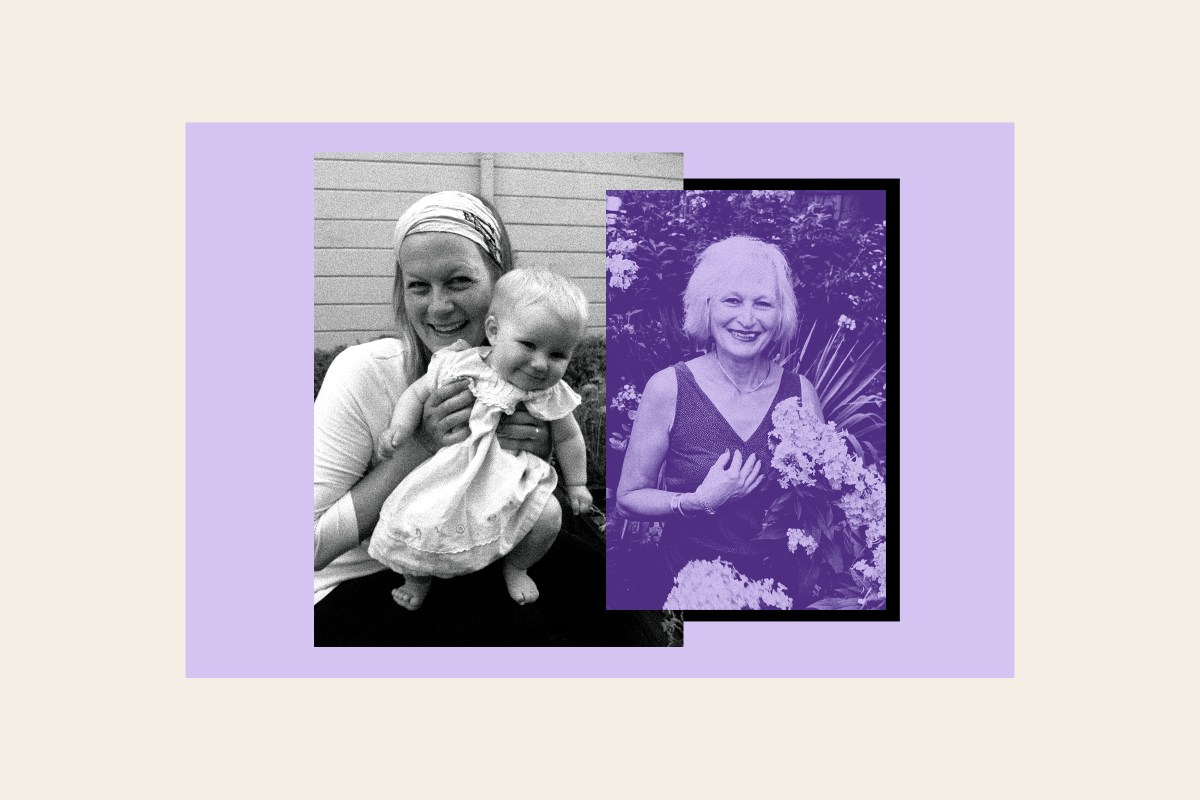
I held out my newborn daughter to my mother for the very first time. My baby’s pink petal face furled and unfurled like her middle name: Rose. “Would you like to hold her?” I asked.
“No,” my mom said, shaking her head and sitting back on the couch.
My dad took her instead, cradling her in his arms while my heart fell apart. How could my mom not want to hold her only granddaughter?
A few weeks later, I went to a support group for new moms in Berkeley, California. The mothers talked about their own moms helping out and giving them time to rest. Or they complained about their moms overwhelming them with outdated advice. Either way, I could not relate.
My daughter wailed. So did I. “My mom doesn’t ask me at all about my daughter,” I explained. “She’s never asked about my labor or how I’m doing. When we talk, she only tells me about her life and complains about my dad. Everything has changed for me and she doesn’t seem to care.”
“I’m so sorry,” said the matriarch of the group. “It sounds like you have a narcissistic mother. I know firsthand. You should Google it.”
Just when new motherhood had dug deep into my own ego, shifting its roots entirely, my mother’s ego seemed to have become monstrously big.
Bleary-eyed at 3 a.m., while nursing my baby, I scrolled through the traits of narcissistic moms. In some ways, the profile fit: My mom was often critical of my appearance, never quite approving of my full figure and hippie clothes. She talked more about herself than she asked about me. She sometimes seemed to view my work and achievements as an extension of herself without caring how I really felt about them.
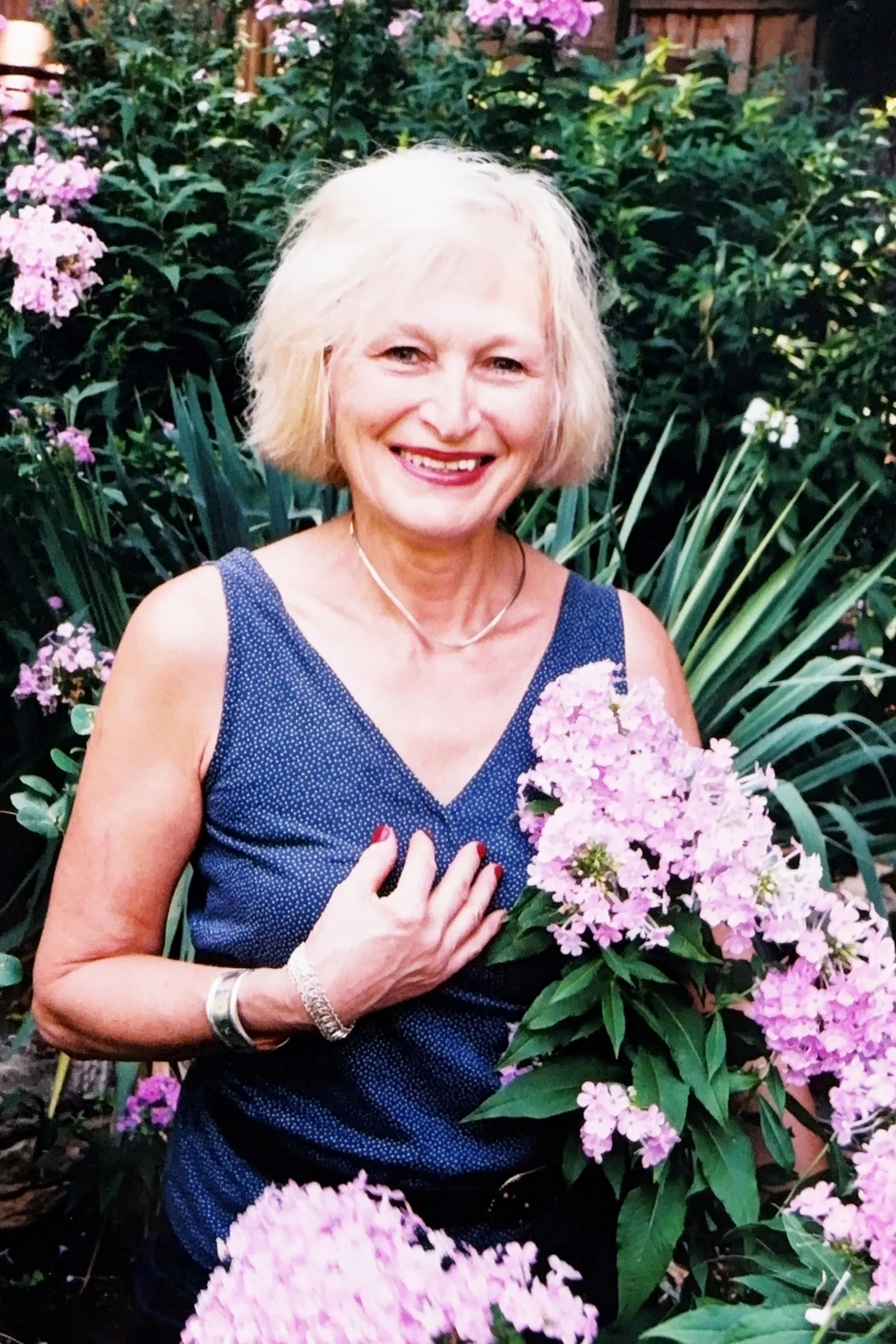
Still, I couldn’t reconcile this new personality with the mom I knew growing up. While she had held many titles in her life—farm girl, cheerleader, speech writer, journalist, realtor, activist, mother—if you asked me to describe her in one word, I’d say, “gardener.” Could a master gardener really be a narcissist?
During my childhood summers, my mom woke up when the sparrows chirped at dawn and went out into her lush Nebraska garden to work. Midmorning, I would walk out into the yard, curving along a brick path past towering purple spikes of delphinium, spicy scented bushes of pink and yellow roses, sun-soaked clumps of orange day lilies, and shady nooks of emerald hosta. Mourning doves cooed and cicadas droned through the thick Midwestern air.
I’d often find my mom knee-deep in one of two large compost boxes, her muscular arms and tank top covered with dirt. For a moment I’d just stand and watch as she turned a layer of dried fall leaves from the bottom of one box over fresh grass clippings in the other, steam rising around her from the hot natural process of decay. Then I’d call out, “Hi, Mom!” She’d wipe her brow and smile delightedly at me. “Good morning, Jennica! How did you sleep?”
All felt right in the world.
It was our routine to walk around the yard and have her quiz me on the names of flowers. She’d nudge different plants with her red garden clogs and talk, almost to herself, about what each plant needed: more sun, more shade, more water or less, more space, maybe a little compost.

To make sure her garden bloomed to its fullest, my mom constantly enriched the clay soil, weeded and watered, transplanted unhappy flowers, and turned over the compost. Now I can see that by showing me her daily gardening tasks, my mother was also gently offering me a gift: practical instructions for loving my daughter while understanding and grieving the unexpected changes with my mom.
Enrich the soil.
As a child, my mom treated me like a unique flower she wanted to help thrive—not as an object to shape to her liking. She gave me the richest soil, reading to me at night, making me homemade banana bread, encouraging me to do what made me happy, to rest, and to spend time with friends. She reached back to hold my hand in the car and laughed with joy when I said something wise. I knew she wanted to help my life to bloom.
Now, as a mom, I was nurturing my own little Rose—and I wanted my mom’s nutrient-rich support as much as ever. But she stopped calling and writing to me.
So, following the sometimes harsh-but-efficient way of nature, I focused my limited time and energy on enriching the soil around my daughter.
Weed and water persistently.
When we took a trip back to Nebraska, my mom’s garden was completely overgrown. The day lilies were bullying the delphinium. The roses sprawled over the lawn. I tried to walk around the garden with my mom, naming the flowers. She could no longer correct me when I got a name wrong.
“My mind has gone to pot, Jennica,” she said.
So had her garden. The sense of order and care had devolved into an oppressive Nebraska jungle.
“Your mom is losing her memory,” my dad told me privately.
My mom hadn’t become a narcissist with a monstrous ego after all. Instead, her sense of self was decomposing, crumbling away her ability to care much for anything or anyone.

Age is the biggest risk factor for dementia; most diagnoses happen after age 65, according to the Cleveland Clinic. Some types of the condition can involve personality changes, including a loss of empathy, the Mayo Clinic notes. For my mom, who was about 70 when her symptoms began, empathy was replaced by an angry mess of complaints and regrets.
I tried to weed and water the hot mess of my mom’s mind, sending her recipes and books I liked, calling her more often, and telling her how much she had taught me in her garden. Still, she faded.
At the same time, I showered my daughter with attention and care. My Rose bloomed.
Transplant flowers that aren’t thriving.
As my mom’s dementia worsened, its steaming heat of decay rose in fits of anger and agitation. The wilds of her mind broke across former neat hedges, so day became night and her childhood memories became the present. She talked over and over about how her brother died in a farming accident when she was 16, the loss once again painfully fresh.
My mom was also incontinent. She no longer wanted to shower. She couldn’t make her own meals. Her arthritis had made it impossible for her to safely go up and down the stairs on her own. Every other step she said, “Ouch.”
Then, at the tail end of the pandemic, my dad had a stroke while trying to clean up the back patio. When the hospital team told me they would not allow my dad to return home and care for my mom without 24-hour assistance, my dad and I decided together that my mom needed to move to memory care.
One of my life’s hardest tasks—the only one besides birthing my daughter that required me to dig so deeply into my inner strength—was leading my mom by myself down the stairs and out the door of her home for the last time. She’d lived there for 44 years. Hardest of all, I was leading her away forever from her garden, where she’d built the very best soil and planted her most joyful and meaningful roots.
My mom had taught me to transplant flowers that aren’t thriving. It was the only way to give her a chance to live out her life in dignity.
Turn over the compost.
My mom was both a gardener and part of a garden—we all are. Every minute, the churning cells in our body die, are cleared away and replaced. Eventually, though, the disintegration of our beings outpaces the weeding and regrowth.
But what if this constant cycle of life and death, this turning over of compost in our own lives, daughter after mother after daughter, is not driven just by the force of nature or a divinity, but by the active, hands-on-the-shovel cultivation of something just as miraculous: love.
Gardening is not always easy. Weeds take over. We fail to water. We get covered in dirt. But when love blooms, there is no work more worthy.
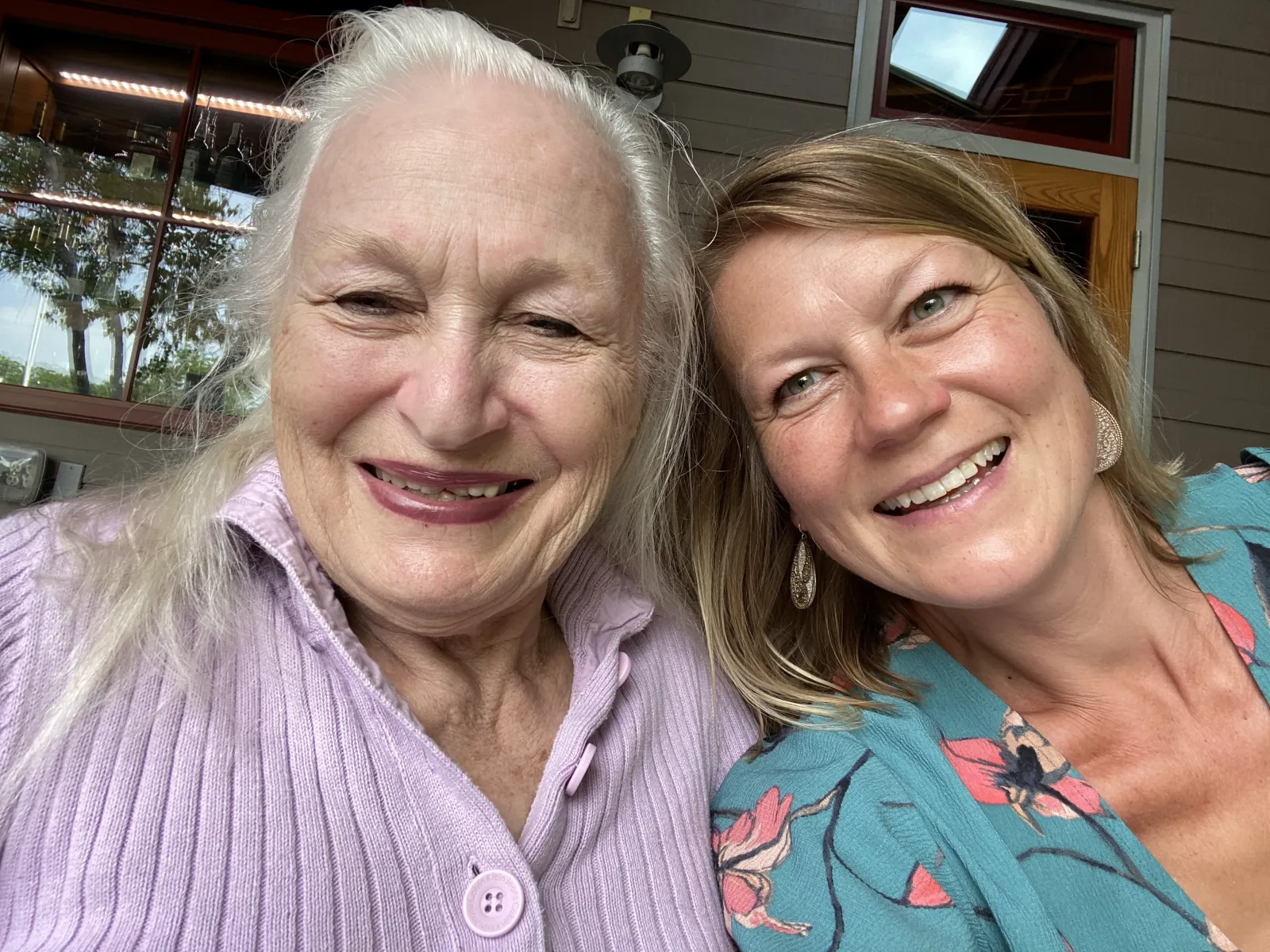
Near the very end of her life, I sat beside my mom in her wheelchair at the memory care center. Her pain had been numbed and her angry heat had dissipated. We looked out on a rather bare winter garden, seemingly a mirror of her mind, and I reached over to hold her petal-soft hand. I told my mom about my spirited daughter and how I was reading to her each night, even if I was tired.
She surprised me then. “You are such a good mom,” she said. “Be sure to take care of yourself too, Jennica.”
This love was such rich, crumbly soil. I could grow anything in it.
Jennica Peterson is a writer and editor living in Louisville, Colorado.
All views expressed in this article are the author’s own.
Do you have a personal essay you want to share with Newsweek? Send your story to MyTurn@newsweek.com.
Read the full article here


