



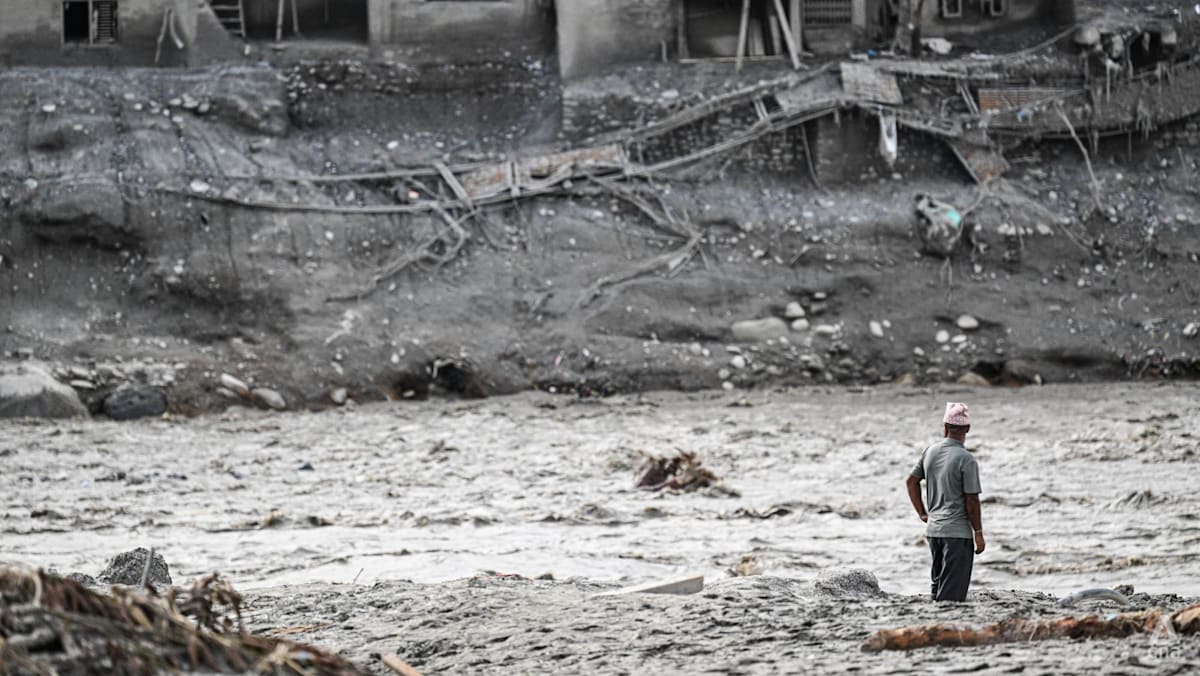
Mobile networks have been disrupted across parts of the disaster zone and access to some communities still remains difficult.
Shyam Kumar Pun is desperate for news of his lost brother, who was working as a machine operator at the border port of Rasuwagadhi.
Pun, 33, flew from Pokhara to Bidur and has been waiting for days for any news.
“If he was alive he would contact us on the phone,” he said. “We think he might have died but sometimes we wonder if he is out of phone network or his phone has died. We are somewhat hopeful that he is alive.”
As he speaks, the air buzzes with more helicopters dropping aid and bringing back survivors.
For those waiting for their loved ones, it’s a cycle of hope turned to anguish on repeat.
MORE BODIES IN THE MUD
In the small nearby town of Devighat, a digger starts to work around one of the collapsed houses close to the river. A rescue team is on hand with sniffer dogs.
After some time, there is a breakthrough. But the outcome is yet another dead body: another victim in a rising death toll.
Locals tell CNA of seeing bodies on rooftops in the immediate aftermath of the flood.
Days on, the smell of death hangs heavily in the air here. Heavy lift drones move overhead carrying stretchers, and later more body bags, across terrain that vehicles can no longer easily traverse.
The life of this riverside community appears frozen in time, and in the mire. Motorcycles stand abandoned, caked in muck. Personal belongings lie strewn.
Still, some locals have begun returning to their homes to salvage what little might be left.
Two men on the first floor of an engulfed home take a break from shovelling mud and debris, to ponder what has been lost here, staring into the distance.
Read the full article here


