




Labor’s failure to honour its poker machine promises should surprise no one (“Labor’s pokie porkies: Punters pay the price for unfulfilled promises”, July 12). Governments have a fundamental conflict of interest. They condemn the social harm caused by poker machines while quietly relying on gambling losses as a form of voluntary taxation. As long as poker machines remain a lucrative source of revenue, meaningful reform will always take second place to protecting the Treasury’s income. The same hypocrisy is evident in housing. Governments lament declining affordability while collecting billions from stamp duty, land tax and a host of other property taxes that rise as house prices increase. Why would they seriously tackle problems from which they are such major beneficiaries? John Kempler, Rose Bay
Why are NSW taxpayers subsidising clubs with gambling concessions of $1.2 billion a year? Even more ridiculous is the fact that hotels pay 50 per cent on gambling profits over $5 million while clubs pay no tax on profits up to $1 million and only 28.4 per cent on gambling profits over $20 million. It’s not like these gambling dollars are free money. They come at the cost of divorces, suicides, food budgets, school fees and even utilities, not to mention mortgages. Larry Woldenberg, Forest Lodge
Joyce thought bubble
More gobbledygook from Barnaby Joyce and so-called policy moves by One Nation (“One Nation flags radical RBA plan to cut inflation”, July 12). Also interesting is that he is complaining about the tax on alcohol. Instead of writing a book trying to explain his party, he would serve all Australians better by writing policy. Peter Dutton went to the last election with a lot of missing “policies” and was judged accordingly. Ian Ferrier, Long Jetty

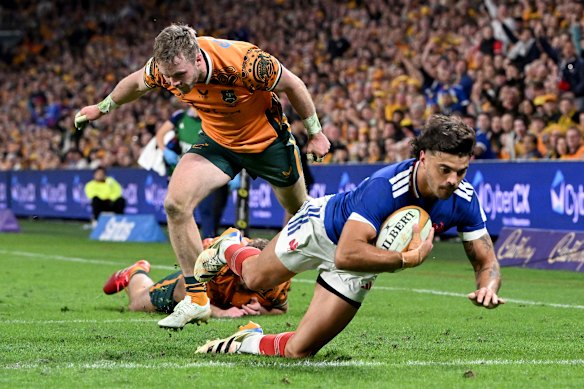
Wallabies’ woes
I told yers (“France put Wallabies to the sword with a devastating second-half display”, July 12)! Check the numbers. Since the Wallabies have been sponsored by a major fossil fuel company, they have (almost) never won a game. Too conflicted? Hugh Barrett, Sanctuary Point
Iain Payton’s Sunday article picked up many Wallabies faults, but I wish he’d mentioned two more. One, the idiotic way Australia’s backs continually kicked high defensive balls from their own half, mostly for only 10 metres, thus giving the ball back to the French, and two, the ragged stand of poor tackling in the second half. The Wallabies won’t beat anyone until these two faults are corrected. Stephen Wallace, Glebe


Open-hearted science
Thanks, Fitz, for a great good news story (“Ancient genius is professor’s passion”, July 12). Corey Tutt is an inspiration to the whole country, but particularly a bringer of hope to Indigenous peoples. His sharing of the ancient scientific wisdom of our First Nations peoples, openly given to all, is the spirit of the Australia I know. No unrealistic monoculture or banning of flags – just an openness to sharing and justice. Geoff Nilon, Mascot
I was inspired by Peter FitzSimons’ interview with Corey Tutt, founder of DeadlyScience, “an educational charity … to teach children across Australia about Indigenous science”. FitzSimons’ interview will undoubtedly open eyes to the sophistication of Indigenous culture. Corey’s grandfather taught him about Indigenous knowledge of country and culture, passed down by ancestors for millennia through storytelling. I knew our Indigenous peoples worked in harmony with the environment, but I hadn’t heard of their genius fish traps, invention of bread, weather forecasting through twinkling stars, fish-hunting collaboration with orca whales and purpose-targeted boomerang designs, to mention just a few of Corey’s revelations. He summed up Indigenous cultural practice with “they developed exactly what they needed for the environments in which they lived”. DeadlyScience is a charity that opens the door to a number of career path opportunities for Indigenous students. I trust Corey’s interview with Peter FitzSimons will generate donations to support his brilliant initiative. Corey hoped to make his grandfather proud. He succeeded. Gerardine Grace, Leura

Long-term strategy
Trump is stuck looking for a Plan C (“Trump no closer to Iran end game”, July 12). Iran has two plans. The short-term plan is Hormuz, but it also has a long-term plan. Trump will be gone in 2½ years. Just outwait him and candidates for the next election will be queuing up to end the war and blame Trump for everything. Iran will probably be able to get back frozen assets, keep its enriched nuclear fuel and get compensated for damage. If a dictatorship thinks long term, it can easily beat a democracy. Neville Turbit, Russell Lea
Bus bungling
Today’s article on bus driver salaries (“Bus drivers to cost government $200 million”, July 12) is another example of why the privatisation deal, concluded by the last state Coalition government, reeks of incompetence. Public money to fund private driver salaries, insufficient drivers, timetables that bear no resemblance to running time reality, contracts booby-trapped with cancellation landmines – the Coalition created an awful mess. Living in the inner west, I try to use buses a lot but give up when buses fail to show. I waited 40 minutes for a bus on a supposedly 10-minute frequency on Friday. It’s not the first time and not even unusual any more. The sooner these abominable privatised arrangements are put to the sword, the better. Wayne Duncombe, Lilyfield
- To submit a letter to the Sydney Morning Herald, email letters@smh.com.au. Click here for tips on how to submit letters.
- The Opinion newsletter is a weekly wrap of views that will challenge, champion and inform. Sign up here.
Read the full article here


