



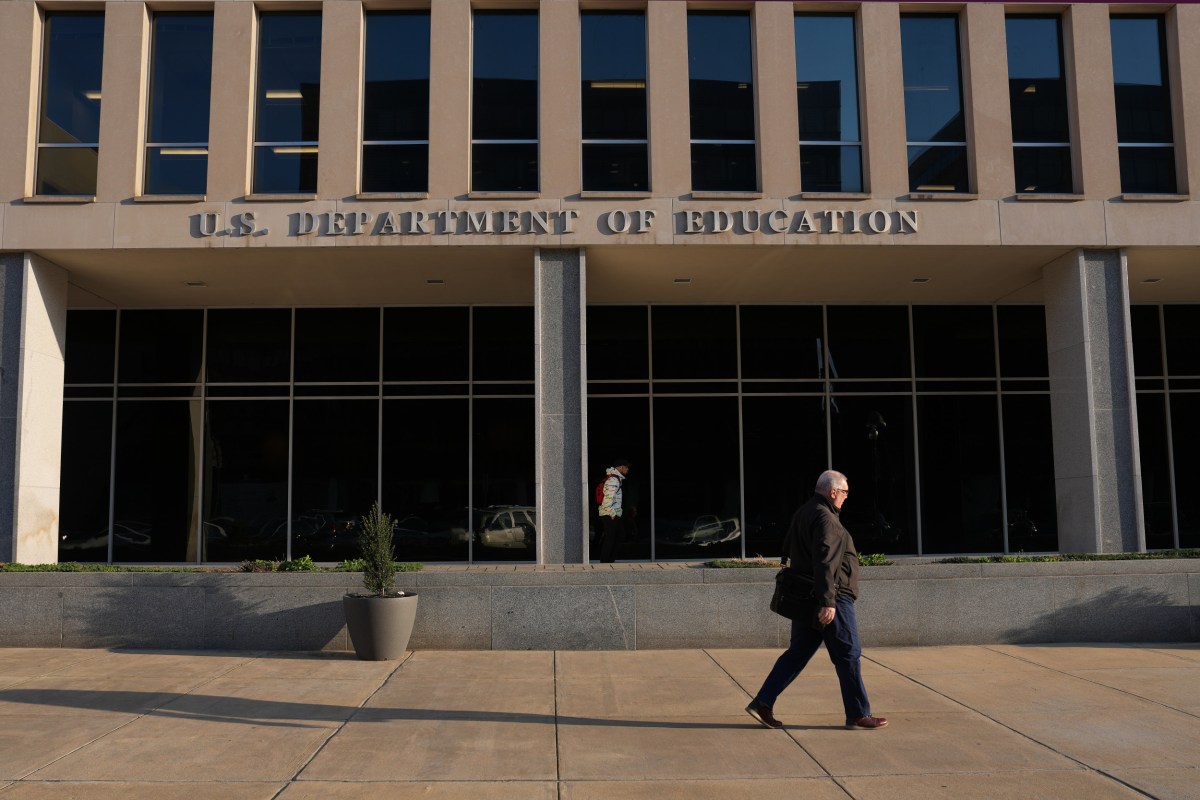
Public service workers pursuing student loan forgiveness are now facing higher costs after the Trump administration quietly changed how the Education Department calculates what borrowers must pay to qualify for relief.
“Many student loan borrowers are finding out that what looked like a path to forgiveness has suddenly become much more expensive,” Alex Beene, a financial literacy instructor for the University of Tennessee at Martin, told Newsweek. “By shifting how PSLF buybacks are calculated, the price for public service workers is effectively being raised for those who were already caught in repayment limbo because of legal disputes over the SAVE plan.”
The change affects borrowers using the Public Service Loan Forgiveness (PSLF) buyback program, a Biden‑era option that allowed some public servants to retroactively make up missed payments and receive loan forgiveness sooner.
Under the new calculation rules, more than 88,000 borrowers could see buyback offers that are significantly more expensive than expected, according to new estimates from The Street.
Why It Matters
Public Service Loan Forgiveness was designed to reward long‑term public service work by canceling remaining student debt after 10 years of qualifying payments. By increasing the cost of buyback retroactively, many feel the administration is changing the terms at the final stage of repayment for borrowers who have already met the program’s employment requirements.
For borrowers nearing the finish line, the shift could mean years of additional payments or the loss of forgiveness altogether.
What To Know
Under the updated methodology, the Education Department will no longer use the SAVE repayment plan to calculate buyback payments for borrowers whose deferment or forbearance occurred on or after July 1, 2024.
Instead, the department is applying formulas tied to older income‑driven repayment plans, such as Income‑Based Repayment (IBR), which generally require higher monthly payments.
The SAVE plan, which was introduced during the Biden administration, based payments on as little as 5 percent of a borrower’s discretionary income. By contrast, IBR typically requires payments equal to 10 percent or more, depending on the borrower’s loan type. Using the higher formula can dramatically increase the lump sum borrowers must pay to “buy back” missed months.
The policy change will impact public service workers who relied on the buyback option to bridge gaps in their payment histories. These gaps were often due to administrative forbearances, deferments, or legal pauses tied to court challenges of the SAVE plan.
“Long term, borrowers can choose to complete a lump-sum buy back under the new calculation, or they can continue qualifying employment until they reach 120 payments on their loan,” Drew Powers, the founder of Illinois-based Powers Financial Group, told Newsweek. “Either way, the total cost of their education just jumped dramatically.”
More than 88,000 borrowers could be affected, and many of those borrowers were placed into SAVE‑related forbearance involuntarily while legal challenges played out. Despite that, the Education Department is still applying higher‑cost repayment formulas when calculating what those borrowers must now pay to qualify for forgiveness.
The PSLF buyback program, created by the Biden administration, allowed borrowers who have already completed 120 months of qualifying public service employment to retroactively make missed payments from periods of forbearance or deferment. Each bought‑back month then counts toward the 120 qualifying payments required for loan forgiveness.
Because the Education Department is no longer using the SAVE formula for certain periods, buyback payments can now be two to three times higher than borrowers anticipated, according to TheStreet.
“Borrowers are dealing with a moving target,” Kevin Thompson, the CEO of 9i Capital Group and the host of the 9innings podcast, told Newsweek.” Between court challenges, shifting repayment plans, and new PSLF rules, what used to be a defined path now feels like guesswork. Buyback is still on the table, but in many cases, it costs more and requires more effort to execute. Add-in delays and backlogs, and the reality is simple. The path did not disappear; it just got harder to follow.”
The higher costs could make forgiveness effectively unreachable for some public servants, particularly those with modest incomes or high loan balances, experts say.
“The long-term risk is that more borrowers either have to delay forgiveness or potentially abandon it entirely because the system has become too costly and confusing to navigate,” Beene told Newsweek.
What Happens Next
Many public service workers only learned about the higher costs after requesting buyback offers or receiving revised calculations from the Education Department.
Impacted borrowers are urged to carefully review any buyback offer they receive before agreeing to pay, especially given the potentially large sums involved. Borrowers who cannot afford the buyback amount are not required to accept the offer and can continue making regular qualifying payments toward PSLF instead, though that may delay forgiveness.
“This hits PSLF borrowers the hardest. The ones who did what they were told, made payments, worked in qualifying roles, and expected the system to hold up its end,” Thompson said. “You can still fix gaps from forbearance or deferment, but now it takes more money, more patience, and more precision.”
Read the full article here


