



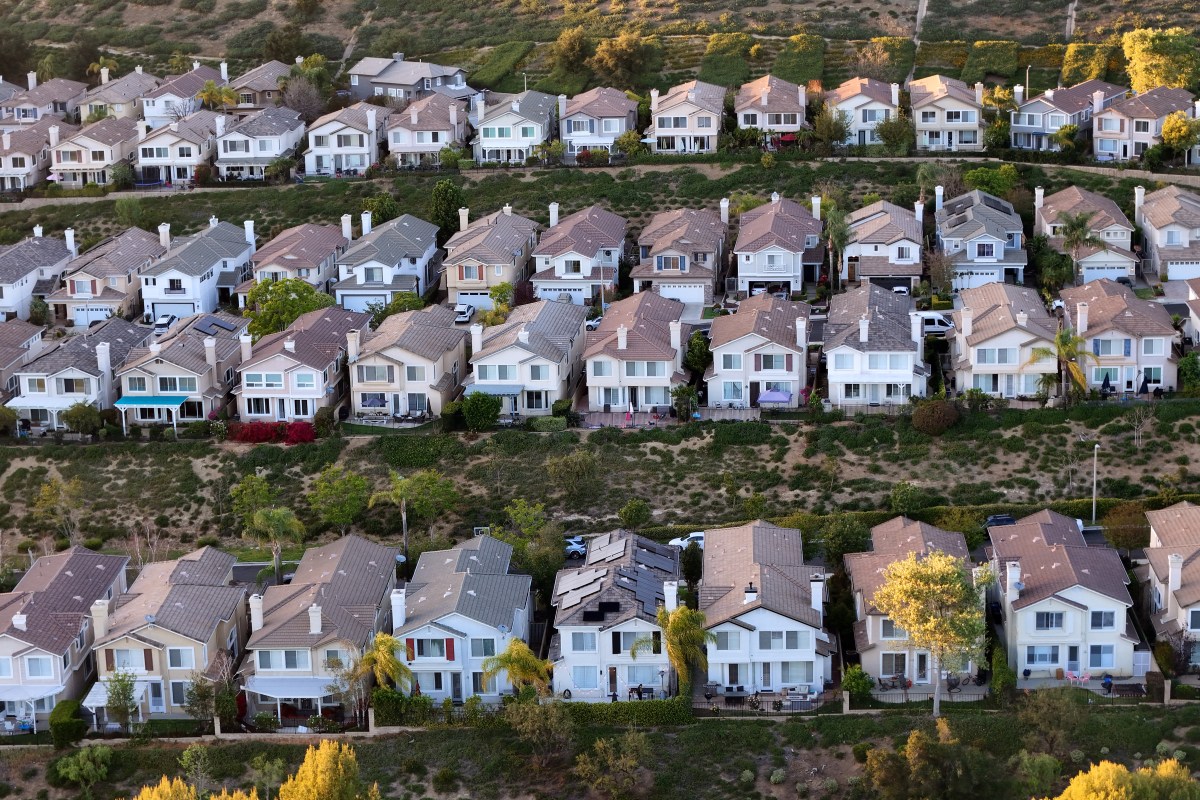
The cost of homeownership has skyrocketed in recent years to the point that Americans must now earn over $120,000 a year, on average, to be able to afford a home in the current market, according to a new study from ConsumerAffairs.
That is over $55,000 more (or nearly 83 percent) more than they needed to earn in 2020, before home prices skyrocketed and mortgage rates nearly doubled, and nearly 50 percent more than the national median household actually earns.
ConsumerAffairs analyzed monthly home payments in 200 of the largest metropolitan areas to determine the income needed to afford a home in each location. It found that, across the country, homeownership comes out to a bill of around $2,819 a month. That means that homeownership now requires an annual income of $120,796 with a downpayment of 10 percent, while the actual median household income is just $81,604.
To estimate the minimum income needed to afford a typical home in each metro, ConsumerAffairs applied the 28/36 rule, which recommends spending no more than 28 percent of gross monthly income on housing and that one’s total debt payments shouldn’t exceed 36 percent.
According to ConsumerAffairs’ calculations, the last time the median U.S. household income was enough to follow the 28 percent rule of affordability was 2015. Then, the median household income exceeded the amount necessary to buy a home by 0.4 percent.
Which Metros Requires the Lowest Income?
Luckily for those aspiring to get on the property ladder, there are still some affordable markets in the country. Perhaps unsurprisingly, most are concentrated in the Midwest and the South.
Huntington, West Virginia, is the most affordable metro in the nation for homeownership, requiring an income of $53,650 a year. Residents of the city can afford a home with 13.1 percent less than their 2024 median household income, at $61,741.
Youngstown, Ohio, came in second, requiring residents to have an income of $59,433 per year to be able to afford a home. The city’s 2024 median household income was $57,812.
It was followed by Shreveport, Louisiana, ($63,030), Flint, Michigan, ($63,535), Peoria, Illinois, ($65,486), Binghamton, New York, ($65,989), Mobile, Alabama, ($66,241), Columbus, Georgia, ($66,245), Fort Smith, Arkansas, ($67,064), and Macon, Georgia ($67,832).
And Which the Highest?
Nine of the 10 most income-restrictive cities in the nation are in California, with the only exception being Honolulu.
San Jose is the least affordable metro in the country, with homeownership there requiring an income of $501,012 per year. That is 204 percent more than the city’s 2024 median household income—$164,801.
Second place goes to San Francisco. In the City by the Bay, homeownership requires an annual income of $358,090 per year, while the median household income is $135,590.
It was followed by Santa Cruz ($354,973), Santa Maria ($305,535), Los Angeles ($301,221), San Diego ($293,618), San Luis Obispo ($280,591), Oxnard ($276,805), Salinas ($262,403), and Honolulu ($255,280).
Read the full article here


